Review Article | DOI: https://doi.org/10.31579/2693-2156/159
Research and Training Center ‘Physical and Chemical Materials Science’ Under Kyiv Taras Shevchenko University and NAS of Ukraine, Kiev, Ukraine
*Corresponding Author: Yuri Pivovarenko. Research and Training Centre ‘Physical and Chemical Materials Science’ Under Kyiv Taras Shevchenko University and NAS of Ukraine, Kiev, Ukraine.
Citation: Yuri Pivovarenko, (2026), Intensive breathing, boiling water and other sources of positive electrification of the body, which contribute to the development of various pathologies, including cancer, J Thoracic Disease and Cardiothoracic Surgery, 7(1); DOI:10.31579/2693-2156/159
Copyright: © 2026, Yuri Pivovarenko. This is an open access article distributed under the Creative Commons Attribution License, which permits unrestricted use, distribution, and reproduction in any medium, provided the original work is properly cited.
Received: 13 January 2026 | Accepted: 02 February 2026 | Published: 18 February 2026
Keywords: thrombosis; cancer; slow breathing; pranayama; hydrogen therapy; microbiota
Considering that water is the main substance filling cells, McIntyre put forward the hypothesis that it is the excess accumulation of water by cells that is a necessary condition for their division, including unlimited, that is, cancerous, division. Developing McIntyre's hypothesis, it was shown over time that cells are only able to accumulate positively charged water, but cannot retain negatively charged water, which therefore does not promote cell division and is thus beneficial for cancer patients. In addition, it has been shown that the accumulation of positively charged water in tissues contributes to thrombosis of their blood vessels, which underlies a number of diseases, including cancer. Taking all of the above into account, it was eventually concluded that information about the most common sources of both positively and negatively charged water deserves the attention of both physicians and their patients. To make this conclusion truly useful, it is proposed to consider here some of the most common sources of water with certainly opposite charges.
The fact that water is the main substance of every living cell [1 – 3] undoubtedly allows concluding that water accumulation by cells is a necessary condition for their division; moreover, this same fact also allows concluding that without this accumulation, cell division is completely impossible. Apparently, taking into account precisely this fact, McIntyre put forward the hypothesis that it is the excessive accumulation of water by cells that is a necessary condition for their division, including unlimited, that is, cancerous division [4, 5]. However, McIntyre's hypothesis, despite its appeal, did not offer ways to regulate water accumulation in cells and therefore remained idealistic. Taking this into account and in an effort to make McIntyre's hypothesis more realistic, water electrification was proposed as a means of controlling its accumulation in cells. In particular, it was proposed to take into account that positively charged water quickly hydrates various biopolymers even at room temperature, while negatively charged water is absolutely incapable of this [6, 7]. Thus, given such a radical difference in the hydration properties of waters with opposite charges, it was proposed to believe that different tissues can retain only positively charged water, thereby creating conditions favorable for the proliferation of their cells (that is, in full accordance with McIntyre's ideas [4, 5]); naturally, it has also been suggested that negatively charged water cannot moisturize tissues and therefore cannot stimulate cell division, in particular, division of cells in cancerous tissues [6, 8, 9].
Developing all these ideas, over time it was shown that the accumulation of positively charged water in tissues contributes to thrombosis of their blood vessels and, consequently, the development of a number of diseases, including thrombosis-associated cancer [10]; at the same time, it was shown that negative electrification of tissues promotes the dissolution of blood clots and, consequently, treating.
Taking all these considerations into account, over time it became necessary to discuss the most common sources of pathogenic positively charged water, as well as the most common sources of medicinal negatively charged water. Thus, this article can be considered the result of this very discussion.
It was decided that sources of positively charged water should be mentioned first.
Boiling water. It is probably quite obvious that boiling water is accompanied by the release of bubbles formed from water vapor. However, it is not so obvious that it is this release that is accompanied by positive electrification of water. Those who wish to understand more deeply the reason for this particular electrification should use Kyon's rule: when two phases come into contact, the phase with the higher permittivity acquires a positive charge, and the phase with the lower permittivity acquires a negative charge [11]. Thus, given that the dielectric constant of boiling water is 55,1 [11, 12], and the dielectric constant of water vapor is approximately 1 [13], according to the same Kyon's rule, it turns out that boiling water acquires a positive charge. This means, in particular, that food placed in boiling water becomes saturated with positively charged water, which causes it to become moist and, as a result, soften. Thus, it turns out that, in an effort to soften food with boiling water, people simultaneously saturate it with positively charged water, thereby creating the preconditions for the development of a number of diseases [8 – 10].
While all this reasoning may seem discouraging, there is a natural phenomenon that reduces the positively charged water content in both boiling water and freshly cooked food. It's called evaporation: since positive charges rise with steam [14], any evaporation of water is always accompanied by a decrease in the positively charged water content in both the boiling water and the food cooked in it. Thus, it turns out that the content of positively charged water in both boiling water and food cooked in it constantly decreases as they cool. Thus, we come to a completely obvious conclusion: partially cooked food is healthier than freshly prepared food.
Of course, all these considerations can be extended to tea and coffee, which are, of course, prepared in boiling water. Accordingly, the recommendation to consume both of these drinks after they have been partially cooled also seems appropriate, since their cooling occurs through the process of evaporation, which carries away positive charges (Figure 1).

Figure 1. This is a cup of hot coffee with steam rising above it: it is the droplets of positively charged water that form the rising steam.
Frozen food. Applying the same Kyon's rule [11] to frozen foods, it turns out that when they come into contact with boiling water, they become even more saturated with positively charged water than non-refrigerated foods, taking into account, of course, that the dielectric constant of water at 0 °C is close to 88, and the dielectric constant of ice at 0 °C is close to 90 [11, 12].
Breath. However, there are also sources that directly cause positive
electrification of the internal fluids of the human body, mainly water-containing ones. So, given the ability of atmospheric oxygen to attach electrons [11], respiration can be considered the most significant of these sources; apparently, it is worth adding here that this very ability of atmospheric oxygen allows creating such electrochemical sources of electric current as air-hydrogen cells (Figure 2).
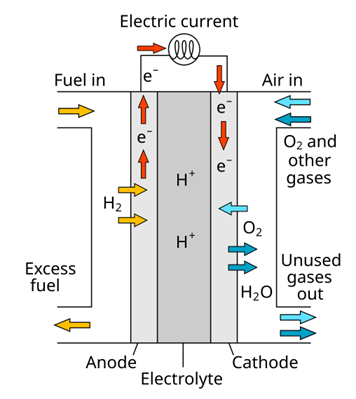
Figure 2. This is a diagram of a hydrogen-air electrochemical cell [15]. The red arrows indicate the movement of electrons from the compartment with an aqueous solution saturated with hydrogen gas to the compartment with an aqueous solution saturated with air.
So, when extrapolating the right side of this diagram (Figure 2, right) to
the human body, it apparently becomes clear that frequent respiratory acts contribute to a greater extent to the positive electrification of the human internal environment than infrequent ones; naturally, when drawing a parallel between the intensities of air flows in the lungs and in a hydrogen-air electrochemical cell. Thus, taking into account the above reasons, it becomes clear why slow breathing is so beneficial for human health [16 – 18].
Light. Because the Poynting vector, which indicates the direction of the light beam, moves positive charges along it and negative charges towards it [19], the illuminated skin quickly acquires an excess positive charge. Thus, taking into account the proposed concept [8 – 10], it is becoming abundantly clear why intense sunlight is the leading cause of skin cancer [20, 21].
Thus, it can be seen that sources of positively charged water constantly surround people. However, not everything is so pessimistic, since there are also sources of negatively charged water in the human environment.
Sweating. Considering the ability of water vapor to carry positively charged water (Figure 1), sweating can be considered a way to remove it from the body and, therefore, a way to prevent various diseases [22]; accordingly, all human activities that promote sweating can be considered beneficial to health. By analogous reasoning, it seems that antiperspirants that prevent sweating should be considered as agents that contribute to the development of various diseases [23], including cancer (which, according to McIntyre's hypothesis [4, 5], requires excess water in the cells, which is facilitated by antiperspirants).
So, this same scheme (Figure 2) allows proposing one of the most effective methods of negative electrification of
Microbiota. The ability of the intestinal microbiota, mainly Escherichia coli, to actively produce hydrogen gas [24 – 28], which supplies electrons to the aqueous environment (Figure 2, right), thereby neutralizing its positive charge, turns the intestine into a reservoir [29] supplying the entire body with this very medicine; apparently, the exceptionally high penetrating power of hydrogen gas (Figure 3) makes this statement quite justified.
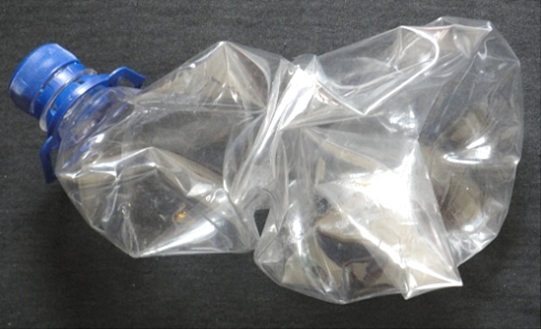
Figure 3. This is what a tightly sealed PET bottle looks like two weeks after being filled with hydrogen gas: the changes in the bottle's shape indicate that hydrogen gas is flowing freely out of it [15].
Thus, the mechanism underlying the anticancer activity of human microbiota [30 – 34] appears to be quite clear (of course, if the idea about the connection between the development of cancer and the positive electrification of the internal environment of a person [8 – 10] is correct). Taking all of the above into account, it probably becomes clear that food should be considered not only as sources of nutrients, but also as stimulants of intestinal microflora that promote hydrogen gas formation.
Hydrogen inhalation. Following the above analysis of the mechanism of anti-cancer activity of human hydrogen-producing microbiota, the mechanism of anti-cancer activity of hydrogen therapy, in particular hydrogen inhalation [35 – 38], also seems no less clear, especially given the high penetrating power of hydrogen gas (Figure 3).
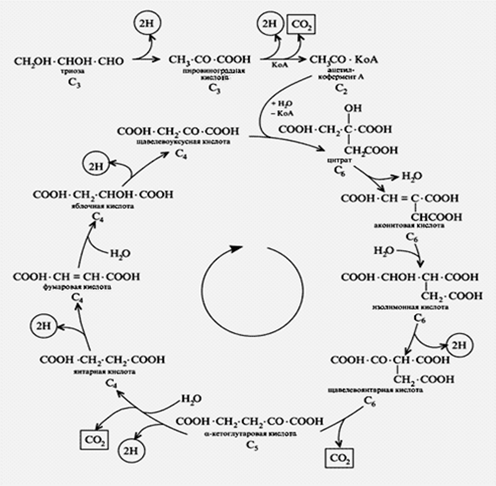
Since this seems quite appropriate in this case, it is worth noting that the fact that hydrogen atoms are the main products of the mitochondrial Krebs cycle (Figure 4) allows considering hydrogen therapy and hydrogen inhalation as treatment methods that use exclusively a natural metabolite of the human body; at the same time, it should not be forgotten that the symbiosis between humans and hydrogen-producing microbiota is also both a natural and evolutionarily determined phenomenon [22, 39].
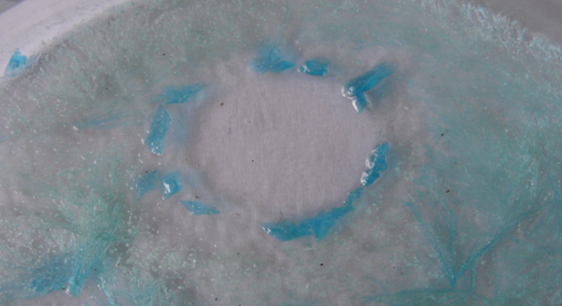
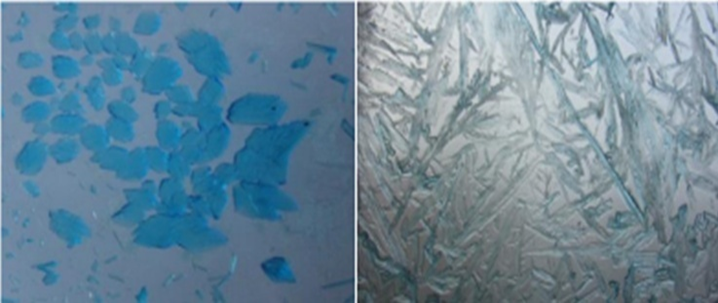
Thus, the combination of McIntyre's hypothesis [4, 5] with the fact that only positively charged water is capable of hydrating biopolymers [6 – 10] allows drawing very important conclusions regarding the common factors that contribute to the development of diseases caused by thrombosis of blood vessels, including the corresponding type of cancer, as well as the common factors that suppress such diseases. At the same time, the obvious fact that all these conclusions can be drawn based on a single concept makes them worthy of attention.
In any case, considering water as an active substance whose properties are determined by its electrical charge can provide doctors with a basis for a deeper understanding of the various states of the human body, both healthy and sick. It is hoped that such considerations will allow doctors to consciously use quite ordinary means to correct the electrification of the internal environment of the human body, thereby promoting the strengthening of human health.
Apparently, it is worth noting separately that all of the above is of particular importance for citizens of the United States and Japan, who are constantly exposed to powerful geomagnetic factors that determine the positive electrification of the environment [60].
Dear Editorial Team, Clinical Medical Reviews and Reports. My experience with the journal was highly positive. The peer-review process was rigorous, constructive, and completed in a timely manner. The reviewers provided valuable comments that helped improve the quality and clarity of our manuscript. The editorial office was professional, responsive, and supportive throughout all stages of the publication process. Communication was clear and efficient, and any questions were addressed promptly. Overall, I found the journal to maintain high scientific standards and an excellent publication workflow. I would be pleased to consider submitting future work to this journal. Best wishes from, Elena Popa.

It was my pleasure to submit my testimonial concerning the Reviewer Board of our Scientific Journal “Brain and Neurological Disorders”. The Reviewers focused on some modifications and their contribution was helpful. The ladies of our Editorial Office were also supported my efforts. It was my honor to have such a co-operation and I am looking forward for more collaboration.

Dear Grace Pierce, Editorial Coordinator of Journal of Clinical Research and Reports, Thank you for the speedy and efficient peer review process. I appreciate the fact that your peer reviewers do not take months to respond like with some other journals. I would also like to thank the editorial office for responding quickly to my questions. It is an excellent journal. I plan to submit more manuscripts in the future. Best wishes from, Robert W. McGee

Dear Grace Pierce, Editorial Coordinator of Journal of Clinical Research and Reports, Working with you and your team on our recent publication in JCRR has been a truly wonderful and enjoyable experience. The responses were prompt, and the reviewers were patient, constructive, and highly professional. One reviewer in particular gave me the feeling that a professor was carefully reading and commenting on my coursework, which was deeply touching. The entire process was straightforward and hassle‑free, with no tedious online forms to complete. I highly recommend this journal. Best wishes from, DR Aibing Rao, Head of R&D

I Appreciate the Opportunity to Share my Experience with the Journal of Clinical Research and Reports. The peer review process was timely and constructive, and the feedback provided helped improve the quality of our manuscript. The editorial office was professional, responsive, and supportive throughout the process, ensuring smooth communication and efficient handling of the submission. Overall, it was a positive experience collaborating with your team.

Dear Mercy Grace, Editorial Coordinator of Obstetrics Gynecology and Reproductive Sciences, We would like to express our gratitude for your help at all stages of publishing and editing the article. The editors of the magazine answer all the necessary questions and help at every stage. We will definitely continue to cooperate and publish other works in the Obstetrics Gynecology and Reproductive Sciences! Best wishes from, Alla Konstantinovna Politova,