Review Article | DOI: https://doi.org/10.31579/2690-8808/330
*Corresponding Author: Igor Smirnov, Global Quantech Ltd., Cyprus.
Citation: Igor Smirnov, (2026), Water and Human Consciousness (Review), J, Clinical Case Reports and Studies, 7(8); DOI:10.31579/2690-8808/330
Copyright: ©, 2026, Igor Smirnov. This is an open access article distributed under the Creative Commons Attribution License, which permits unrestricted use, distribution, and reproduction in any medium, provided the original work is properly cited.
Received: 29 June 2026 | Accepted: 24 July 2026 | Published: 05 August 2026
Keywords: brain; consciousness; confined water; electrodynamic characteristics; water symmetry
A growing movement of scientists, philosophers, and spiritual thinkers is turning their attention to water, not only as the basis of biological life, but also as a potential mirror of human consciousness. This shift goes beyond the material understanding of water as a resource and raises questions about its deeper role in the human experience. Could water, which flows through every cell of the body and every ecosystem on Earth, also serve as a medium for energy, memory, or consciousness? The human brain is composed of roughly 73%-75% water, meaning hydration dictates every aspect of consciousness, from daily focus and mood regulation to neurological waste clearance. Cognitive performance had previously been reported to decline at or above a 2% body water loss. The level of reduction in cognitive performance can depend on environmental and individual factors (e.g. level of fitness, acclimatization, and dehydration tolerance) and it appears that as the level of dehydration increases, efficiency of cognitive processing decreases. In long distance walkers and runners, increased water intake has been associated with increased visual attentiveness and short-term memory. In women, aspects of mood (i.e. vigor, alertness, fatigue, calmness, confusion, happiness) were negatively affected during fluid deprivation. Children may also have decrements in cognitive functioning as a result of inadequate water intake. Recently we have learned that even mild dehydration – a body water loss of 1–2% - can impair cognitive abilities. This amount of dehydration equates to about 1½-3 lbs of body weight loss for a 150 lb person, which could occur through routine daily activities. Since many individuals experience fatigue later in the day when their workout time approaches, this could be important for fitness professionals to discuss with their clients. We are presenting some in vivo experimental data regarding MRET treated water effects on the brain tissues in this article. These experimental findings may share a light on the possible MRET activated water effect on brain physiology and consciousness.
The brain is bathed in CSF, which is 99% water, providing buoyancy and acting as a shock absorber. Insufficient water reduces CSF volume, impairing the brain’s waste disposal mechanisms and nutrient circulation. Blood plasma is about 92% water. Dehydration decreases plasma volume, reducing the delivery of oxygen and glucose to neurons, leading to brain fog and mental fatigue. Proper hydration is essential for clear thinking. Water facilitates the flow of oxygen and nutrients to the brain and helps optimize neural electrical conduction. Even mild dehydration (a 1% - 2% loss of body water) can severely impact consciousness by causing:
• The ability to temporarily hold and manipulate information drops by about 15%.
• Mental tasks can take up to 20% - 23% longer to complete.
• Attention span and mental flexibility notably decrease, causing confusion, fatigue, and frustration.
Your brain relies on water for every aspect of cognitive function and electrical signaling: Problems with cognitive performance that can occur with mild dehydration include poor concentration, increased reaction time, and short-term memory problems, as well as moodiness and anxiety. Water consumption affects cognitive performance in adults, and an adequate daily water intake is important for maintaining optimal cognitive functioning. Most studies on hydration and cognitive performance are short-term (i.e., hours, days) and it is not certain if there are longer-term cognitive decrements resulting from hypohydration; however, a recent study suggests that even after replenishing a fluid deficit, effects on mood may persist. Meaning, even after achieving euhydration, cognitive functioning may be compromised. This is an area in need of additional research [1]. Hydration directly influences neurotransmitter synthesis (such as serotonin and dopamine) in aqueous solutions. When the body is dehydrated, the hypothalamic-pituitary-adrenal axis is activated—triggering the body's main stress response. Dehydration can increase cortisol (the stress hormone) by up to 28% and is heavily linked to mood swings, anxiety, and increased feelings of stress.
The neurons fire using ion gradients (sodium, potassium) maintained across cell membranes. Dehydration disrupts these gradients, significantly slowing down processing speed and impairing working memory.
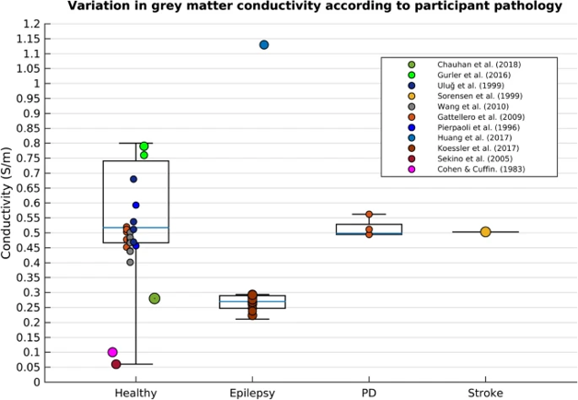
Figure 1: The technique models electrical conductivity (σ) as a monotonic function of local tissue water content (3).
The research data yields for the conclusion that healthy subjects have significantly lower gray matter conductivity values compared to the patients with Epilepsy, PD and Stroke. It indicates that the consumption of water with the modified low electrical conductivity has tendency to be a stabilizing agent keeping brain tissue’s water content at healthy, normal homeostasis. This is exactly a case with MRET treated water. The study of electrodynamic
characteristics of bulk water after MRET treatment conducted at Moscow State University, Russia clearly indicate tendency of significant lowering of electrical conductivity and dielectric permittivity of bulk water after activation. The electrical conductivity of MRET activated water at 20◦C in the range of frequencies 0.1Hz– 100 kHz decreased by 77–90% in 30-min-activated water and by 66–70% in 60-min-activated water respectively compared to non-activated distilled water (4), [Figure.2].
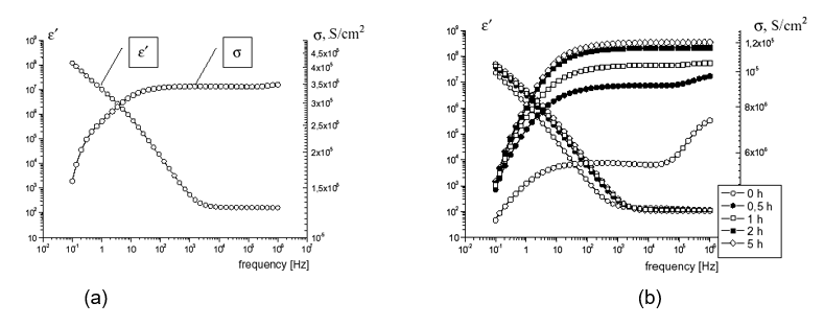
Figure 2: Electrodynamic characteristics of non-activated distilled water at 20ºC (a), Electrodynamic characteristics of MRET water (30min activation) at 20ºC and different periods of time of storage: 0 h, 0.5 h, 1.0 h, 2.0 h, and 5.0 h, respectively (b).
The experimental findings also provide evidence that MRET treated water posses a significant low dielectric permittivity. The dielectric permittivity in the very low frequency range 0.1–1000 Hz decreased by 80–90%, and in the range of frequencies 1–100 kHz, decreased by 18% in 30-min-activated water; a decrease by 70–85% was observed in the range 0.1–1000 Hz in 60-min-activated water compared to non-activated water [4].
Water with low dielectric permittivity drastically alters how electric charges interact within the brain. While bulk water usually has a high dielectric constant (around 78–80) that shields electric forces, water confined in nanometer-wide channels in the brain exhibits an anomalously low dielectric constant (near 2). Here is how this low permittivity affects neural dynamics and consciousness: in bulk water, charges are highly shielded, neutralizing attractions. In low-permittivity confined water, this shielding disappears. This allows ions and biomolecules to interact with maximum, undiminished electrostatic strength. The dielectric properties of brain regions are directly tied to local neuronal activation and ion flow. Changes in permittivity alter how electromagnetic (EM) waves propagate and resonate through brain structures. Ion channels act as nanoconfined pathways. When water is confined to these tiny spaces, its altered dielectric state changes the energy required for protons and ions to pass through. This directly dictates nerve signaling and synaptic transmission. The proteins fold and function by relying on surface-bound water. The low dielectric environment at these interfaces determines the structural stability of enzymes and receptors in the nervous system.
Some theoretical models of consciousness propose that these vast areas of "confined water" (the fourth phase of water) support complex quantum mechanisms. By creating environments with low dielectric permittivity, the brain may sustain unique conditions for proton hopping and coherent energy states. While mainstream science maintains that water's structure changes too rapidly to hold lasting memories or information, alternative and controversial hypotheses suggest that water in the brain acts as an antenna. If true, the low-permittivity state would make brain water highly sensitive to quantum stimuli and endogenous EM fields.
How MRET treated water can affect brain cells development. The in vivo research conducted at Toronto University, Department of Medical Biophysics, Center for Research in Neurodegenerative Diseases (Figure.3).
One potentially interesting observation of the TgCRND8 Transgenic Amyloid Mice Models made during the course of the investigation was the decreased mortality of the MEET-treated animals compared to the control ones. We typically see a 25-40% mortality in these mice as is evidenced by the animals on the regular water administration. In contrast, a significant decrease in this mortality rate was observed in the group receiving MEET-activated water. The 33% mortality rate was observed for mice on regular water, and 9% mortality rate for mice on MRET- treated water in this experiment.
This research also showed very interesting fact regarding the enhanced development of the brain tissue in the group of mice on MRET water. The mean value of total brain area for mice on MRET water was by 15% higher comparing with the mean value of total brain area for mice on regular water [2].
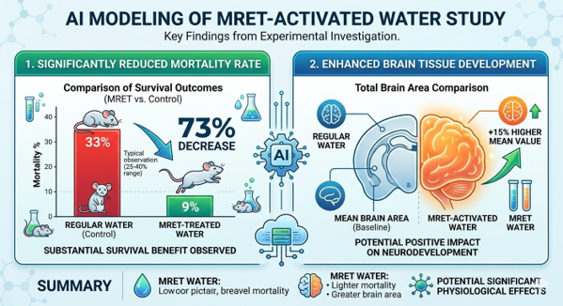
Figure 3: AI modeling of in vivo research data regarding MRET water effect on brain tissue development in animal models.
The Structural States of Water:
The relationship between water's structure (symmetric/fractal versus asymmetric/damaged), its state during freezing, and consciousness is rooted in quantum biology and the physics of the brain. Because the human brain is roughly 75% water, the geometry of brain-water is hypothesized to dictate cognitive performance and conscious awareness.
Symmetric/Fractal Structure: Often referred to as "structured water", Pauling clathrate structure, MRET water. In this state, water molecules align into organized, hexagonal layers. When flash-frozen, this state yields highly symmetric, aesthetic, and fractal crystalline structures (Figure .4).
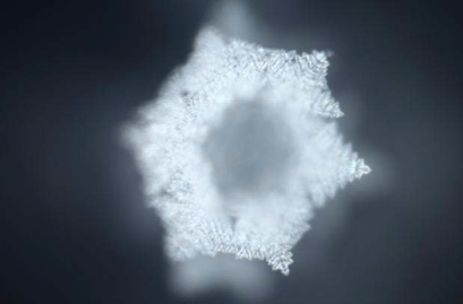
Figure 4: MRET treated frozen water sample. Masaru Emoto laboratory, Tokyo, Japan.
Asymmetric/Damaged Structure: Refers to unstructured, chaotic, or bulk water. When exposed to environmental pollutants, toxic heavy metals, or negative stimuli, the molecular bonds break and reorganize. When frozen, this creates jagged, asymmetrical, and deformed patterns (Figure.5).
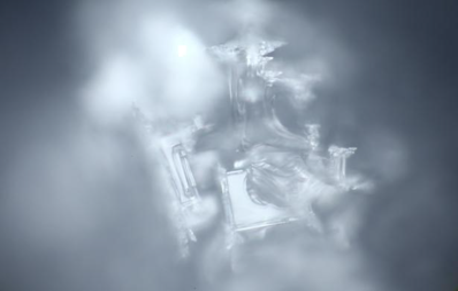
Figure 5: Tab water frozen sample. Masaru Emoto laboratory, Tokyo, Japan.
In traditional neuroscience, consciousness emerges from electrical impulses between neurons. However, theoretical frameworks—such as the Orchestrated Objective Reduction (Orch OR) theory pioneered by Roger Penrose and Stuart Hameroff—and topological theories of symmetry suggest a deeper quantum mechanism:
Symmetrically structured water inside cellular structures (like microtubules) exhibits quantum coherence. This means the molecules act in unison, allowing for instantaneous information transfer across the brain.
Symmetrical and fractal water matrices act as a biological medium to hold and reflect environmental vibrations and intentions. Symmetries in consciousness dynamics correlate with stable, healthy cognitive processing, while symmetry-breaking can lead to cognitive fragmentation.
Impact on Brain Activity
• Optimal Conduction: Symmetrical water improves electrical conductivity and neurotransmitter signaling, allowing your brain to process data and form memories efficiently.
• Preventing Brain Fog: Asymmetric or chaotic water structures hinder this conductivity, impairing working memory, slowing processing speeds, and leading to brain fog.
While the concepts of “water memory” and fractal-consciousness are prominent in alternative healing and quantum biology—popularized by researchers like Dr. Masaru Emoto and Veda Austin—mainstream science remains skeptical. On the other hand, the current research findings related to MRET study, Vladimir Vysotskyi and his co-researchers (Alla Kornilova and Igor Smirnov) proposed a model of "water memory" that relies on Linus Pauling's "clathrate" (dodecahedron) structural model of water. In this framework, water is theorized to retain information about previously dissolved substances or electromagnetic fields through long-lasting, geometrically structured molecule clusters. Authors hypothesized that when water is exposed to external forces (such as mechanical pressure or electromagnetic fields), these flexible, multi-layered tetrahedral frames rearrange into new orientations. According to their publications, these quasistable configurations supposedly remain stable long after the initial physical trigger is removed, acting as an informational "memory" that interacts with biological systems [5].
Water doesn't just affect consciousness from the inside; it also shapes our state of mind externally: Studies in cognitive psychology indicate that simply being near, observing, or hearing water can induce a meditative, trance-like state. It calms the central nervous system by decreasing cortisol and increasing serotonin and dopamine. The mechanism of water effect on human consciousness deeply relies on water molecular structures and physical properties of water such as electrical conductivity, dielectric permittivity, viscosity, etc. Considering such effect we have to bare in mind that intro-cellular/extra-cellular water being a confined type of water have the modified electrodynamic characteristics of significantly lower conductivity and dielectric permittivity. Symmetrical and fractal water matrices act as a biological medium to hold and reflect environmental vibrations and intentions. Symmetries in consciousness dynamics correlate with stable, healthy cognitive processing, while symmetry-breaking can lead to cognitive fragmentation.
Dear Editorial Team, Clinical Medical Reviews and Reports. My experience with the journal was highly positive. The peer-review process was rigorous, constructive, and completed in a timely manner. The reviewers provided valuable comments that helped improve the quality and clarity of our manuscript. The editorial office was professional, responsive, and supportive throughout all stages of the publication process. Communication was clear and efficient, and any questions were addressed promptly. Overall, I found the journal to maintain high scientific standards and an excellent publication workflow. I would be pleased to consider submitting future work to this journal. Best wishes from, Elena Popa.

It was my pleasure to submit my testimonial concerning the Reviewer Board of our Scientific Journal “Brain and Neurological Disorders”. The Reviewers focused on some modifications and their contribution was helpful. The ladies of our Editorial Office were also supported my efforts. It was my honor to have such a co-operation and I am looking forward for more collaboration.

Dear Grace Pierce, Editorial Coordinator of Journal of Clinical Research and Reports, Thank you for the speedy and efficient peer review process. I appreciate the fact that your peer reviewers do not take months to respond like with some other journals. I would also like to thank the editorial office for responding quickly to my questions. It is an excellent journal. I plan to submit more manuscripts in the future. Best wishes from, Robert W. McGee

Dear Grace Pierce, Editorial Coordinator of Journal of Clinical Research and Reports, Working with you and your team on our recent publication in JCRR has been a truly wonderful and enjoyable experience. The responses were prompt, and the reviewers were patient, constructive, and highly professional. One reviewer in particular gave me the feeling that a professor was carefully reading and commenting on my coursework, which was deeply touching. The entire process was straightforward and hassle‑free, with no tedious online forms to complete. I highly recommend this journal. Best wishes from, DR Aibing Rao, Head of R&D

I Appreciate the Opportunity to Share my Experience with the Journal of Clinical Research and Reports. The peer review process was timely and constructive, and the feedback provided helped improve the quality of our manuscript. The editorial office was professional, responsive, and supportive throughout the process, ensuring smooth communication and efficient handling of the submission. Overall, it was a positive experience collaborating with your team.

Dear Mercy Grace, Editorial Coordinator of Obstetrics Gynecology and Reproductive Sciences, We would like to express our gratitude for your help at all stages of publishing and editing the article. The editors of the magazine answer all the necessary questions and help at every stage. We will definitely continue to cooperate and publish other works in the Obstetrics Gynecology and Reproductive Sciences! Best wishes from, Alla Konstantinovna Politova,