Review Article | DOI: https://doi.org/10.31579/2690-8794/344
1Department of Family Medicine, University of Health Sciences, Gaziosmanpasa Training and Research Hospital, Istanbul, Türkiye.
2Department of Emergency Medicine, University of Health Sciences, Gaziosmanpasa Training and Research Hospital, Istanbul, Türkiye.
3Department of Internal Medicine, Gaziantep Islam Science and Technology University School of Medicine, Gaziantep Türkiye.
*Corresponding Author: Mehmet Akif Buyukbese, Department of Internal Medicine, Gaziantep Islam Science and Technology University School of Medicine, Gaziantep Türkiye.
Citation: Melike M. Baspinar, Ibrahim Sarbay, Mehmet A. Buyukbese, (2026), Smoking Exposure and Severe Hypoglycemia in Diabetes: A PRISMA-ScR Scoping Review of Population-Based Evidence, Clinical Medical Reviews and Reports, 8(7); DOI:10.31579/2690-8794/344
Copyright: © 2026, Mehmet Akif Buyukbese. This is an open access article distributed under the Creative Commons Attribution License, which permits unrestricted use, distribution, and reproduction in any medium, provided the original work is properly cited.
Received: 22 June 2026 | Accepted: 01 July 2026 | Published: 16 July 2026
Keywords: diabetes mellitus; hypoglycemia; smoking; risk factor; scoping review
Background: Hypoglycemia is a major acute complication of diabetes mellitus that limits safe glycemic management. Although smoking is a well-recognized cardiovascular risk factor in diabetes, its role as a risk modifier for severe hypoglycemia has received limited systematic attention. This scoping review aimed to map and synthesize observational and population-based evidence on the association between smoking exposure and hypoglycemia across different diabetes types and severity levels.
Methods: Conducted in accordance with PRISMA-ScR guidelines, this review systematically searched PubMed and Web of Science databases. From 440 identified records, 234 articles were screened after deduplication, and 19 studies were ultimately included, encompassing nationwide cohort studies, retrospective analyses, cross-sectional investigations, systematic reviews, and health economic models, with a combined population exceeding 4.5 million individuals with type 1 or type 2 diabetes.
Results: Large population-based cohort studies consistently demonstrated an increased risk of medically attended severe hypoglycemia among current smokers (HR/OR range: 1.17–1.35). Lifestyle composite analyses revealed dose-response relationships, with hazard ratios reaching 1.81 when smoking was combined with other unhealthy behaviors. Meta-analytic evidence in type 1 diabetes confirmed smoking as an independent risk factor (OR 1.17; 95% CI: 1.07–1.28). Continuous glucose monitoring studies reported a nearly two-fold higher rate of severe hypoglycemia in smokers. Smoking was also associated with elevated hypoglycemia-related mortality in type 1 diabetes (HR 2.86; 95% CI: 1.57–5.22).
Conclusion: Smoking is a consistent, independent, and modifiable risk factor for severe hypoglycemia in individuals with diabetes mellitus. Integrating smoking cessation into comprehensive diabetes care may reduce acute hypoglycemic complications and associated morbidity and mortality.
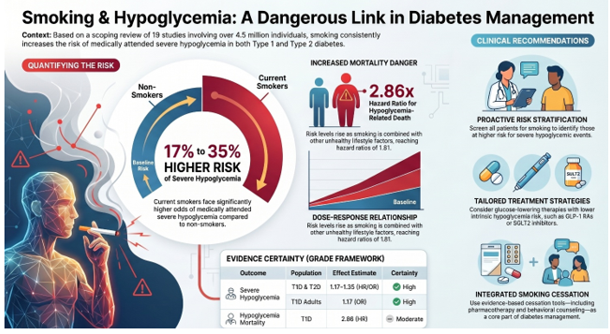
Graphical Abstract: The Smoking Risk: Key findings from this scoping review illustrating the quantified risk gradient between smoking and severe hypoglycemia, the biological and behavioral mechanisms involved, and the proposed clinical solutions.
Diabetes mellitus (DM) is one of the most prevalent non-communicable diseases globally, affecting an estimated 537 million adults in 2021, with projections of 852.5 million by 2050 [1–3]. In Türkiye specifically, the age-adjusted prevalence of diabetes has risen substantially over the past two decades, with recent forecasts estimating a prevalence of 17.5% by 2030 and 19.2% by 2045 [4, 5]. The increasing disease burden underscores the urgency of identifying modifiable risk factors that can be addressed within routine clinical care.
Hypoglycemia is a major limiting factor in glycemic management for both type 1 diabetes mellitus (T1DM) and type 2 diabetes mellitus (T2DM) [6]. Severe hypoglycemia (SH) — defined as an episode requiring external assistance for recovery — is associated with significant clinical consequences, including cardiovascular events, arrhythmias, cognitive dysfunction, hospitalization, and mortality [7, 8]. Glycemic variability, which reflects the dynamic interplay between hyperglycemia and hypoglycemia, further amplifies oxidative stress and inflammatory burden [6]. Effective diabetes management therefore requires an integrated approach combining pharmacotherapy optimization with lifestyle modification, including smoking cessation [1, 5].
Smoking exacerbates insulin resistance and impairs glycemic control, thereby increasing the risk of microvascular and macrovascular complications, including neuropathy, retinopathy, and cardiovascular disease [9, 10]. Studies in populations without prior diabetes have established that active smoking increases the risk of incident T2DM through multiple mechanisms, including impairment of pancreatic beta-cell function and enhancement of peripheral insulin resistance [11, 12]. In individuals with established diabetes, smoking cessation has been associated with reductions in fasting plasma glucose and HbA1c levels [13]. However, evidence specifically addressing the relationship between smoking and hypoglycemia in diabetes management remains fragmented.
This scoping review aimed to systematically map the multifaceted evidence on the association between smoking exposure and hypoglycemia in individuals with DM. Specifically, we sought to examine: (1) whether smoking is associated with an increased risk of hypoglycemia; (2) whether this risk differs between T1DM and T2DM; (3) whether the association varies according to hypoglycemia severity; and (4) the overall strength, consistency, and certainty of the existing evidence. By integrating these dimensions, this review seeks to inform risk-stratified and proactive clinical strategies for hypoglycemia prevention.
Study Design and Framework
This scoping review was conducted in accordance with the Preferred Reporting Items for Systematic Reviews and Meta-Analyses Extension for Scoping Reviews (PRISMA-ScR) framework. The methodology was designed to systematically map the extant literature and identify key evidence regarding the association between smoking and hypoglycemia in individuals with diabetes.
Search Strategy and Information Sources
A systematic literature search was performed in two principal electronic databases: PubMed and Web of Science (WoS). The search strategy incorporated a combination of Medical Subject Headings (MeSH) terms and free-text keywords pertaining to “Diabetes,” “Hypoglycemia,” and “Smoking.”
PubMed (n = 148): (("Diabetes Mellitus"[Mesh] OR diabetes OR "diabetes mellitus") AND ("Hypoglycemia"[Mesh] OR hypoglycemia OR hypoglycaemia) AND ("Smoking"[Mesh] OR smoking OR tobacco OR nicotine))
Web of Science (n = 292): TS=((diabetes OR "diabetes mellitus" OR diabetic*) AND (hypoglycemia OR hypoglycaemia OR "low blood sugar") AND (smoking OR smoker* OR cigarette* OR tobacco OR nicotine OR "tobacco use"))
Study Selection and Eligibility Criteria
Following the initial search, 440 records were identified. After removing 206 duplicates, 234 unique articles remained for title and abstract screening. Of these, 124 were excluded due to wrong outcome (n = 88) or wrong population (n = 36). A further 77 records could not be retrieved in full text. Of 33 articles assessed for full-text eligibility, 14 were subsequently excluded (wrong association, n = 8; wrong study design, n = 4; other, n = 2), yielding a final sample of 19 studies for synthesis. The complete selection process is depicted in Figure 1 (PRISMA flow diagram).
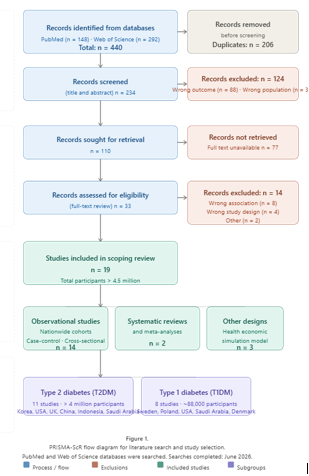
Figure 1: Prisma -ScR flow diagram of study
Predefined inclusion criteria were applied as follows:
Study Design: Primary research studies, including observational designs (prospective and retrospective cohorts, nested case-control, and cross-sectional) and interventional designs, were eligible. Secondary research, including systematic reviews, meta-analyses, and health economic simulation models, was also included to provide a comprehensive mapping of available evidence.
Population: Adults or adolescents with a confirmed diagnosis of any type of diabetes mellitus (T1DM, T2DM, or mixed populations).
Exposure: Smoking or tobacco use, encompassing current, former, or lifetime exposure.
Outcome: Hypoglycemia of any definition, including severe, symptomatic, CGM-detected, or biochemical episodes.
Language and Availability: Only English-language articles with accessible full-text were included in the final synthesis.
Data Extraction and Synthesis
Data were extracted using a standardized charting form, capturing study characteristics (author, year, country), population details, diabetes type, smoking exposure metrics, hypoglycemia definitions, effect sizes (hazard ratios, odds ratios, incidence rate ratios), and strength of evidence. Given the methodological heterogeneity across exposure measurements, outcome definitions, and analytic approaches, quantitative meta-analysis was not appropriate for the majority of outcomes. Findings were therefore synthesized narratively according to outcome severity and methodological robustness. A GRADE-based certainty of evidence assessment was applied for the key outcomes.
Overview of Study Characteristics
Nineteen studies were included, collectively encompassing over 4.5 million individuals with T1DM, T2DM, or mixed diabetes populations (Table 1). Study designs were heterogeneous, including nationwide prospective cohorts, registry-based analyses, nested case–control studies, cross-sectional investigations, systematic reviews with meta-analyses, and one simulation model. Smoking exposure was primarily self-reported, although several large administrative cohorts utilized health examinations or registry-linked data. Hypoglycemia outcomes ranged from medically attended severe hypoglycemia to self-reported non-severe episodes, impaired awareness of hypoglycemia (IAH), mortality, and markers of glycemic instability measured by continuous glucose monitoring (CGM).
| No. | Study | Design / Data Source | Population | Smoking Exposure | Hypoglycemia Outcome | Main Finding / Effect Estimate | Direct Analysis | Evidence Category | Key Limitations |
|---|---|---|---|---|---|---|---|---|---|
| 1 | Ahlen et al., 2016 [14] | Nationwide cohort, Sweden | 33,915 T1DM + 169,249 matched controls | Current smoking | Death from hypoglycemia or DKA in adults <50> | Smoking: HR 2.86 (95% CI 1.57–5.22) for hypoglycemia/DKA death | Yes (combined outcome) | T1DM mortality signal | Hypoglycemia and DKA combined; residual confounding |
| 2 | Hogendorf et al., 2017 [15] | Cross-sectional; ESPAD questionnaire | 209 adolescents with T1DM; 12,114 controls | Lifetime and recent cigarette use | Severe hypoglycemia and DKA | Lifetime smoking associated with higher SH incidence and poorer metabolic control (HbA1c ≥8%) | Yes | T1DM adolescent evidence | Small T1DM sample; self-reported HbA1c; limited statistical power |
| 3 | Han et al., 2018 [16] | Nationwide population-based cohort; Korea NHID | 1,676,885 adults with T2DM | Current smoking | Severe hypoglycemia (ICD-10 coded) | Current smoking: HR 1.17 (95% CI 1.08–1.26) | Yes | Core SH evidence (T2DM) | No HbA1c data; medically attended events only |
| 4 | Jendle et al., 2018 [17] | Health economic simulation (IQVIA CORE Diabetes Model) | 1,000 simulated T1DM patients | Smoking subgroup (modelled) | Modelled long-term hypoglycemia outcomes | No direct empirical smoking–hypoglycemia effect estimated | No | Very low-certainty simulation | Simulation only; not empirical; derived from model assumptions |
| 5 | Shah et al., 2018 [18] | T1D Exchange registry; cross-sectional | 9,481 adults with T1DM | Current smoking prevalence | Acute complications; self-care variables | Higher smoking prevalence in men; smoking–SH association not directly analyzed | No | Contextual T1DM evidence | Cross-sectional; smoking not modelled as SH predictor |
| 6 | Cai et al., 2019 [19] | Prospective nationwide cohort; China | 5,770 newly diagnosed T2DM | Current smoking | Metabolic target failure; hypoglycemia (secondary) | Smoking associated with metabolic failure; hypoglycemia not directly linked to smoking | Indirect | Metabolic control pathway evidence | Short follow-up (12 months); not designed for smoking–hypoglycemia analysis |
| 7 | Yun et al., 2019 [20] | Nationwide population-based cohort; Korea | 1.3+ million T2DM adults | Smoking in subgroup analyses | Severe hypoglycemia requiring medical care | Low BMI strongly associated with SH; smoking modified risk patterns (contextual) | Indirect/contextual | Contextual risk-factor evidence | Smoking not the primary exposure; administrative data only |
| 8 | van Mark et al., 2020 [21] | Registry-based cross-sectional; DPV/DIVE registries | 396,719 older adults with T2DM | Smoking prevalence by age group | SH across age groups | SH more frequent in oldest-old; smoking–SH association not directly modelled | No | Contextual elderly T2DM evidence | Smoking not tested as SH predictor |
| 9 | Zaccardi et al., 2020 [22] | UK primary care observational cohort | 74,610 adults with T2DM | Current smoking (baseline covariate) | Severe hypoglycemia and cause-specific mortality | SH predicted higher mortality; smoking not tested as SH predictor | No | Contextual mortality evidence | Smoking not primary exposure; residual confounding |
| 10 | Jensen et al., 2021 [23] | Randomized trial CGM subanalysis (Onset 5) | 49 smokers and 320 non-smokers; T1DM | Daily smoking | CGM-detected hypoglycemia; time in range; SH rate | Smokers: nearly doubled SH rate; higher glycemic variability; increased time in very low glucose | Yes | Objective CGM-based evidence | Small smoker subgroup; limited SH power; European/North American population only |
| 11 | Agrawal et al., 2022 [24] | Cross-sectional analysis; Poland | 300 T1DM or T2DM patients | Smoking status | Self-reported hypoglycemia | Smoking correlated with increased hypoglycemia risk alongside alcohol use and low BMI | Yes (lower certainty) | Supportive cross-sectional evidence | Small sample; recall bias; cross-sectional design |
| 12 | Al-Ma'aitah et al., 2022 [25] | Systematic review and meta-analysis; MENA region | 54 studies; 41,079 T2DM adults | Current smoking | Inadequate glycemic control | Smoking associated with poor glycemic control: OR 1.26 (95% CI 1.05–1.52) | Indirect | Metabolic pathway evidence | High heterogeneity; mostly cross-sectional; hypoglycemia not direct outcome |
| 13 | Galindo et al., 2022 [26] | Retrospective population-based cohort; USRDS | 521,789 U.S. adults with diabetes and ESKD | Tobacco use (self-reported/registry) | Severe hypoglycemic crisis (ED/hospitalization) | Tobacco use: IRR 1.35 (95% CI 1.28–1.43) | Yes | Strong population-based evidence (ESKD) | Diabetes type not differentiated; administrative coding |
| 14 | Hassounah et al., 2022 [27] | Cross-sectional questionnaire study; Saudi Arabia | 242 T1DM patients | Current smoking | Impaired awareness of hypoglycemia (IAH) | Smoking not significantly associated with IAH (p = 0.166) | No significant association | Low-certainty IAH evidence | Small sample; single center; self-reported exposure and outcome |
| 15 | Settles et al., 2022 [28] | Nested case-control study; U.S. IQVIA claims data | 3,153 case-control pairs; insulin-treated T2DM | Current or history of smoking | SH requiring emergency care | Smoking independently associated with SH: OR 1.28 (95% CI 1.08–1.52) | Yes | Core SH evidence | Emergency-care events only; pharmacy claims may not reflect actual intake |
| 16 | Yun et al., 2022 [29] | Nationwide longitudinal cohort; Korea | 1,490,233 T2DM adults | Current smoking and lifestyle composite | Severe hypoglycemia requiring medical care | Current smoking: HR 1.28 (95% CI 1.23–1.34); lifestyle dose-response up to HR 1.81 | Yes | Very strong population-based evidence | Lifestyle self-reported; HbA1c and medication dose unavailable |
| 17 | Naser et al., 2025 [30] | Retrospective cross-sectional; Saudi Arabia hospital | 396 hospitalized patients with hypoglycemia | Ex-smoker/current smoker status | Hospitalization cost, length of stay, ICU admission | Ex-smokers: 4.4-fold higher hospitalization costs; smoking as incident risk factor not analyzed | No/indirect | Health economic burden evidence | Single-center; retrospective; cost/burden outcome not incident hypoglycemia risk |
| 18 | Veryanti et al., 2025 [31] | Cross-sectional outpatient study; Jakarta, Indonesia | 501 T2DM outpatients; five hospitals | Current smoking vs. non-smoking | Any self-reported hypoglycemia (previous 3 months) | Non-smoking associated with higher reported hypoglycemia (OR 2.2; 95% CI 1.3–3.6); likely confounded | Yes (inconsistent result) | Low-certainty/conflicting evidence | Self-reported; cross-sectional; probable confounding by insulin use and treatment intensity |
| 19 | Zhang et al., 2025 [32] | Systematic review and meta-analysis | 31 studies; 54,634 T1DM adults | Current smoking | Overall hypoglycemia risk in T1DM | Smoking: pooled OR 1.17 (95% CI 1.07–1.28) | Yes | Core T1DM meta-analytic evidence | Heterogeneity in hypoglycemia definitions; many cross-sectional studies included |
Table 1: presents the full evidence base, organized chronologically. Table 2 provides a GRADE summary of evidence by outcome category.
Abbreviations: T1DM, type 1 diabetes mellitus; T2DM, type 2 diabetes mellitus; SH, severe hypoglycemia; IAH, impaired awareness of hypoglycemia; HR, hazard ratio; OR, odds ratio; IRR, incidence rate ratio; CI, confidence interval; CGM, continuous glucose monitoring; ESKD, end-stage kidney disease; DKA, diabetic ketoacidosis; ED, emergency department; MENA, Middle East and North Africa; USRDS, United States Renal Data System; NHID, National Health Insurance Database.
Severe Hypoglycemia Requiring Medical Attention
The most consistent and methodologically robust evidence was derived from large population-based cohort studies examining medically attended SH. Han et al. [16] utilized a nationwide South Korean cohort of over 1.6 million adults with T2DM and demonstrated that current smoking was independently associated with an increased risk of SH (HR 1.17; 95% CI: 1.08–1.26), after adjustment for multiple confounders including age, sex, body mass index, comorbidities, and pharmacotherapy. Yun et al. [29] substantially extended this evidence in a cohort of 1,490,233 Korean adults with T2DM, confirming an adjusted HR of 1.28 (95% CI: 1.23–1.34) for current smokers. Critically, this study further demonstrated a dose-response relationship: the co-occurrence of smoking with other unhealthy lifestyle behaviors (heavy alcohol consumption, physical inactivity) was associated with an HR of 1.81, establishing a lifestyle risk-gradient model for SH prevention.
In a U.S. population-based cohort of 521,789 adults with diabetes and end-stage kidney disease (ESKD), Galindo et al. [26] reported that tobacco use was independently associated with a significantly higher rate of severe hypoglycemic crises requiring emergency department visits or hospitalization (IRR 1.35; 95% CI: 1.28–1.43). Settles et al. [28], using a nested case–control design of insulin-treated T2DM patients, identified smoking as a previously underrecognized risk factor for medically attended SH (OR 1.28; 95% CI: 1.08–1.52), independent of established predictors including age, comorbidities, and insulin type.
Evidence in Type 1 Diabetes
Dedicated T1DM evidence was provided by several complementary studies. Ahlen et al. [14], in a nationwide Swedish cohort of 33,915 individuals with T1DM, found that smoking was a significant independent predictor of death attributed to hypoglycemia or diabetic ketoacidosis in adults younger than 50 years (HR 2.86; 95% CI: 1.57–5.22). While the combined outcome definition limits precise attribution to hypoglycemia alone, the magnitude of this effect was clinically substantial. Hogendorf et al. [15] reported, in a cross-sectional study of Polish adolescents with T1DM, that lifetime smoking was associated with higher SH incidence and worse metabolic control compared with non-smokers.
The most methodologically rigorous T1DM-specific evidence was provided by a recent meta-analysis by Zhang et al. [32], which synthesized data from 31 studies comprising 54,634 adults with T1DM and confirmed smoking as an independent risk factor for hypoglycemia (pooled OR 1.17; 95% CI: 1.07–1.28). This finding, derived through standardized pooled analysis, confirms the biological plausibility and statistical robustness of the smoking–hypoglycemia association in T1DM populations.
CGM-Detected Hypoglycemia and Glycemic Variability
Jensen et al. [23] provided objective, sensor-derived evidence from a sub-analysis of a randomized trial (Novo Nordisk Onset 5). Among 49 smokers and 320 non-smokers with T1DM receiving continuous subcutaneous insulin infusion, smokers exhibited a 4.7-fold increased risk of not achieving glycemic targets (95% CI: 1.5–15.4), increased time in hyperglycemia, decreased time in range, and a nearly two-fold higher rate of SH. CGM median profiles also revealed an elevated risk of morning hypoglycemia in smokers, suggesting a temporal pattern potentially related to nocturnal nicotine withdrawal effects on counterregulatory hormone release.
Non-Severe and Self-Reported Hypoglycemia
Evidence for non-severe and self-reported hypoglycemia was heterogeneous and of lower certainty. Agrawal et al. [24] demonstrated a positive correlation between smoking and hypoglycemia in a cross-sectional analysis of 300 Polish patients with T1DM or T2DM; however, the small sample size and cross-sectional design limit causal inference. Notably, Veryanti et al. [31] reported a paradoxical inverse association, with non-smoking independently associated with higher self-reported hypoglycemia risk (OR 2.2; 95% CI: 1.3–3.6) in a cohort of Indonesian outpatients. This result is likely confounded by differences in treatment intensity, with non-smoking patients potentially receiving more aggressive glucose-lowering pharmacotherapy, and illustrates the methodological challenges inherent to cross-sectional self-report designs.
GRADE Evidence Summary
| Outcome | No. Studies | Key Studies | Participants | Effect Estimate | Certainty (GRADE) | Key Comments |
|---|---|---|---|---|---|---|
| Severe Hypoglycemia (Medical/ER) | 7 | Han 2018 [16]; Galindo 2022 [26]; Settles 2022 [28]; Yun 2022 [29]; Yun 2019 [20]; van Mark 2020 [21]; Zaccardi 2020 [22] | >4.5 million | HR/OR 1.17–1.35 | HIGH | Consistent risk across large cohorts; dose-response relationship observed |
| Severe Hypoglycemia (T1DM Adults) | 3 | Ahlen 2016 [14]; Hogendorf 2017 [15]; Zhang 2025 meta-analysis [32] | ~88,000 | OR 1.17 (95% CI 1.07–1.28) | HIGH | Meta-analysis confirmed smoking as independent T1DM risk factor |
| CGM-Detected Hypoglycemia | 1 | Jensen 2021 [23] | 369 | ~2-fold increase | MODERATE | Objective CGM-based evidence; strengthens biological plausibility; small smoker subgroup |
| Hypoglycemia-Related Mortality (T1DM) | 1 | Ahlen 2016 [14] | 33,915 | HR 2.86 (95% CI 1.57–5.22) | MODERATE | Outcome combined hypoglycemia + DKA; strong clinical signal |
| Metabolic Instability (HbA1c ≥7%) | 1 | Al-Ma'aitah 2022 [25] | 41,079 | OR 1.26 (95% CI 1.05–1.52) | MODERATE | Poor glycemic control may predispose to hypoglycemia through indirect pathway |
| Non-Severe / Self-Reported | 4 | Agrawal 2022 [24]; Hogendorf 2017 [15]; Veryanti 2025 [31]; Cai 2019 [19] | ~6,800 | OR 0.45–2.56 | LOW | Heterogeneous definitions; recall bias; cross-sectional designs |
| Impaired Awareness (IAH) | 1 | Hassounah 2022 [27] | 242 | p = 0.166 (NS) | LOW | Self-reported outcomes; small sample; imprecision noted |
| Modelled Risk (Simulation) | 1 | Jendle 2018 [17] | 1,000 (simulated) | No direct effect estimated | VERY LOW | Indirect modeling; no empirical data on smoking-hypoglycemia link |
Table 2: presents the GRADE summary of evidence across the principal outcome categories. Consistent, large-effect-size evidence from multiple population-based cohorts supports high certainty for medically attended SH in both T1DM and T2DM, while CGM-based evidence was rated moderate certainty due to limited sample sizes in the smoker subgroup. Evidence for non-severe and self-reported hypoglycemia was rated low certainty, reflecting methodological heterogeneity and risk of bias.
This scoping review synthesizes evidence from 19 studies encompassing over 4.5 million individuals to examine the association between smoking and hypoglycemia in diabetes. The findings demonstrate that smoking is consistently associated with an increased risk of SH requiring medical attention, with effect estimates ranging from HR/OR 1.17 to 1.35 across large-scale population-based cohorts. This association was observed in both T1DM and T2DM populations, with high-certainty evidence supporting smoking as an independent and modifiable risk factor for clinically attended SH. In contrast, evidence for non-severe, self-reported, and CGM-detected hypoglycemia remained heterogeneous and of lower certainty.
Several interacting biological and behavioral mechanisms plausibly underlie the observed association. Nicotine acutely stimulates catecholamine release, promoting transient hyperglycemia, but chronic smoking-induced insulin resistance may lead to compensatory increases in exogenous insulin dosing, elevating the background risk of hypoglycemia [9, 10]. Smoking also impairs sympatho-adrenal counterregulatory responses to hypoglycemia, potentially blunting glucagon secretion and epinephrine-mediated glucose recovery [14, 23]. Furthermore, smoking-associated irregular meal patterns, increased alcohol co-use, psychological distress, and lower adherence to self-management behaviors create a behavioral risk milieu that compounds the pharmacological risk [24, 29]. The lifestyle composite analysis by Yun et al. [29] exemplifies this interaction, with an escalating HR from 1.28 for smoking alone to 1.81 when combined with heavy drinking and physical inactivity.
The findings of this review carry several important clinical implications. First, smoking should be formally recognized as an independent and modifiable risk factor for SH and routinely assessed within comprehensive diabetes care frameworks. Current clinical guidelines, while emphasizing smoking cessation for cardiovascular and microvascular risk reduction [33], rarely highlight hypoglycemia prevention as a specific clinical indication. Incorporating hypoglycemia risk as an additional benefit of cessation may enhance patient motivation and prioritize cessation efforts in clinical encounters.
Second, patients with diabetes who smoke may benefit from intensified hypoglycemia prevention strategies, including structured education on hypoglycemia recognition and management, more frequent glucose monitoring, and preferential use of glucose-lowering agents with lower intrinsic hypoglycemia risk, such as GLP-1 receptor agonists or SGLT2 inhibitors, where clinically appropriate [34, 35]. For insulin-treated patients, proactive review of insulin regimens, dose adjustments, and integration of CGM technology may further mitigate smoking-related hypoglycemia risk, as supported by the CGM-based evidence of Jensen et al. [23].
Third, smoking cessation interventions should be proactively offered and integrated into routine diabetes care pathways. Evidence-based cessation strategies, including pharmacotherapy with nicotine replacement, varenicline, and bupropion, behavioral counseling, and digital health interventions, have demonstrated efficacy in the general population [36, 37]. Importantly, clinicians should anticipate and address challenges specific to diabetes, including transient glycemic variability during cessation, weight gain, and psychological distress [38, 39]. Cessation benefits for diabetes patients extend well beyond hypoglycemia risk reduction, encompassing clinically meaningful reductions in cardiovascular events, cancer risk, microvascular complications, and all-cause mortality [13, 40].
Finally, the health economic burden of SH is substantial. Naser et al. [30] demonstrated that ex-smokers hospitalized for hypoglycemia incurred 4.4-fold higher costs than non-smokers, underscoring the economic case for proactive smoking cessation as an acute safety and cost-reduction strategy within diabetes care systems.
Strengths and Limitations
The strengths of this review include the systematic search strategy, adherence to PRISMA-ScR guidelines, inclusion of diverse study designs from multiple healthcare systems, synthesis of data from over 4.5 million participants, and application of GRADE criteria to assess certainty of evidence. The inclusion of CGM-based and meta-analytic evidence further strengthens the evidence mapping.
Several limitations warrant acknowledgment. First, restriction to English-language publications may have introduced language bias, potentially excluding relevant studies from non-English-speaking countries. Second, the scoping review methodology prioritizes breadth over depth and does not include a formal risk of bias assessment; a systematic review with risk of bias evaluation would be warranted for primary outcomes. Third, heterogeneity in hypoglycemia definitions across studies — ranging from ICD-coded hospitalizations to self-reported symptomatic episodes to CGM-detected glucose values below 70 mg/dL — complicates direct comparisons. Adoption of standardized definitions, such as those proposed by the International Hypoglycemia Study Group [41], would facilitate future synthesis. Fourth, smoking exposure was predominantly self-reported across studies, introducing social desirability and misclassification bias; biochemical validation (e.g., cotinine measurement) was rarely employed. Fifth, as the majority of included studies were observational, causal inference is limited by residual confounding and potential reverse causation.
This scoping review provides high-certainty evidence that current smoking is associated with a consistent and clinically significant increase in the risk of severe hypoglycemia in individuals with T1DM and T2DM. The consistency of findings across large population-based cohorts, the demonstration of dose-response relationships, and the biological plausibility of multiple mechanistic pathways collectively support smoking as an independent and modifiable risk factor for severe hypoglycemic events requiring medical attention. Evidence for non-severe hypoglycemia, impaired awareness, and CGM-detected hypoglycemia remains more limited and of lower certainty.
From a clinical perspective, these findings underscore the importance of integrating smoking cessation into comprehensive diabetes care as a pragmatic acute safety strategy to reduce hypoglycemia risk, complementing established interventions such as patient education, intensified glucose monitoring, and pharmacotherapy optimization. From a public health perspective, population-level smoking cessation programs and policy-level tobacco control measures may yield meaningful reductions in hypoglycemia-related morbidity, mortality, and healthcare expenditure in individuals with diabetes. Future interventional research incorporating hypoglycemia as a primary endpoint in diabetes-specific smoking cessation trials is needed to formally quantify the clinical and economic benefits of cessation for hypoglycemia prevention.
Declarations
Authors’ Contributions
MMB conceived the study, designed the search strategy, conducted the literature search, performed data extraction and synthesis, and drafted the manuscript. IS contributed to the literature search, data extraction, and critical revision of the manuscript for important intellectual content. MAB provided clinical expertise, supervised the conceptual framework, critically revised the manuscript, and approved the final version for submission. All authors read and approved the final manuscript.
Conflict of Interest
The authors declare no competing interests.
Funding
This research received no external funding.
Ethical Compliance
All procedures performed in studies involving human participants were conducted in accordance with the ethical standards of the relevant institutional and/or national research committees and with the 1964 Helsinki Declaration and its later amendments or comparable ethical standards. As this is a scoping review of published literature and no primary data were collected, additional ethical approval was not required.
Data Access Statement
No primary data were generated or analyzed during this scoping review. All data supporting the conclusions of this review are drawn from the published literature included in the reference list.
AI Disclosure
During the preparation of this manuscript, the authors used Google Gemini (Google LLC, Mountain View, CA, USA) and Notebook LM (Google LLC) as AI-assisted tools to support initial literature organization, thematic structuring, and language refinement. All AI-generated suggestions were critically reviewed, verified against the primary literature, and substantially revised by the authors. AI tools were not used for study design, literature search execution, data extraction, statistical analysis, or interpretation of results. The authors take full responsibility for the integrity and accuracy of all content in this publication.
Acknowledgments
The authors thank the research librarians at Gaziosmanpasa Training and Research Hospital for their assistance with database access. No external funding was received for this study.
“This study has been accepted for an oral presentation at the 18th International Primary Care Diabetes Europe (PCDE) Conference, which will be held in Istanbul, Türkiye, from 10 to 12 September 2026.
Dear Editorial Team, Clinical Medical Reviews and Reports. My experience with the journal was highly positive. The peer-review process was rigorous, constructive, and completed in a timely manner. The reviewers provided valuable comments that helped improve the quality and clarity of our manuscript. The editorial office was professional, responsive, and supportive throughout all stages of the publication process. Communication was clear and efficient, and any questions were addressed promptly. Overall, I found the journal to maintain high scientific standards and an excellent publication workflow. I would be pleased to consider submitting future work to this journal. Best wishes from, Elena Popa.

It was my pleasure to submit my testimonial concerning the Reviewer Board of our Scientific Journal “Brain and Neurological Disorders”. The Reviewers focused on some modifications and their contribution was helpful. The ladies of our Editorial Office were also supported my efforts. It was my honor to have such a co-operation and I am looking forward for more collaboration.

Dear Grace Pierce, Editorial Coordinator of Journal of Clinical Research and Reports, Thank you for the speedy and efficient peer review process. I appreciate the fact that your peer reviewers do not take months to respond like with some other journals. I would also like to thank the editorial office for responding quickly to my questions. It is an excellent journal. I plan to submit more manuscripts in the future. Best wishes from, Robert W. McGee

Dear Grace Pierce, Editorial Coordinator of Journal of Clinical Research and Reports, Working with you and your team on our recent publication in JCRR has been a truly wonderful and enjoyable experience. The responses were prompt, and the reviewers were patient, constructive, and highly professional. One reviewer in particular gave me the feeling that a professor was carefully reading and commenting on my coursework, which was deeply touching. The entire process was straightforward and hassle‑free, with no tedious online forms to complete. I highly recommend this journal. Best wishes from, DR Aibing Rao, Head of R&D

I Appreciate the Opportunity to Share my Experience with the Journal of Clinical Research and Reports. The peer review process was timely and constructive, and the feedback provided helped improve the quality of our manuscript. The editorial office was professional, responsive, and supportive throughout the process, ensuring smooth communication and efficient handling of the submission. Overall, it was a positive experience collaborating with your team.

Dear Mercy Grace, Editorial Coordinator of Obstetrics Gynecology and Reproductive Sciences, We would like to express our gratitude for your help at all stages of publishing and editing the article. The editors of the magazine answer all the necessary questions and help at every stage. We will definitely continue to cooperate and publish other works in the Obstetrics Gynecology and Reproductive Sciences! Best wishes from, Alla Konstantinovna Politova,