Research Article | DOI: https://doi.org/10.31579/2692-9406/221
1Department of Pharmacy, University of Karachi, Head of Marketing and Sales, Riggs Pharmaceuticals, Karachi, Pakistan.
2GD Pharmaceutical Inc OPJS University Rajasthan.
3Department of Pathology Dow University of Health Sciences, Fellow College of Physician and Surgeon, Assistant Professor Pakistan.
4Department of Health sciences, Assistant Prof Ziauddin University Sukkur Pakistan.
*Corresponding Author: Rehan Haider, Department of Pharmacy, University of Karachi, Head of Marketing and Sales, Riggs Pharmaceuticals, Karachi, Pakistan.
Citation: Rehan Haider, Geetha K. Das, Hina Abbas, Mehak Shaikh, (2025), Pharmaceutical Barcoding: Advancing Accuracy and Accountability in Healthcare, J. Biomedical Research and Clinical Reviews, 10(5); DOI:10.31579/2692-9406/221
Copyright: © 2025, Rehan Haider. This is an open-access article distributed under the terms of the Creative Commons Attribution License, which permits unrestricted use, distribution, and reproduction in any medium, provided the original author and source are credited.
Received: 27 June 2025 | Accepted: 04 July 2025 | Published: 11 July 2025
Keywords: pharmaceutical barcoding; healthcare technology; patient safety; medication administration; and electronic documentation
Pharmaceutical barcoding is an creative electronics proposed at improving patient security by underrating cure wrongs throughout the healthcare arrangement. This study checks the impact of drug barcoding on patient security. By designating a singular barcode to each cure, healthcare specialists can correctly label and verify drugs at all stage of the cure use process, from prescribing to presidency. This electronics authorizes real-opportunity proof of cure orders, lowering the risk of errors in the way that wrong dosages or injurious drug interplays. Additionally, barcoding supports photoelectric verification of cure presidency, improving transparence and accountability in healthcare practice. This paper reviews the evidence advocating the function of drug barcoding in barring cure errors and reconstructing patient consequences. It more considers the challenges of implementing barcoding schemes, containing unification accompanying existent healthcare technologies and stick preparation. Despite these challenges, drug barcoding holds important potential for enhancing patient security and the overall value of care in healthcare setting.
Since the 1970s, the growing use of calculations and the need for revised data capture have compelled arrangements to move away from manual dossier entry into network wholes. Automatic Identification and Data Capture (AIDC) sciences, specifically barcoding, have having another in its place many manual tasks by permissive secure and efficient dossier accumulation and recovery. Barcoding as an AIDC form ensures dossier veracity and dependability, reduces human wrongs, speeds up dossier entry and recovery, enhances stock administration, lowers costs, and enables commodity traceability [1,4].
Barcoding electronics includes building systematized information that is to say impressed on a predefined, self-sticking label or tag. This label stores essential data in the form of a series of parallel bars or graphical patterns encrypted accompanying numbers, postcards, and different characters, that may be surely leafed through and elucidated by barcode readers [1,2]. Today, barcode publication and leafing through sciences are widely applicable, highly trustworthy, and play an essential function in automating differing processes, particularly in healthcare settings [1,3].
In healthcare, barcodes are secondhand widely in clinics and gaining nourishment by suckling homes for tasks to a degree patient labeling, cure marking, and recording patient information, containing drug allergies and situation records. Barcoded news further supports the sorting and indexing of abundant capacities of documents and helps correct the marking and tracking of articles affecting supply chains [1].
Over ancient times four decades, the enactment of barcoding has expanded everywhere, situated production directions from main industry groups to a degree the AIAG (automotive), EIA (electronic devices), HIBCC (healthcare), HAZMAT (synthetic), GS1, and HDA (drug and supply chain). International guidelines organizations like ISO, IEC, ANSI, and CEN guarantee thickness, interoperability, and security when managing production such as pharmaceuticals, healing designs, and dangerous projectiles for weaponry [3].
Various barcode symbologies, printers, and scanners are available to meet various needs, each accompanying distinguishing physiognomy and disadvantages. Organizations must carefully judge and select ultimate acceptable barcoding answers to address their internal necessities, in addition to those of their supply chain wives and supervisory corpses [4]. This paper aims to provide efficient understandings to help arrangings, suppliers, and collaborators in the healthcare sector implement active barcoding methods that meet functional, work, and regulatory demands [4].
1. What is a Barcode?
A barcode is a system-understandable label consisting of a predefined composition of dark bars and light rooms of variable widths. It encodes news in the form of numbers, letters, or different personalities, which may be read fast and correctly by a barcode scanning of documents [2].
The encrypted information in a barcode is expressed utilizing leafing through ploys — most commonly ray of light scanners or concept-located barcode readers. A barcode is not a stand-unique scheme but functions as a photoelectric describing tool that, when joined accompanying calculating spreadsheet and applications, guarantees correct, current dossier management. This unification upgrades functional effectiveness, productivity, and appropriateness [2].
2. Applications and Advantages of Barcode Technology
The basic benefit of barcode technology is allure capability to defeat human wrongs that often happen all the while manual dossier access. Key benefits include [2]:3
3. Barcode Symbologies
A barcode hint delimits the rules for delineating data utilizing bars and rooms. Each expression by pictures contains an algorithm for encrypting and claiming dossier honor. These specifications decide traits to a degree bar breadth, character sets, encrypting means, and checksum necessities. Proper encrypting ensures that the facts, containing start and stop individualities, quiet zones (margins), and check digits, are correctly elucidated by scanners (visualize Figure 1) [5].
Initially, facts are represented in barcodes by variable the breadth and composition of parallel lines, that are read by detecting the mirrored light utilizing an ocular sensor named a barcode scanner. The dark bars consume light, while the light rooms indicate it, permissive the scanner to decipher the dossier. This type of barcode is usually referred to as an uninterrupted or superficial (1D) barcode [2].
Over occasion, two-spatial (2D) barcodes were developed. These use shapes to a degree rectangles, dots, or hexagons organized in patterns to store more dossier in a compact room. Examples of 2D barcodes include QR codes and Data Matrix codes. These may be scoured utilizing calculating programs or mobile instruments accompanying included cameras, making them more common on account of the availability of scanning straightforwardly from smartphones [6].
Different barcode symbologies change ignorance and rightness for specific uses. There are also 50 patterned barcode types, each created to meet different functional needs. Some prevailing instances and their uses are described later in this place paper (visualize Figure 2) [6].
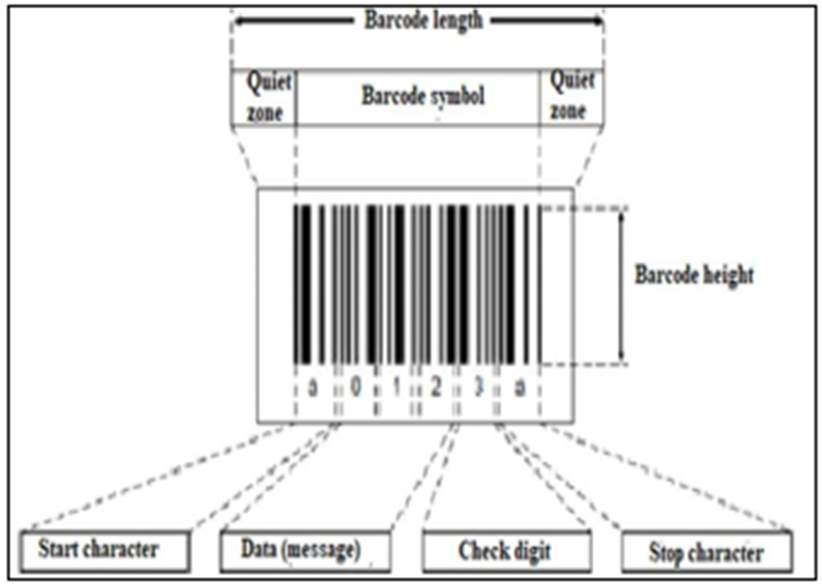
Figure 1: Components of the linear barcode [27].
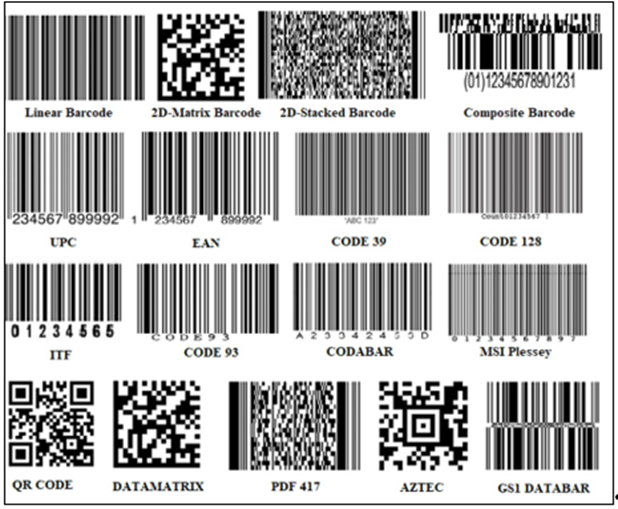
Figure 2: Image of important barcode topologies (linear and two-dimensional) [1, 2, 7, 8].
3.1 Linear Barcode Symbologies
In uninterrupted barcoding schemes, facts are encrypted by variable the widths and composition of bars and rooms. In most linear symbologies, the crest of the bars is not appropriate, except that few postal codes demand particular bar climax (such as the Australian Post 4-State Barcode or the USPS Intelligent Mail® Barcode) [7].
Linear barcode symbologies may be top-secret in this manner [1, 2]:
Discrete: In individual symbologies, characters are divided by scopes that are not few the encrypted dossier. These bury-type breaks contain pliable barcode lengths.
Continuous: Continuous symbologies encrypt data in an order without a bury-type breach. Characters contain two together bars and scopes, and a distinguished start and stop pattern is used to signify place the barcode starts and ends.
Two-breadth: Also known as two-breadth or binary-breadth barcodes, these use bars and rooms of two obvious widths: expansive and narrow. The exact breadth percentage can change but usually falls within a standard range [1, 2].
Multi-breadth: Some symbologies use diversified bar widths or various bar heights. For example, the POSTNET barcode uses unreasonable and short bars. Other twofold symbologies, like the CPC Binary Barcode, use the appearance or omission of bars to encrypt data.
Interleaved: In interleaved symbologies, pairs of digits are encrypted together. One number is depicted apiece bar and the difference for one space between bureaucracy. Interleaved 2 of 5 (ITF) is a prevailing model secondhand for wrap and management [1].
Common uninterrupted barcode types involve the Universal Product Code (UPC), which has differences like UPC-A and UPC-E; the European Article Number (EAN) plan with EAN-13, EAN-8, and connected layouts in the way that JAN-13, ISBN, and ISSN. UPC and EAN are usually in sale.
Other models involve:
Code 39: Common in automotive and explanation energies, appropriate for moderate dossier sizes.
Code 128: Highly flexible, secondhand in supply chains, shipping, and management.
Code 93: Used in production, management, and televisions.
Interleaved 2 of 5 (ITF): Suitable for the mathematical-only dossier, frequently secondhand in a bundle.
Codabar: Used in healthcare and atheneum. Variants involve Ames Code, NW-7, Monarch, Code 2 of 7, and ANSI/AIM BC3-1995.
MSI Plessey: Numeric-only, secondhand in retail.
GS1 DataBar: Includes plans like GS1 DataBar Omnidirectional, Stacked, Truncated, Expanded, and Expanded Stacked, primarily for sales and pharmaceuticals [1, 2, 7, 8].
3.2 Two-Dimensional Barcode Symbologies
Two-spatial (2D) barcodes store facts in two together-level and upright guidances, admitting bureaucracy to hold much more dossier than uninterrupted barcodes. 2D codes use patterns such as squares, dots, or hexagons organized in a gridiron. Some leading forms even sink data inside a countenance (like, DataGlyphs) [1]. Unlike uninterrupted barcodes, 2D barcodes cannot understand information by usual ray-of-light scanners but require figure-located scanners utilizing CCD or mathematical camcorder sensors [1, 9]. 2D barcodes can store quotations, site URLs, or additional particularized data. They have established accompanying traveling devices, as included cameras can surely leaf through bureaucracy and link to connect to the internet facts [1, 9].
Examples of 2D barcodes contain:
Matrix codes: Information is encrypted in a gridiron of dark and light dots. Common models are Maxi Code, Data Matrix, and QR Code® [7].
Stacked codes: These store data in diversified stacked rows of uninterrupted barcodes. Examples involve PDF417 and Code Block. PDF417 is established for administration and bureaucratic requests [1, 7].
2D barcodes in the way that QR Codes are average in sales, amusement, and shopping. The Data Matrix and Micro Data Matrix are established in television, healthcare, and government areas. The Aztec law, while more restricted in typical range than QR Codes, is secondhand in transport and healthcare [8].
3.3 Composite Codes
Composite barcodes integrate an undeviating barcode accompanying a joined 2D component. This approach admits the undeviating part to store basic information to a degree of brand labeling, while the 2D component holds a supplementary dossier to a degree of parcel numbers or demise dates. One model is the GS1 Data Bar Composite Symbology, which integrates two together factors to meet complex marking and traceability requirements in healthcare and supply chains [7]
4. AIDC, Barcoding, and Healthcare Settings
Using barcode electronics in healthcare dates returned to the Seventies. In the early 2000s, reviews emphasized excessive charges of restoration errors, hiking healthcare costs, and patient safety worries in addition raised the demand for barcoding as an active automatic identity and facts seize (AIDC) decision in healthcare backgrounds [10].
AIDC technology in healthcare includes the use of tool-legible data, commonly via barcoding. Barcode-based AIDC plans help humble treatment errors inwards and tending neighborhoods. By way of leafing through barcodes, healthcare execs can guarantee that the right medicine is executed to the right patient, at the right time or area, with the aid of manner of the right course, and at the proper part of the drug or different consumables. This reduces drug and transference errors and facilitates control of healthcare fees [11].
4.1 applications of Barcoding in Healthcare
Barcoding in healthcare is used in miscellaneous districts, consisting of the following [10]:
Blood example accumulation and transference protection: Healthcare professionals acquire ancestry, excretion, or added samples to decide conditions, screen well-being rank, and choose situations that have an effect. Accurate consequences believe incorrect-loose samples describing and following. Mistakes in sample labeling can bring about wrong test effects, misdiagnosis, or a vulgar state of affairs. Barcoding samples and ancestry brands facilitate weak labeling mistakes and enhance affected person security [10].
Surgical put in force pursuing and sterility: Barcodes are perhaps used to direct surgical agents and device interior procedure kits. This enables making certain that kits are massed by each physician’s priorities and that new components are diagnosed and remote from future kits. Barcode following authorizes hospitals to broaden provisions fillings, defeat waste, and control delivery charges. Similarly, barcodes on surgical mechanisms help confirm that each component has passed off effectively and absolutely cleanly [10].
Affected person identity: Barcoding drastically increases patient labeling and enables blocking drug errors by way of imparting correct, approachable information not pretty care. Barcoded wristbands incorporate patient information in a manner that records what came about, treatment records, and singular identifiers. This ensures decent care and accurate pursuit of therapy management, transfusions, sample organization, and different affected person care initiatives [10].
4.2 Barcoding policies and Healthcare systems
The renovation of barcoding in healthcare has aged substantially since 2000, pressured by the aid of production stakeholders and supervisory requirements. In 2001, the U.S. branch of health and Human offerings settled a patient protection task pressure. Therefore, the U.S. Food and Drug Management (FDA) needs ancestry container labels to include device-comprehensible statistics beneath 21 CFR 606.121(c)(13) [11].
California’s e-pedigree regulation and allied drug pedigree guidelines were devised to cope with the risks of counterfeit, misbranded, or deflected pills through serialization and direction-and-hint schemes [16]. In 2008, eastern specialists administered that each drug emblem be marked with a Japan Article Number (JAN) or a worldwide alternate item wide variety (GTIN®) to guarantee emblem traceability [17]. The European Union’s Falsified Drugs Directive (Directive 2011/62EC) demands serialization and proof to fight counterfeit treatment plans. By using February 2019, all developers, distributors, and dispensers within the ecu were important to obey these traceability requirements [18].
In France, the club Inter Pharmaceutiques 13 (CIP 13) systematizes device demands that each drug quantity comprise a barcode conserving the CIP13 rule, package deal wide variety, and demise date on wrap. Manufacturers should enforce suitable serialization and ship answers using uninterrupted barcodes, subordinate barcodes, or RFID [19].
In India, the Directorate Fashionable of Overseas Exchange (DGFT) circulated an announcement on January 10, 2011, authorizing the use of a direction-and-trace association including barcoding for all pills and drug merchandise exported from India. This necessity applies to all ranges of package deals [20]. This management helps a healthy traceability association fight to copy and guarantee commodity completeness throughout the whole of the delivery chain — from producers and wholesalers to exporters, healthcare vendors, and patients [20].
A key mission in executing these measures is the uniformity of branding and proof throughout result traces. Compliance accompanying traceability handling demands commodity serialization at the subordinate packaging level. Serialization assigns a novel particular identifying range for each tool component, similar to information within the way that end date and series or lot number. This authorizes the pursuit of each crop for the duration of the whole charm lifecycle — from trade to application and disposition — making sure affected person protection and supervisory compliance throughout borders [20].
5. Barcode Symbols Used in Healthcare Settings
5.1 ITF-14
The ITF-14 is a 14-number barcode used to label professional parts at various packaging levels. It encodes the GTIN-14 (Global Trade Item Number) and establishes the Interleaved 2 of 5 hint [7].
5.2 Pharmacode (Laetus-Code®)
The Pharmacode, developed by Laetus®, is specifically designed for drug manufacturing. It uses distorted bars to show mathematical values and is generally secondhand for bundle control and label proof in drug results. Pharmacode regularly performs alongside the human-understandable text, accompanying data encrypted straightforwardly in a group of judges' patterns. It may be configured as a alone-path or multi-path law [7].
5.3 Pharma Zentralnummer (PZN)
The Pharma Zentralnummer (PZN) uses Code 39 as its base hint and is trained by Informationsstelle für Arzneispezialitäten GmbH in Germany. It involves a single check number, and the human-readable layout continually displays the prefix “PZN-,” which is not encoded in the barcode itself [7].
5.4 Pharmacy Product Number (PPN) Code
The PPN Code, too governed by Informationsstelle für Arzneispezialitäten GmbH, offers the PZN scheme by providing everywhere singular brand codes for pharmaceuticals. It integrates existent nationwide systems, in the way that the German PZN, into a patterned worldwide layout [7].
5.5 NTIN Code
The National Trade Item Number (NTIN) is outlined by GS1 as a singular worldwide word that modifies a noun for a drug brand. It also integrates governmental systematized wholes, to a degree the PZN in Germany, into a patterned plan for worldwide traceability [7].
5.6 QR Code®
The QR Code® (ISO standard) — as known or named at another time or place QR Code 2005 — is almost identical to the original Japanese JIS standard. It varies for the most part in lineaments to a degree of support for integrity encrypting, reflectance transposition (light characters on a dark education), and possible error adjustment adaptations. QR Codes are usual for encrypting URLs, parcel numbers, and additional data in healthcare and drug bundles [7].
5.7 GS1 DataBar Symbologies (Reduced Space Symbologies - RSS Codes)
The GS1 Data Bar family was grown by GS1 to encrypt the GTIN® (Global Trade Item Number) and additional dossier items for effective labeling of work parts during the whole of the supply chain (see Figure 3(A)). Using a GTIN® guarantees that each brand alternative has a singular word that modifies a noun, which helps claim traceability from the maker completely user [21].
A GTIN®: Uniquely recognizes a brand or work part.
Is encrypted in a barcode character for electrical scouring. May hold 8, 12, 13, or 14 digits. For supervisory compliance, GTINs for basic wrap levels are encrypted in a 14-number plan utilizing a GS1 Data Matrix or GS1 Data Bar.
A GTIN® is conceived utilizing:
(See Figure 3(A)) [20].
Common GS1 Data Bar Symbologies involve:
GS1 Data Bar (RSS): Not a separate hint but a numbering arrangement utilizing GTIN® and request identifiers. It uses a guest name and wrap sign, understood apiece EAN-13 base number, and a calculated check number [7].
GS1 Data Bar Truncated (RSS-14 Truncated): A smaller rendition of GS1 Data Bar. Its decreased climax limits omnidirectional scouring [7].
GS1 Data Bar Limited (RSS Limited): Similar to GS1 Data Bar but more condensed; it is restricted to wrap signs 0 or 1 [7].
GS1 Data Bar Stacked (RSS-14 Stacked): The symbol is split into two shapely rows to humble breadth, secondhand for branding narrow articles like drug bundle. Omnidirectional scanning is not backed [7].
GS1 Data Bar Stacked Omnidirectional (RSS-14 Stacked Omnidirectional): Similar to the shapely adaptation but created for omnidirectional thumbing through [7].
GS1 Data Bar Expanded (RSS Expanded): A changeable-distance letter that can encrypt until 74 numeric or 41 alphanumeric types utilizing request identifiers. Supports omnidirectional flipping through [7].
6. GS1 Composite and prolonged Data Bar Symbologies
GS1 Data Bar increased Stacked (RSS extended Stacked): That is a shapely interpretation of the GS1 Data Bar multiplied expression by way of images. The number of dossier slices in keeping with the row can range from 4 to 22 [7].
GS1 Data Bar Composite Symbology: A GS1 Data Bar letter linked accompanying a supplementary ---spatial aspect (CC-A or CC-B) that encodes extra facts to a point component wide variety, component, and dying date [7].
GS1 Data Bar Truncated Composite Symbology: A GS1 Data Bar Truncated barcode accompanying an ascribed 2nd factor (CC-A or CC-B) [7].
GS1 Data Bar constrained Composite Symbology: A GS1 Data Bar constrained barcode related accompanying a 2nd element (CC-A or CC-B) for additional dossier [7].
GS1 Data Bar Stacked Composite Symbology: A GS1 Data Bar Stacked barcode accompanying a related 2d element (CC-A or CC-B) [7].
GS1 Data Bar Stacked Omnidirectional Composite Symbology: A GS1 Data Bar Stacked Omnidirectional barcode linked accompanying a second object (CC-A or CC-B) [7].
GS1 Data Bar extended Composite Symbology: A GS1 Data Bar expanded barcode accompanying a second thing fastened (CC-A or CC-B) [7].
GS1 Data Bar expanded Stacked Composite Symbology: A GS1 Data Bar accelerated Stacked barcode accompanying a supplementary 2d component (CC-A or CC-B) [7].
GS1-128 Composite Symbology: A GS1-128 barcode accompanies an affiliated second factor (CC-A, CC-B, or CC-C) for encrypting extra records [7].
5.8 Health Enterprise Bar Code (HIBC)
The Health Enterprise Bar Code (HIBC) is a patterned systematized scheme grown for one fitness industry business Communications Council (HIBCC). It is a numbering shape instead of a selected barcode hint and is secondhand for merchandise labeling and worldwide pursuing of healing schemes and healthcare shipments.
HIBCC determines two important describing principles: The HIBC dealer Labeling trendy (HIBC SLS) — covers layouts secondhand by means of manufacturers and providers of healthcare products [23]. The HIBC company programs well-known (HIBC PAS) — cover plans secondhand through healthcare providers for within branding [23]. HIBC codes are certified by one ANSI and the eu Committee for Standardization (CEN). The HIBCC is similarly an authorized emitting instrumentality for the precise device identity (UDI) application of us FDA [23, 24].
Key HIBCC components and structures:
The HIBCC UDI structure: The HIBCC UDI (precise device Identifier) holds 4 components [25]:
Those fundamentals together form the primary file building. for instance, a widespread HIBCC barcode like +A123ABCDEFGHI1234567891 involves all important additives (visualize determine-3B)) [25]. Producers can conceive miscellaneous HIBC LIC and PAS symbologies installed in this dossier makeup. The itemized substances are summed up under:
| Identifier | Data Type | DB Field Size | Example Data |
|---|---|---|---|
| Device Identifier (DI) | Fixed Character | 1+ | — |
| Labeler Identification Code (LIC) | Alphanumeric | 4 | A123 |
| Product or Catalog Number (PCN) | Alphanumeric | 1–18 | ABCDEFGHI123456789 |
| Unit of Measure Identifier (U/M) | Numeric | 1 | 1 |
| Check Character Mod 43 (C) | Alphanumeric | 1 | E |
Table 1: Components of the HIBCC UDI Data Structure
| Based on the Symbology (Data Carrier) | Name of the HIBC Symbology | LIC | PAS |
|---|---|---|---|
| Code 128 (1D) | HIBC LIC 128 | ✓ | ✓ |
| Code 39 (1D) | HIBC LIC 39 | ✓ | ✓ |
| Data Matrix (2D) | HIBC LIC Data Matrix | ✓ | ✓ |
| QR Code (2D) | HIBC LIC QR Code | ✓ | ✓ |
| Aztec Code (2D) | HIBC LIC Aztec Code | ✓ | ✓ |
| PDF417 (2D) | HIBC LIC PDF417 | ✓ | ✓ |
| MicroPDF417 (2D) | HIBC LIC MicroPDF417 | ✓ | ✓ |
| Codablock F (2D Stacked) | HIBC LIC Codablock F | ✓ | ✓ |
Table 2: HIBC LIC and PAS Symbologies Generated Using the Primary Data Structure [7]
Online or Inline Printing: Online or inline publication refers to the publication arrangement where the publication and request structure is redistributed on the result and packaging line itself. This order may straightforwardly belong to an application or enterprise ability preparation' plan that creates and prints barcodes in the resulting process for primary, subordinate, and after-second bundle levels [20].
Offline Printing: Offline publication refers to the publication method place the publication and describing process is accomplished post-result for all levels of packaging that is to say use of the preprinted barcode label [20].
Preprinted barcode labels endure various disadvantages like limited flexibility and impropriety for the addition of changeable consumer data or consolidations of text and barcode news. Ordering preprinted barcode labels from duty bureaus is beneficial and advantageous in movements that demand only a low capacity of equal labels significance established and non-changeable dossier, often accompanying thorough use of colors or drawings. Organizations accompanying uses needing high-capacity responsibility-fault-finding labels will find on-demand barcodes value the beginning expenditure associated with the additional profit from the publication of customized facts on each label. If they have barcoding structures, can order preprinted labels with the inevitable color, drawings, or standardized paragraph (like return addresses on ship labels); bound for augment through a barcode printer to sustain customized labels accompanying changing facts [3].
While utilizing preprinted or plain labels, television selection is fault-finding to the benefit of some barcode unification. The news forms a variety of strips, paper, artificial labels, and tags. However, barcode requests engage the extent of a being's life of the label, and the atmosphere to which the label will be made public all have a direct effect on new elections. It is more reasonable to pre-test a variety of radios in a request before buying bureaucracy all-inclusive quantities [3].
6. Barcode Printing Technologies
Various printing electronics are possible for barcode publication. Following are a few of the ultimate prevailing printing electronics secondhand inside the AIDC manufacturing (apply Figure-4) [3, 20]:
Barcodes concede the possibility be impressed on differing packaging levels utilizing two main publication forms [3, 20]:
a. Online (Inline) Printing: Online or inline publication refers to publication and branding directly on the result and wrap line. This plan is frequently unspecified as an integrated production or bundle process that creates and prints barcodes in physical periods for basic, secondary, and after-second bundle levels [20].
b. Offline Printing: The offline publication refers to creating and asking for barcode labels separately, subsequently, the resulting process, utilizes pre-impressed labels. Pre-impressed labels offer benefits for applications that demand limited quantities of alike, established-content labels, particularly when color or drawings are included. However, they have restraints for changing dossier needs.
Organizations accompanying taller labeling demands benefit from on-demand publication resolutions, that substantiate the primary loan by enabling a made-to-order dossier on each label. For assorted approaches, associations can order pre-impressed labels with motionless parts (for example, trademarks, color borders, or return addresses) and therefore increase variable data accompanying their barcode printers [3].
When utilizing either pre-impressed or blank labels, selecting the correct label material is critical to barcode stamina and readability. Substrate alternatives contain paper, artificial fabrics, and miscellaneous adhesive tags. Factors in the way that label old age and uncovering material environments directly influence material options. It is recommended to pre-test fabrics in original-world environments before buying big quantities [3].
6.1 Barcode Printing Technologies
A type of publication sciences is available for bearing barcode labels. Commonly secondhand electronics in the AIDC manufacturing involve (see Figure 4) [3, 20]:
Dot Matrix Printing, Inkjet Printing, Laser Printing, Thermal Printing
6.2 Barcode Printing Technologies
Various publication electronics are free to create barcode labels. Common methods secondhand in AIDC manufacturing involve dot model publication, inkjet publication, laser publication, and warm publication (visualize Figure 4) [3, 20].
Dot Matrix Printing: Dot origin machine for printing by beautiful ink decoration accompanying an attach or beat device to transfer sign onto the label or paper substrate (visualize Figure 4) [3].
Advantages [3]:
Limitations [3]:
Inkjet Printing: Inkjet publication is performed by throwing tiny beads of the sign upon the substrate outside the tangible contact middle from two points the typesetter and the label (see Figure 4) [3, 20]. Inkjet plans are top-secret into two main types:
Continuous Inkjet Printing: Produces an unending stream of sign beads that are electrically loaded and deflected by an electrostatic field, addressing drops to the substrate or reusing bureaucracy back into bureaucracy [3, 20].
Drop-on-Demand Inkjet Printing: Uses sign beads only when wanted, making it suitable for extreme-judgment publication [3, 20].
Advantages [3]:
Limitations [3]:
Inkjet plans may be slow and demand orderly support to guarantee consistent print status and hinder clogging. High-competency inkjet orders are priceless to establish and cannot be practical for narrow or reduced-book requests. Dot installation veracity and barcode resolution may be restricted on account of surface motion and sign splash. Water-located inks can smudge, streak, or fade when unprotected to dampness. Glossy inks can indicate light and weaken scanning in of documents' readability, exceptionally on dark backgrounds. Poor contrast can influence illegible barcodes [3]. A careful draft of thumbing through supplies should ensure a trustworthy barcode examination.
Laser Printing: Laser publication is an electrostatic mathematical publication process that produces barcode labels accompanying high judgment and print features (visualize Figure 4) [3, 20].
Advantages [3]:
Limitations [3]: Laser printers are not ideal for extreme-capacity mechanical branding. They concede the possibility fight with the publication's small or narrow labels and maybe high-priced on account of toner and supply costs. Toner-located prints are exposed to flaking or smudging when controlled frequently. Label adhesive must bear the heat and pressure of the ray of light typesetter’s fuser whole. Printed barcodes are not innately opposed to chemicals, scrapes, or dampness.
Thermal Printing: The thermal publication is the ultimate established electronics for dedicated barcode label results. The two main warm publication procedures are direct warm and warm transfer (visualize Figure 4) [3, 20]. Thermal printers are reliable across differing uses, containing point-of-auction schemes, changeable label sizes, graphics, pliable fonts, and extreme-determination barcodes — all accompanying depressed functional costs and compact design.
Direct Thermal Printing: Direct warm book makes use of warmth-impressionable cloth that unlit whilst it passes under the heated printhead — doing away with the need for signal, toner, or stripe (visualize discern 4) [3, 20].
Advantages [3]:
Barriers [3]: Direct warm prints are very wakeful referring to practices or guidelines that do not negatively have an effect on the environment environments within the way that warmth and mild — prolonged exposure can evapoextremely good the print. Media secondhand winding heat publication debris chemically alive, so labels may demand coating or securing coatings to withstand UV uncovering, chemical compound, and scrape.
Thermal switch Printing: Thermal transfer e-book makes use of warmth to switch ink from a bow to the label floor, bearing sturdy, 2927099c7129e5e67b031f9eb65b6349 figures (visualize figure 4) [3, 20].
Advantages [3]:
Obstacles [3]: Calls for decoration, that growth delivers fees prominent to direct thermal publication. Unmarried-use stripes produce waste and are much less recyclable, rather whilst most effective incompletely secondhand. Both the bow and label cloth ought to be carefully doubled to guarantee the foremost print characteristic.
Discern 4:
instance: working regulation of regular barcode booklet electronics — dot matrix, inkjet, a ray of mild, direct warm, and warm switch.
6.3 Deciding on the proper Printer
Deciding on the proper barcode typesetter is extra natural than it concede possibility seems. By way of expertise in your unique barcoding requirements and work surroundings, you could lower your alternatives successfully [3]:
7. Automatic Identification and Data Capture (AIDC)
Automatic Identification and Data Capture (AIDC) everything by designating a singular barcode to a product or material. When thumbed through, the barcode optically encodes and transmits data to a calculating method. Linear barcodes are started using a ray of light scanners, that sweep a light beam across the barcode in a sole transfer to discover the pattern of light and dark elements. Dark bars indicate less light than the silver scopes, and the mirrored light is discovered by an optical sensor and converted into energetic signals, that are before decoded into available data [2, 26]. Laser flipping through accompanying diversified passes can again be secondhand for reading shapely symbologies [1].
Most 2D barcodes demand a concept-located scanning of documents, which captures a mathematical exact likeness of the character and processes it utilizing included software to decipher the dossier. Image scanners function like compact mathematical cameras accompanying joined processors and can capture both impressed barcodes and on-screen codes. They usually combine orders by way of USB, PS/2, or serial ports [1, 2, 9, 26].
Barcode scanners enter the place in differing forms, containing handheld, hands-free, established-rise, mobile dossier terminals, pen-type, or rod scanners. Broadly, scanners may be classified as rays of light barcode scanners or image-located barcode scanners. Figure 5 shows instances of usually secondhand barcode scanners [26].
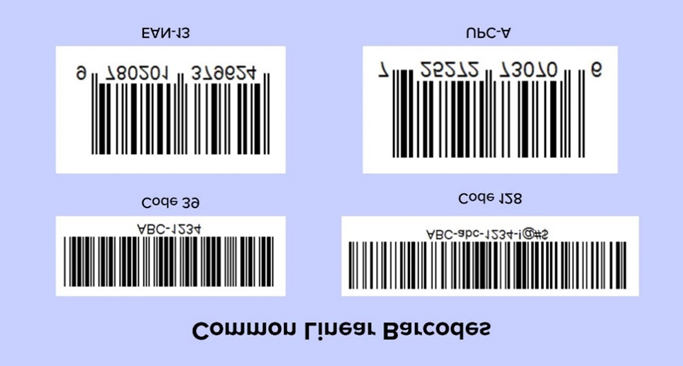
Figure 5: Common types of barcode scanners.
7.1 Laser Barcode Scanners
Laser barcode scanners are the ultimate common type, economical, and acceptable for standard 1D barcodes. They use either alone-line (undeviating) or omnidirectional leafing through patterns. Omnidirectional laser scanners admit the barcode expected scoured at differing angles outside precise adjustment, making the ruling class more available than uninterrupted-only scanners. However, rays of light scanners cannot read 2D barcodes, as these demand figure capture [1, 26].
7.2 Image Barcode Scanners
Image-located barcode scanners are more leading than rays of light scanners. They use ocular sensors and digital images to capture and decipher barcodes. These scanners fit learning two together 1D and 2D symbologies and are widely available in a range of prices and configurations [26].
7.3 Handheld Linear Scanners
Handheld barcode scanners are conducted manually for one consumer. They are usually created with a shotgun-style grip and generate smooth incitement. Some handheld scanners create built-in operating plans — as known or named at another time or place traveling calculations — and grant permission to support wired or Wi-Fi movement. They can state 1D or 2D barcodes and are frequently agreeable with smartphones or tablets by way of Bluetooth or USB [2].
7.4 Mobile Barcode Scanners
Mobile barcode flipping through uses smartphones or tablets as scanners through loyal apps. These apps influence the device’s included camera to thumb through miscellaneous symbologies, containing 1D, 2D, and QR codes [26].
7.5 Barcode Scanner Selection Criteria
The following determinants help delineate specific necessities when selecting a barcode scanning of documents [9, 26]:
Typical scouring points include:
Receiving merchandise from manufacturers.
Pick-and-pack movements in dispersion centers.
Receipt at the dealer or healthcare householder.
Inventory management and pursuing.
8. Quality Control of Barcodes
To implement AIDC science accompanying high dependability, manufacturers and consumers must demonstrate schemes to inspect and confirm barcodes. Quality control guarantees barcodes meet consumer and regulatory necessities for thumb through acting. Verification includes experiment barcode scannability and character-established acknowledged standards [1, 27].
For uninterrupted barcodes, key test limits involve edge contrast, minimum edge contrast, symbol contrast, timbre, bury-personality breach, defects, and decodability. For 2D symbols, limits contain character contrast, modulation, decodability, wrong discipline, pattern damage, gridiron non-uniformity, and principal non-harmony. Based on these tests, barcodes sustain ANSI grades from 0.0 to 4.0 (F to A) or a pass/fail score [1].
8.1Barcode Verification
Barcode proof guarantees readability, however, the one scanning the implication, again specifies a response on the condition of barcodes with ruling and reconstructing the barcode result process. Barcode proof conceptualizes 'Standards-Based Quality Measures', which is the process of confirming the dossier content plan inside the barcode meets particular use principles also the print feature of a barcode utilizing ISO, IEC, and/or ANSI principles [27].
As per ANSI standards, the3 barcodes are sorted by accompanying note grades A, B, C, D, and F. Relating feature A is the best and F is rude. The ISO/IEC standard supplies mathematical grades that range from 4.0 to 0.0. The grade 4.0 is topmost characteristic while 0.0 is a hostile value. The ISO grades provide a larger dossier granularity equating to ANSI grades. ISO/IEC 15416 standard covers 1D barcodes as long as ISO/IEC 15415 covers 2D barcodes. An ISO score of 1.5 and an ANSI grade of C is deliberate 'passing' for most uses. There also request-distinguishing principles, like the GS1 General Specifications or Mail Mark for the UK Post Office. These methods bear their requirement that may be habitual by way of barcode proof [27].
8.2Barcode Validation
Barcode confirmation reinforces that the correct barcode information is used to the correct amount is an idea of equaling the right dossier to the right product. The confirmation process granting permission involves inspecting the magnitude of the barcode and its position on the things produced/bundled, and guaranteeing the one-wrap components are non-interfering with scouring. Barcode confirmation grant permission involves evaluations of subsequent use (abuse) testing limits to a degree light part of every 24 hours, scrape, impact, dampness, etc. The barcodes are ratified according to the rules constituted by the association operating the confirmation [1, 27].
8.3Verification and Validation of Barcodes
Barcodes play an increasingly important part in the AIDC process, in various activities. For guaranteeing that extremely important factors the barcodes are usually expressed and hold the correct dossier. Barcode-proof processes use standards located measures to guarantee that the barcode may be expressed accompanying some scanner at some locale. In the added help barcode confirmation ensures that the right barcode label or mark has existed used on the right device, and holds the right dossier. The unification of barcode verification and confirmation is the action for 'Mission-Critical Quality Control' in branding and result processes [27].
Comparing proof validation does not understand tight or delimited principles but is equally important to guarantee the fame of a barcode marking/ designating program. If the barcode is encrypted accompanying an incorrect dossier and/or is used for the wrong article or whole, skilled could be any of functional breakdowns like erroneous shipments, returns, repackaging, charge back, and added expensive errors. The results of the confirmation test are more emotional in type, and certainly cannot guarantee the scannability of the barcode. A poorly printed barcode keeps passing a confirmation test, as it holds the right dossier, but will forsake a proof test. The points on barcode verification against barcode confirmation bestowed accompanying Table 3 [27].
In the field of drug and medical design, and the healthcare scene the results of poorly describing are even more fault-finding. For example, in the retail subdivision, the wrong description of a drug or healing device, that is to say, produce labels accompanying the wrong barcode dossier, can affect demand and appropriateness or influence brand recall [27].
Barcode Verification
Barcode Validation
Ensures print quality and scannability of the
barcode.
Evaluates the accuracy of the barcode data and correctness of label and labeling the
product.
The process is standards-based.
The process is subjective and based on the requirements of the user/company/regulations.
Requires purpose-built verification systems.
Can be performed using any scanning equipment.
8.4 Barcode Verification
Barcode proof guarantees that a barcode may be reliably thumbed through and meets print character guidelines. It includes determining whether the encoded dossier and print feature obey particular mechanics guidelines such as ISO, IEC, and ANSI [27]. According to ANSI flags, barcodes are sorted A, B, C, D, or F, accompanying A being the best choice feature and F rude. ISO/IEC standards use mathematical scores grazing from 4.0 (maximal) to 0.0 (shortest). ISO ranking supports finer granularity than ANSI. For uninterrupted barcodes, ISO/IEC 15416 applies; for 2D barcodes, ISO/IEC 15415 is secondhand. Typically, an ISO grade of 1.5 or an ANSI grade of C is deliberate a display an attitude most uses. Industry-distinguishing standards to a degree the GS1 General Specifications or the UK Post Office’s Mailmark concede the possibility of more requests [27].
8.5 Barcode Validation
Barcode confirmation guarantees that the correct data is encrypted on the correct merchandise. This process checks the veracity of the barcode content, allure amount, placement on the bundle, and whether the label interferes with accompanying leafing through. Validation can likewise include staying power tests to a degree uncovering light, scrape, impact, and liquid. Validation is a completed activity according to the rules set by apiece institution or appropriate supervisory guidelines [1, 27].
8.6 Verification vs. Validation
Barcodes are fault-finding in AIDC processes. Verification ensures that a barcode meets feature flags for flipping through, while confirmation validates that the right barcode has existed correctly used and holds the correct dossier. Together, proof and confirmation form the endowment of responsibility-critical control of product quality in branding and brand following [27].
Key dissimilarities:
Verification trails technical principles and uses specific supplies to test print kind and scannability.
Validation checks whether the right data is connected to the right crop; it may be acted utilizing some scanning design and is more emotional.
A barcode manages to pass confirmation but forsake proof if, for example, it holds the correct dossier but is poorly impressed and illegible. This can bring about priceless errors to the degree of wrong shipments, crop recalls, and agreement defeats — which are especially fault-finding in healthcare [27].
Barcode Verification Barcode Validation
Ensures print characteristics and scannability. Ensures the veracity of data and decent branding.
Standards-based process. The process depends on consumer or party necessities.
Requires hard-working proof supplies. Can use general flipping through supplies.
| Aspect | Proof | Confirmation |
|---|---|---|
| Definition | Conclusive evidence that establishes a fact beyond doubt. | Supporting evidence that increases confidence in a claim, but may not be absolute. |
| Level of Certainty | Provides certainty and finality. | Provides partial assurance, often provisional. |
| Use in Science/Research | More common in mathematics and formal logic where absolute proofs are possible. | Common in empirical sciences where hypotheses are confirmed by accumulating evidence. |
| Nature | Deductive and absolute. | Inductive and probabilistic. |
| Example | A mathematical theorem proven through logical steps. | Experimental results that confirm a theory but do not prove it definitively. |
| Possibility of Refutation | Once proven, it remains valid unless an error is found in the logic. | Can be refuted or revised as new evidence emerges. |
Table 3: Difference between Proof and Confirmation
8.7 Barcode Verifier Standards
Barcode verifier standards are outlined by ISO/IEC 15416 (for undeviating barcodes) and ISO/IEC 15415 (for 2D letters). The earlier flags — ISO/IEC 15426-1 (undeviating) and ISO/IEC 15426-2 (2D) — have been fired. The European standard EN 1635 has again existed out-of-date by ISO/IEC 15416. The original US proof standard was ANSI X3.182 (for UPCs in the US, ANSI/UCC5). As of 2011, ISO’s occupied group JTC1 SC31 developed ISO/IEC TR 29158 for direct part designating [1].
A sort of proof and confirmation answers are feasible, at different price points and levels of complicatedness. Organizations concede the possibility of inquiring expert recommendations to select the right plan for their industry and merge it accompanying their description and control of product quality processes [27].
9. Healthcare Settings and AIDC Concerns
Although barcodes and added AIDC sciences are widely accepted as essential finishes in healthcare, various concerns limit their use in dispassionate practice [10]:
Key concerns include [10]:
10. Future of AIDC in Healthcare Settings
Barcodes, as AIDC electronics, are a fundamental component of the drug security foundation mandated by managers in general. Among differing barcode symbologies, 2D barcodes can encrypt considerably more dossier while using less room than established undeviating barcodes. This upgrades veracity and fullness when the encoded dossier is salvaged by thumbing through. 2D barcodes too allow more trustworthy tracking of Product Identification Data (PID) for supervisory frames and help healthcare providers assert correct, complete news about stock and the management of pharmaceuticals, healing maneuvers, and accompanying healthcare production [10, 14].
The current in healthcare is apparently shifting toward adopting 2D barcode symbologies to address the restraints of uninterrupted barcodes and meet increasing dossier demands. Current directions approve that Product Identification Data, such as the National Drug Code (NDC), portion number, and demise date, contribute to a distinct 2D barcode on drug bottles and syringes. Traditionally, this data has been manually filed into Electronic Medical Records (EMR) or Immunization Information Systems by healthcare stick. The growing use of smartphones for barcode thumbing immediately plays an important function in the growth of traveling well-being (mHealth) requests [10, 14].
Looking before, barcoding will remain a mature, trustworthy science inside healthcare to increase patient security. However, skilled is growing interest in alternative AIDC sciences, to a degree Radio Frequency Identification (RFID). Despite its potential, barcoding will stretch to be established alongside RFID on account of its dependability, extensive ratification, and cost influence. In many synopsizes, barcoding (two together 1D and 2D) offers clear advantages over lifeless RFID, particularly for experienced tasks [1, 10]:
Barcoding is considerably less expensive than RFID, it must become more inexpensive to clash widely. Barcodes are better adapted for sketches place the operator is fixed and the object is traveling — for instance, in ancestry sample accumulation and description.
Healthcare organizations endure:
Promote the approval of 2D barcoded output and merge bureaucracy into their workflows. Upgrade operating system systems to support 2D barcode dossier capture. Ensure healthcare IT hawkers combine a 2D barcode range of capabilities into EMRs and accompanying plans. Train staff on the decent use of 2D barcode scanners and conduct routine audits to ratify the scanning of document veracity. Develop patterned thumbing through protocols and purchase unending preparation to maintain agreement and be dramatic in the benefits of barcoding [14].
Objective: The objective of this research is out judging the impact of achieving drug barcoding on patient security in a particular healthcare setting, to a degree a crisis area or a person being treated for a medical problem hospital.
Study Design: An anticipated, practical study design was secondhand. Data were composed two together before and following in position or time the exercise of the drug barcoding structure to compare consequences.
Participants: The study contained all subjects taking cures inside the chosen healthcare scene all the while the study ended, containing inpatients, outpatients, and danger area patients.
Intervention: The mediation complicated describing cure bundle accompanying unique barcodes holding essential news in the way that drug name, portion of drug or other consumable, and finish date. Healthcare providers secondhand barcode scanners to verify drug presidency.
Data Collection: Data were composed of photoelectric fitness records, medication presidency logs, occurrence reports, and patient surveys. This contained facts on cure wrongs, adverse drug occurrences, and patient delight.
Variables: The basic effect measures were the rates of drug mistakes and adverse drug occurrences before and afterward executing drug barcoding. Secondary consequences contained patient satisfaction scores and healthcare householder duties and responsibilities.
Analysis: Statistical reasoning contained US city-square tests or Fisher’s exact tests for explicit variables and t-tests or Mann–Whitney U tests for continuous variables. Multivariate reversion reasonings were transported to regulate potential confounders.
Quantitative Findings: After achieving drug barcoding, cure error rates discontinued from 2.5% to 0.8% (p Less-than 0.001), and unfavorable drug occurrences diminished from 1.2% to 0.5% (p = 0.003).
Qualitative Findings: Healthcare providers stated better confidence in cure veracity and discounted drug-connected stress. Patients expressed greater delight accompanying enhanced security measures.
Subgroup Analyses: Subgroup reasonings by age, diagnosis, and cure complicatedness demonstrated regular reductions in drug wrongs across all groups.
Adverse Events: No significant increase in different antagonistic occurrences was noticed subsequently after exercise.
Interpretation: These findings accompanying earlier studies show that drug barcoding considerably reduces cure errors and helps patient security.
Mechanism: Barcoding increases veracity by providing palpable-occasion verification of drug facts, lowering confidence in manual checks.
Limitations: Limitations involve the potential underreporting of drug wrongs and adverse occurrences, in addition to the failure to evaluate general sustainability.
Future Directions: Future research should try the scalability and cost-influence of drug barcoding in various healthcare atmospheres. Qualitative studies take care of investigating healthcare providers’ and patients’ outlooks on barcoding electronics.
The accomplishment concerning this research would not have happened likely without the gifts and support of many things and organizations. I am intensely nice to my tutors, Dr. Naweed Imam Syed (Department of Cell Biology, University of Calgary) and Dr. Sadaf Ahmed (Head, Psychophysiology Research Lab, University of Karachi), for their invaluable counseling and support during the whole of the project.
Summary: Pharmaceutical barcoding significantly reduces drug wrongs and unfavorable drug occurrences, improving patient security in healthcare settings.
Clinical Implications: Healthcare organizations concede the possibility select drug barcoding as a standard practice to develop drug safety and patient consequences.
Policy Recommendations: Policymakers plan out expenditures in fitness data processing infrastructure to support the extensive exercise of drug barcoding wholes.
Final Thoughts: Continued exertions to institute and restore medication security practices — containing the unification of sciences in the way that barcoding — are essential for transferring safe, excellent patient care.
The author declares no fiscal or individual interest that manages to influence the whole report.
The authors reveal no conflicts of interest.
No capital was taken for the incident concerning this book.
“I would like to express my sincere gratitude to Ms. Sarah Jacobs, Editorial Coordinator of the IJCCR, for her excellent collaboration and exceptional support throughout the entire process, from article submission and peer review to financial matters and successful publication. Everything went very quickly and smoothly. I would also like to thank the reviewers, whose comments were helpful and contributed to an even better article. I wholeheartedly recommend this deservedly renowned journal to my colleagues for publication.” Best regards, Andreas Schapowal.

Dear Editorial Team, Clinical Medical Reviews and Reports. My experience with the journal was highly positive. The peer-review process was rigorous, constructive, and completed in a timely manner. The reviewers provided valuable comments that helped improve the quality and clarity of our manuscript. The editorial office was professional, responsive, and supportive throughout all stages of the publication process. Communication was clear and efficient, and any questions were addressed promptly. Overall, I found the journal to maintain high scientific standards and an excellent publication workflow. I would be pleased to consider submitting future work to this journal. Best wishes from, Elena Popa.

It was my pleasure to submit my testimonial concerning the Reviewer Board of our Scientific Journal “Brain and Neurological Disorders”. The Reviewers focused on some modifications and their contribution was helpful. The ladies of our Editorial Office were also supported my efforts. It was my honor to have such a co-operation and I am looking forward for more collaboration.

Dear Grace Pierce, Editorial Coordinator of Journal of Clinical Research and Reports, Thank you for the speedy and efficient peer review process. I appreciate the fact that your peer reviewers do not take months to respond like with some other journals. I would also like to thank the editorial office for responding quickly to my questions. It is an excellent journal. I plan to submit more manuscripts in the future. Best wishes from, Robert W. McGee

Dear Grace Pierce, Editorial Coordinator of Journal of Clinical Research and Reports, Working with you and your team on our recent publication in JCRR has been a truly wonderful and enjoyable experience. The responses were prompt, and the reviewers were patient, constructive, and highly professional. One reviewer in particular gave me the feeling that a professor was carefully reading and commenting on my coursework, which was deeply touching. The entire process was straightforward and hassle‑free, with no tedious online forms to complete. I highly recommend this journal. Best wishes from, DR Aibing Rao, Head of R&D

I Appreciate the Opportunity to Share my Experience with the Journal of Clinical Research and Reports. The peer review process was timely and constructive, and the feedback provided helped improve the quality of our manuscript. The editorial office was professional, responsive, and supportive throughout the process, ensuring smooth communication and efficient handling of the submission. Overall, it was a positive experience collaborating with your team.

Dear Mercy Grace, Editorial Coordinator of Obstetrics Gynecology and Reproductive Sciences, We would like to express our gratitude for your help at all stages of publishing and editing the article. The editors of the magazine answer all the necessary questions and help at every stage. We will definitely continue to cooperate and publish other works in the Obstetrics Gynecology and Reproductive Sciences! Best wishes from, Alla Konstantinovna Politova,

Dear Maria Emerson, Editorial Coordinator of International Journal of Clinical Case Reports and Reviews, What distinguishes International Journal of Clinical Case Report and Review is not only the scientific rigor of its publications, but the intellectual climate in which research is evaluated. The submission process is refreshingly free of unnecessary formal barriers and bureaucratic rituals that often complicate academic publishing without adding real value. The peer-review system is demanding yet constructive, guided by genuine scientific dialogue rather than hierarchical or authoritarian attitudes. Reviewers act as collaborators in improving the manuscript, not as gatekeepers imposing arbitrary standards. This journal offers a rare balance: high methodological standards combined with a respectful, transparent, and supportive editorial approach. In an era where publishing can feel more burdensome than research itself, this platform restores the original purpose of peer review — to refine ideas, not to obstruct them Prof. Perlat Kapisyzi, FCCP PULMONOLOGIST AND THORACIC IMAGING.

Dear Reader: We have published several articles in the Auctores Publishing, LLC, journal, Clinical Medical Reviews and Reports in recent years (CMRR). This is an ‘open access’ journal and the following are our observations. From the initial invitation to submit an article, to the final edits of galley proofs, we have found CMRR personnel to be professional, responsive, rapid and thorough. This entire process begins with Catherine Mitchell, Editorial Coordinator. She is simply outstanding, and, I believe, unparalleled in her capacity. I cannot imagine a more responsive and dedicated Editorial Coordinator. As I read the dates and timing of her correspondence with us, it seems that she never sleeps. I hope Auctores Publishing, LLC, appreciates her efforts as much as these authors do. Thank you to Auctores Publishing, LLC, to the Editorial Staff/Board, and to Catherine Mitchell from a grateful author(s).

Dear Maria Emerson, Editorial Coordinator of - Journal of Clinical Research and Reports. ''I am pleased to provide this testimonial following the publication of our recent case report in this journal. The peer review process was rigorous, constructive, thorough, and conducted in a timely manner. The reviewers’ comments were thoughtful, detailed, and highly constructive, contributing substantially to the refinement, clarity, and scientific robustness of our manuscript. The process was conducted with professionalism and academic integrity throughout. The support provided by the editorial office was exemplary. Communication was consistently prompt, clear, and courteous at all stages of the submission and publication process. The editorial team demonstrated a high level of organization and responsiveness, ensuring that all queries were addressed efficiently and that the process remained transparent and well-coordinated. The overall quality of the journal is reflected in its strong editorial standards, commitment to scientific excellence, and dedication to publishing clinically meaningful research. It has been a privilege to publish our work in this journal, and we would welcome the opportunity to contribute further in the future.'' Best wishes from, Dr. Efstratios Trogkanis, Cardiologist.

Dear Grace Pierce, Editorial Coordinator of the journal IJCCR, I had a very positive experience with Auctores - Journal throughout the publication process. The Editorial Team was highly responsive, professional, and supportive at every stage. I would like to extend my sincere thanks to the Editor: Grace Pierce, for her guidance and assistance. The peer-review process was smooth and constructive, helping improve the quality of my work. I would gladly recommend Auctores Journal to fellow researchers and authors. Dr. SABITA SINHA, Medical Oncologist, MD (Electro Homeopathy).

Dear Mayra Duenas, Editorial Coordinator of the journal IJCCR, I write here a little on my experience as an author submitting to the International Journal of Clinical Case Reports and Reviews (IJCCR). This was my first submission to IJCCR and my manuscript was inherently an outsider’s effort. It attempted to broadly identify and then make some sense of life’s under-appreciated mysteries. I initially had responded to a request for possible submissions. I then contacted IJCCR with a tentative topic for a manuscript. They quickly got back with an approval for the submission, but with a particular requirement that it be medically relevant. I then put together a manuscript and submitted it. After the usual back-and-forth over forms and formality, the manuscript was sent off for reviews. Within 2 weeks I got back 4 reviews which were both helpful and also surprising. Surprising in that the topic was somewhat foreign to medical literature. My subsequent updates in response to the reviewer comments went smoothly and in short order I had a series of proofs to evaluate. All in all, the whole publication process seemed outstanding. It was both helpful in terms of the paper’s content and also in terms of its efficient and friendly communications. Thank you all very much. Sincerely, Ted Christopher, Rochester, NY.

International Journal of Clinical Case Reports and Reviews is a high quality journal that has a clear and concise submission process. The peer review process was comprehensive and constructive. Support from the editorial office was excellent, since the administrative staff were responsive. The journal provides a fast and timely publication timeline.

Dear Cecilia Lilly, Editorial Coordinator, Endocrinology and Disorders, Thank you so much for your quick response regarding reviewing and all process till publishing our manuscript entitled: Prevalence of Pre-Diabetes and its Associated Risk Factors Among Nile College Students, Sudan. Best regards, Dr Mamoun Magzoub.

Dear Editorial Team, Clinical Cardiology and Cardiovascular Interventions. I am really grateful for the peers review; their feedback gave me the opportunity to reflect on the message and impact of my work and to ameliorate the article. The editors did a great job in addition by encouraging me to continue with the process of publishing.

Dear Mayra Duenas, Editorial Coordinator of ‘International Journal of Clinical Case Reports and Reviews Herewith I confirm an optimal peer review process and a great support of the editorial office of the present journal

Dear Maria Emerson, Editorial Coordinator of ‘International Journal of Clinical Case Reports and Reviews’, I appreciate the opportunity to publish my article with your journal. The editorial office provided clear communication during the submission and review process, and I found the overall experience professional and constructive. Best regards, Elena Salvatore.

Dear Editorial Team, Journal-Clinical Cardiology and Cardiovascular Interventions, “Publishing my article with Clinical Cardiology and Cardiovascular Interventions has been a highly positive experience. The peer-review process was rigorous yet supportive, offering valuable feedback that strengthened my work. The editorial team demonstrated exceptional professionalism, prompt communication, and a genuine commitment to maintaining the highest scientific standards. I am very pleased with the publication quality and proud to be associated with such a reputable journal.” Warm regards, Dr. Mahmoud Kamal Moustafa Ahmed

Dear Editorial Team, Clinical Cardiology and Cardiovascular Interventions. It was truly a rewarding experience to work with the journal “Clinical Cardiology and Cardiovascular Interventions”. The peer review process was insightful and encouraging, helping us refine our work to a higher standard. The editorial office offered exceptional support with prompt and thoughtful communication. I highly value the journal’s role in promoting scientific advancement and am honored to be part of it. Best regards, Meng-Jou Lee, MD, Department of Anesthesiology, National Taiwan University Hospital.

Dear Maria Emerson, Editorial Coordinator, Journal of Clinical Research and Reports. Thank you for publishing our case report: "Clinical Case of Effective Fetal Stem Cells Treatment in a Patient with Autism Spectrum Disorder" within the "Journal of Clinical Research and Reports" being submitted by the team of EmCell doctors from Kyiv, Ukraine. We much appreciate a professional and transparent peer-review process from Auctores. All research Doctors are so grateful to your Editorial Office and Auctores Publishing support! I amiably wish our article publication maintained a top quality of your International Scientific Journal. My best wishes for a prosperity of the Journal of Clinical Research and Reports. Hope our scientific relationship and cooperation will remain long lasting. Thank you very much indeed. Kind regards, Dr. Andriy Sinelnyk Cell Therapy Center EmCell

I recommend without hesitation submitting relevant papers on medical decision making to the International Journal of Clinical Case Reports and Reviews. I am very grateful to the editorial staff. Maria Emerson was a pleasure to communicate with. The time from submission to publication was an extremely short 3 weeks. The editorial staff submitted the paper to three reviewers. Two of the reviewers commented positively on the value of publishing the paper. The editorial staff quickly recognized the third reviewer’s comments as an unjust attempt to reject the paper. I revised the paper as recommended by the first two reviewers.

Dear Chrystine Mejia, Editorial Coordinator, Journal of Neurodegeneration and Neurorehabilitation. “The peer review process was efficient and constructive, and the editorial office provided excellent communication and support throughout. The journal ensures scientific rigor and high editorial standards, while also offering a smooth and timely publication process. We sincerely appreciate the work of the editorial team in facilitating the dissemination of innovative approaches such as the Bonori Method.” Best regards, Dr. Matteo Bonori.

Dear Maria Emerson, Editorial Coordinator, we have deeply appreciated the professionalism demonstrated by the International Journal of Clinical Case Reports and Reviews. The reviewers have extensive knowledge of our field and have been very efficient and fast in supporting the process. I am really looking forward to further collaboration. Thanks. Best regards, Dr. Claudio Ligresti

Dear Ms. Mayra Duenas, Editorial Coordinator, International Journal of Clinical Case Reports and Reviews. “The International Journal of Clinical Case Reports and Reviews represented the “ideal house” to share with the research community a first experience with the use of the Simeox device for speech rehabilitation. High scientific reputation and attractive website communication were first determinants for the selection of this Journal, and the following submission process exceeded expectations: fast but highly professional peer review, great support by the editorial office, elegant graphic layout. Exactly what a dynamic research team - also composed by allied professionals - needs!" From, Chiara Beccaluva, PT - Italy.

Dear Clarissa Eric, Editorial Coordinator, Journal of Clinical Case Reports and Studies, Auctores Publishing LLC, USA Office: +1-(302)-520-2644. I would like to express my sincere appreciation for the efficient and professional handling of my case report by the ‘Journal of Clinical Case Reports and Studies’. The peer review process was not only fast but also highly constructive—the reviewers’ comments were clear, relevant, and greatly helped me improve the quality and clarity of my manuscript. I also received excellent support from the editorial office throughout the process. Communication was smooth and timely, and I felt well guided at every stage, from submission to publication. The overall quality and rigor of the journal are truly commendable. I am pleased to have published my work with Journal of Clinical Case Reports and Studies, and I look forward to future opportunities for collaboration. Sincerely, Aline Tollet, UCLouvain.

Dear Chrystine Mejia, Editorial Coordinator, Journal of Neurodegeneration and Neurorehabilitation, Auctores Publishing LLC, We would like to thank the editorial team for the smooth and high-quality communication leading up to the publication of our article in the Journal of Neurodegeneration and Neurorehabilitation. The reviewers have extensive knowledge in the field, and their relevant questions helped to add value to our publication. Kind regards, Dr. Ravi Shrivastava.

Dear Clarissa Eric, Editorial Coordinator, Journal of Clinical Case Reports and Studies, I would like to express my deep admiration for the exceptional professionalism demonstrated by your journal. I am thoroughly impressed by the speed of the editorial process, the substantive and insightful reviews, and the meticulous preparation of the manuscript for publication. Additionally, I greatly appreciate the courteous and immediate responses from your editorial office to all my inquiries. Best Regards, Dariusz Ziora

Dear Ashley Rosa, Editorial Coordinator, International Journal of Clinical Case Reports and Reviews, Auctores Publishing LLC. Thank you for publishing our article, Exploring Clozapine's Efficacy in Managing Aggression: A Multiple Single-Case Study in Forensic Psychiatry in the international journal of clinical case reports and reviews. We found the peer review process very professional and efficient. The comments were constructive, and the whole process was efficient. On behalf of the co-authors, I would like to thank you for publishing this article. With regards, Dr. Jelle R. Lettinga.

Dear Jessica Magne, Editorial Coordinator, Clinical Cardiology and Cardiovascular Interventions, Auctores Publishing LLC. The peer review process of the journal of Clinical Cardiology and Cardiovascular Interventions was excellent and fast, as was the support of the editorial office and the quality of the journal. Kind regards Walter F. Riesen Prof. Dr. Dr. h.c. Walter F. Riesen.

Dear Erin Aust, Editorial Coordinator, Journal of General Medicine and Clinical Practice. We are pleased to share our experience with the “Journal of General Medicine and Clinical Practice”, following the successful publication of our article. The peer review process was thorough and constructive, helping to improve the clarity and quality of the manuscript. We are especially thankful to Ms. Erin Aust, the Editorial Coordinator, for her prompt communication and continuous support throughout the process. Her professionalism ensured a smooth and efficient publication experience. The journal upholds high editorial standards, and we highly recommend it to fellow researchers seeking a credible platform for their work. Best wishes By, Dr. Rakhi Mishra.

Dr Hala Al Shaikh This is to acknowledge that the peer review process for the article ’ A Novel Gnrh1 Gene Mutation in Four Omani Male Siblings, Presentation and Management ’ sent to the International Journal of Clinical Case Reports and Reviews was quick and smooth. The editorial office was prompt with easy communication.

Dear Agrippa Hilda, Editorial Coordinator, Journal of Neuroscience and Neurological Surgery. The entire process including article submission, review, revision, and publication was extremely easy. The journal editor was prompt and helpful, and the reviewers contributed to the quality of the paper. Thank you so much! Eric Nussbaum, MD

Dear Ashley Rosa, Editorial Coordinator, International Journal of Clinical Case Reports and Reviews. Many thanks for publishing this manuscript after I lost confidence the editors were most helpful, more than other journals Best wishes from, Susan Anne Smith, PhD. Australian Breastfeeding Association.

Dear Maria Emerson, Editorial Coordinator, International Journal of Clinical Case Reports and Reviews, Auctores Publishing LLC. I am delighted to have published our manuscript, "Acute Colonic Pseudo-Obstruction (ACPO): A rare but serious complication following caesarean section." I want to thank the editorial team, especially Maria Emerson, for their prompt review of the manuscript, quick responses to queries, and overall support. Yours sincerely Dr. Victor Olagundoye.

Dear Jessica Magne, Editorial Coordinator, Clinical Cardiology and Cardiovascular Interventions, Auctores Publishing LLC. I appreciate the journal (JCCI) editorial office support, the entire team leads were always ready to help, not only on technical front but also on thorough process. Also, I should thank dear reviewers’ attention to detail and creative approach to teach me and bring new insights by their comments. Surely, more discussions and introduction of other hemodynamic devices would provide better prevention and management of shock states. Your efforts and dedication in presenting educational materials in this journal are commendable. Best wishes from, Farahnaz Fallahian.

Dear Ashley Rosa, Editorial Coordinator of the journal - Psychology and Mental Health Care. " The process of obtaining publication of my article in the Psychology and Mental Health Journal was positive in all areas. The peer review process resulted in a number of valuable comments, the editorial process was collaborative and timely, and the quality of this journal has been quickly noticed, resulting in alternative journals contacting me to publish with them." Warm regards, Susan Anne Smith, PhD. Australian Breastfeeding Association.

Dear Jessica, and the super professional team of the ‘Clinical Cardiology and Cardiovascular Interventions’ I am sincerely grateful to the coordinated work of the journal team for the no problem with the submission of my manuscript: “Cardiometabolic Disorders in A Pregnant Woman with Severe Preeclampsia on the Background of Morbid Obesity (Case Report).” The review process by 5 experts was fast, and the comments were professional, which made it more specific and academic, and the process of publication and presentation of the article was excellent. I recommend that my colleagues publish articles in this journal, and I am interested in further scientific cooperation. Sincerely and best wishes, Dr. Oleg Golyanovskiy.

To Dear Erin Aust – Editorial Coordinator of Journal of General Medicine and Clinical Practice! I declare that I am absolutely satisfied with your work carried out with great competence in following the manuscript during the various stages from its receipt, during the revision process to the final acceptance for publication. Thank Prof. Elvira Farina

My article, titled 'No Way Out of the Smartphone Epidemic Without Considering the Insights of Brain Research,' has been republished in the International Journal of Clinical Case Reports and Reviews. The review process was seamless and professional, with the editors being both friendly and supportive. I am deeply grateful for their efforts.

We found the peer review process quick and positive in its input. The support from the editorial officer has been very agile, always with the intention of improving the article and taking into account our subsequent corrections.

Dear Jessica Magne, with gratitude for the joint work. Fast process of receiving and processing the submitted scientific materials in “Clinical Cardiology and Cardiovascular Interventions”. High level of competence of the editors with clear and correct recommendations and ideas for enriching the article.

I thank the ‘Journal of Clinical Research and Reports’ for accepting this article for publication. This is a rigorously peer reviewed journal which is on all major global scientific data bases. I note the review process was prompt, thorough and professionally critical. It gave us an insight into a number of important scientific/statistical issues. The review prompted us to review the relevant literature again and look at the limitations of the study. The peer reviewers were open, clear in the instructions and the editorial team was very prompt in their communication. This journal certainly publishes quality research articles. I would recommend the journal for any future publications.

"I am grateful for the opportunity of contributing to [International Journal of Clinical Case Reports and Reviews] and for the rigorous review process that enhances the quality of research published in your esteemed journal. I sincerely appreciate the time and effort of your team who have dedicatedly helped me in improvising changes and modifying my manuscript. The insightful comments and constructive feedback provided have been invaluable in refining and strengthening my work".

To Dear Erin Aust, I would like to express my heartfelt appreciation for the opportunity to have my work published in this esteemed journal. The entire publication process was smooth and well-organized, and I am extremely satisfied with the final result. The Editorial Team demonstrated the utmost professionalism, providing prompt and insightful feedback throughout the review process. Their clear communication and constructive suggestions were invaluable in enhancing my manuscript, and their meticulous attention to detail and dedication to quality are truly commendable. Additionally, the support from the Editorial Office was exceptional. From the initial submission to the final publication, I was guided through every step of the process with great care and professionalism. The team's responsiveness and assistance made the entire experience both easy and stress-free. I am also deeply impressed by the quality and reputation of the journal. It is an honor to have my research featured in such a respected publication, and I am confident that it will make a meaningful contribution to the field.

I would like to express my sincere gratitude for the support and efficiency provided by the editorial office throughout the publication process of my article, “Delayed Vulvar Metastases from Rectal Carcinoma: A Case Report.” I greatly appreciate the assistance and guidance I received from your team, which made the entire process smooth and efficient. The peer review process was thorough and constructive, contributing to the overall quality of the final article. I am very grateful for the high level of professionalism and commitment shown by the editorial staff, and I look forward to maintaining a long-term collaboration with the International Journal of Clinical Case Reports and Reviews.

Dear Agrippa Hilda- Editorial Coordinator of Journal of Neuroscience and Neurological Surgery, "The peer review process was very quick and of high quality, which can also be seen in the articles in the journal. The collaboration with the editorial office was very good."

I would like to offer my testimony in the support. I have received through the peer review process and support the editorial office where they are to support young authors like me, encourage them to publish their work in your esteemed journals, and globalize and share knowledge globally. I really appreciate your journal, peer review, and editorial office.

My experience publishing in International Journal of Clinical Case Reports and Reviews was exceptional. I Come forth to Provide a Testimonial Covering the Peer Review Process and the editorial office for the Professional and Impartial Evaluation of the Manuscript.

My experience publishing in Psychology and Mental Health Care was exceptional. The peer review process was rigorous and constructive, with reviewers providing valuable insights that helped enhance the quality of our work. The editorial team was highly supportive and responsive, making the submission process smooth and efficient. The journal's commitment to high standards and academic rigor makes it a respected platform for quality research. I am grateful for the opportunity to publish in such a reputable journal.

My Testimonial Covering as fellowing: Lin-Show Chin. The peer reviewers process is quick and effective, the supports from editorial office is excellent, the quality of journal is high. I would like to collabroate with Internatioanl journal of Clinical Case Reports and Reviews.

Dealing with The Journal of Neurology and Neurological Surgery was very smooth and comprehensive. The office staff took time to address my needs and the response from editors and the office was prompt and fair. I certainly hope to publish with this journal again.Their professionalism is apparent and more than satisfactory. Susan Weiner

Dear Editorial Coordinator of the Journal of Nutrition and Food Processing! "I would like to thank the Journal of Nutrition and Food Processing for including and publishing my article. The peer review process was very quick, movement and precise. The Editorial Board has done an extremely conscientious job with much help, valuable comments and advices. I find the journal very valuable from a professional point of view, thank you very much for allowing me to be part of it and I would like to participate in the future!”

Dear Monica Gissare, - Editorial Coordinator of Nutrition and Food Processing. ¨My testimony with you is truly professional, with a positive response regarding the follow-up of the article and its review, you took into account my qualities and the importance of the topic¨.

Dear Dr. Jessica Magne, Editorial Coordinator 0f Clinical Cardiology and Cardiovascular Interventions, I hope this message finds you well. I want to express my utmost gratitude for your excellent work and for the dedication and speed in the publication process of my article titled "Navigating Innovation: Qualitative Insights on Using Technology for Health Education in Acute Coronary Syndrome Patients." I am very satisfied with the peer review process, the support from the editorial office, and the quality of the journal. I hope we can maintain our scientific relationship in the long term.

Clinical Cardiology and Cardiovascular Interventions, I would like to express my sincerest gratitude for the trust placed in our team for the publication in your journal. It has been a true pleasure to collaborate with you on this project. I am pleased to inform you that both the peer review process and the attention from the editorial coordination have been excellent. Your team has worked with dedication and professionalism to ensure that your publication meets the highest standards of quality. We are confident that this collaboration will result in mutual success, and we are eager to see the fruits of this shared effort.

The peer reviewers process is quick and effective, the supports from editorial office is excellent, the quality of journal is high. I would like to collabroate with Internatioanl journal of Clinical Case Reports and Reviews journal clinically in the future time.

Clinical Cardiology and Cardiovascular Interventions, we deeply appreciate the interest shown in our work and its publication. It has been a true pleasure to collaborate with you. The peer review process, as well as the support provided by the editorial office, have been exceptional, and the quality of the journal is very high, which was a determining factor in our decision to publish with you.

Clinical Cardiology and Cardiovascular Interventions I testity the covering of the peer review process, support from the editorial office, and quality of the journal.

Dear editorial department: On behalf of our team, I hereby certify the reliability and superiority of the International Journal of Clinical Case Reports and Reviews in the peer review process, editorial support, and journal quality. Firstly, the peer review process of the International Journal of Clinical Case Reports and Reviews is rigorous, fair, transparent, fast, and of high quality. The editorial department invites experts from relevant fields as anonymous reviewers to review all submitted manuscripts. These experts have rich academic backgrounds and experience, and can accurately evaluate the academic quality, originality, and suitability of manuscripts. The editorial department is committed to ensuring the rigor of the peer review process, while also making every effort to ensure a fast review cycle to meet the needs of authors and the academic community. Secondly, the editorial team of the International Journal of Clinical Case Reports and Reviews is composed of a group of senior scholars and professionals with rich experience and professional knowledge in related fields. The editorial department is committed to assisting authors in improving their manuscripts, ensuring their academic accuracy, clarity, and completeness. Editors actively collaborate with authors, providing useful suggestions and feedback to promote the improvement and development of the manuscript. We believe that the support of the editorial department is one of the key factors in ensuring the quality of the journal. Finally, the International Journal of Clinical Case Reports and Reviews is renowned for its high- quality articles and strict academic standards. The editorial department is committed to publishing innovative and academically valuable research results to promote the development and progress of related fields. The International Journal of Clinical Case Reports and Reviews is reasonably priced and ensures excellent service and quality ratio, allowing authors to obtain high-level academic publishing opportunities in an affordable manner. I hereby solemnly declare that the International Journal of Clinical Case Reports and Reviews has a high level of credibility and superiority in terms of peer review process, editorial support, reasonable fees, and journal quality. Sincerely, Rui Tao.

“The peer review process of JPMHC is quick and effective. Authors are benefited by good and professional reviewers with huge experience in the field of psychology and mental health. The support from the editorial office is very professional. People to contact to are friendly and happy to help and assist any query authors might have. Quality of the Journal is scientific and publishes ground-breaking research on mental health that is useful for other professionals in the field”.

Dr.Tania Muñoz, My experience as researcher and author of a review article in The Journal Clinical Cardiology and Interventions has been very enriching and stimulating. The editorial team is excellent, performs its work with absolute responsibility and delivery. They are proactive, dynamic and receptive to all proposals. Supporting at all times the vast universe of authors who choose them as an option for publication. The team of review specialists, members of the editorial board, are brilliant professionals, with remarkable performance in medical research and scientific methodology. Together they form a frontline team that consolidates the JCCI as a magnificent option for the publication and review of high-level medical articles and broad collective interest. I am honored to be able to share my review article and open to receive all your comments.

I am delighted to publish our manuscript entitled "A Perspective on Cocaine Induced Stroke - Its Mechanisms and Management" in the Journal of Neuroscience and Neurological Surgery. The peer review process, support from the editorial office, and quality of the journal are excellent. The manuscripts published are of high quality and of excellent scientific value. I recommend this journal very much to colleagues.

I would like to give my testimony in the support I have got by the peer review process and to support the editorial office where they were of asset to support young author like me to be encouraged to publish their work in your respected journal and globalize and share knowledge across the globe. I really give my great gratitude to your journal and the peer review including the editorial office.

I am very pleased to serve as EBM of the journal, I hope many years of my experience in stem cells can help the journal from one way or another. As we know, stem cells hold great potential for regenerative medicine, which are mostly used to promote the repair response of diseased, dysfunctional or injured tissue using stem cells or their derivatives. I think Stem Cell Research and Therapeutics International is a great platform to publish and share the understanding towards the biology and translational or clinical application of stem cells.

We are grateful for this opportunity to provide a glowing recommendation to the Journal of Psychiatry and Psychotherapy. We found that the editorial team were very supportive, helpful, kept us abreast of timelines and over all very professional in nature. The peer review process was rigorous, efficient and constructive that really enhanced our article submission. The experience with this journal remains one of our best ever and we look forward to providing future submissions in the near future.

I would like to express my gratitude towards you process of article review and submission. I found this to be very fair and expedient. Your follow up has been excellent. I have many publications in national and international journal and your process has been one of the best so far. Keep up the great work.

"We recently published an article entitled “Influence of beta-Cyclodextrins upon the Degradation of Carbofuran Derivatives under Alkaline Conditions" in the Journal of “Pesticides and Biofertilizers” to show that the cyclodextrins protect the carbamates increasing their half-life time in the presence of basic conditions This will be very helpful to understand carbofuran behaviour in the analytical, agro-environmental and food areas. We greatly appreciated the interaction with the editor and the editorial team; we were particularly well accompanied during the course of the revision process, since all various steps towards publication were short and without delay".

I am very glad to say that the peer review process is very successful and fast and support from the Editorial Office. Therefore, I would like to continue our scientific relationship for a long time. And I especially thank you for your kindly attention towards my article. Have a good day!

Dear Erica Kelsey, Editorial Coordinator of Cancer Research and Cellular Therapeutics Our team is very satisfied with the processing of our paper by your journal. That was fast, efficient, rigorous, but without unnecessary complications. We appreciated the very short time between the submission of the paper and its publication on line on your site.

Thank you very much for publishing my Research Article titled “Comparing Treatment Outcome Of Allergic Rhinitis Patients After Using Fluticasone Nasal Spray And Nasal Douching" in the Journal of Clinical Otorhinolaryngology. As Medical Professionals we are immensely benefited from study of various informative Articles and Papers published in this high quality Journal. I look forward to enriching my knowledge by regular study of the Journal and contribute my future work in the field of ENT through the Journal for use by the medical fraternity. The support from the Editorial office was excellent and very prompt. I also welcome the comments received from the readers of my Research Article.

International Journal of Clinical Case Reports and Reviews. I strongly recommend to consider submitting your work to this high-quality journal. The support and availability of the Editorial staff is outstanding and the review process was both efficient and rigorous.

Dear Agrippa Hilda, Journal of Neuroscience and Neurological Surgery, Editorial Coordinator, I trust this message finds you well. I want to extend my appreciation for considering my article for publication in your esteemed journal. I am pleased to provide a testimonial regarding the peer review process and the support received from your editorial office. The peer review process for my paper was carried out in a highly professional and thorough manner. The feedback and comments provided by the authors were constructive and very useful in improving the quality of the manuscript. This rigorous assessment process undoubtedly contributes to the high standards maintained by your journal.

As an author who has recently published in the journal "Brain and Neurological Disorders". I am delighted to provide a testimonial on the peer review process, editorial office support, and the overall quality of the journal. The peer review process at Brain and Neurological Disorders is rigorous and meticulous, ensuring that only high-quality, evidence-based research is published. The reviewers are experts in their fields, and their comments and suggestions were constructive and helped improve the quality of my manuscript. The review process was timely and efficient, with clear communication from the editorial office at each stage. The support from the editorial office was exceptional throughout the entire process. The editorial staff was responsive, professional, and always willing to help. They provided valuable guidance on formatting, structure, and ethical considerations, making the submission process seamless. Moreover, they kept me informed about the status of my manuscript and provided timely updates, which made the process less stressful. The journal Brain and Neurological Disorders is of the highest quality, with a strong focus on publishing cutting-edge research in the field of neurology. The articles published in this journal are well-researched, rigorously peer-reviewed, and written by experts in the field. The journal maintains high standards, ensuring that readers are provided with the most up-to-date and reliable information on brain and neurological disorders. In conclusion, I had a wonderful experience publishing in Brain and Neurological Disorders. The peer review process was thorough, the editorial office provided exceptional support, and the journal's quality is second to none. I would highly recommend this journal to any researcher working in the field of neurology and brain disorders.

Dear Hao Jiang, to Journal of Nutrition and Food Processing We greatly appreciate the efficient, professional and rapid processing of our paper by your team. If there is anything else we should do, please do not hesitate to let us know. On behalf of my co-authors, we would like to express our great appreciation to editor and reviewers.

This is an acknowledgment for peer reviewers, editorial board of Journal of Clinical Research and Reports. They show a lot of consideration for us as publishers for our research article “Evaluation of the different factors associated with side effects of COVID-19 vaccination on medical students, Mutah university, Al-Karak, Jordan”, in a very professional and easy way. This journal is one of outstanding medical journal.

Dr. Bernard Terkimbi Utoo, I am happy to publish my scientific work in Journal of Women Health Care and Issues (JWHCI). The manuscript submission was seamless and peer review process was top notch. I was amazed that 4 reviewers worked on the manuscript which made it a highly technical, standard and excellent quality paper. I appreciate the format and consideration for the APC as well as the speed of publication. It is my pleasure to continue with this scientific relationship with the esteem JWHCI.

Testimony of Journal of Clinical Otorhinolaryngology: work with your Reviews has been a educational and constructive experience. The editorial office were very helpful and supportive. It was a pleasure to contribute to your Journal.

Thank you most sincerely, with regard to the support you have given in relation to the reviewing process and the processing of my article entitled "Large Cell Neuroendocrine Carcinoma of The Prostate Gland: A Review and Update" for publication in your esteemed Journal, Journal of Cancer Research and Cellular Therapeutics". The editorial team has been very supportive.

Dr. Katarzyna Byczkowska My testimonial covering: "The peer review process is quick and effective. The support from the editorial office is very professional and friendly. Quality of the Clinical Cardiology and Cardiovascular Interventions is scientific and publishes ground-breaking research on cardiology that is useful for other professionals in the field.

Journal of Neuroscience and Neurological Surgery. I had the experience of publishing a research article recently. The whole process was simple from submission to publication. The reviewers made specific and valuable recommendations and corrections that improved the quality of my publication. I strongly recommend this Journal.

The peer-review process which consisted high quality queries on the paper. I did answer six reviewers’ questions and comments before the paper was accepted. The support from the editorial office is excellent.

We would like to thank the Journal of Thoracic Disease and Cardiothoracic Surgery because of the services they provided us for our articles. The peer-review process was done in a very excellent time manner, and the opinions of the reviewers helped us to improve our manuscript further. The editorial office had an outstanding correspondence with us and guided us in many ways. During a hard time of the pandemic that is affecting every one of us tremendously, the editorial office helped us make everything easier for publishing scientific work. Hope for a more scientific relationship with your Journal.

Journal of Clinical Research and Reports I would be very delighted to submit my testimonial regarding the reviewer board and the editorial office. The reviewer board were accurate and helpful regarding any modifications for my manuscript. And the editorial office were very helpful and supportive in contacting and monitoring with any update and offering help. It was my pleasure to contribute with your promising Journal and I am looking forward for more collaboration.

Journal of Women Health Care and Issues By the present mail, I want to say thank to you and tour colleagues for facilitating my published article. Specially thank you for the peer review process, support from the editorial office. I appreciate positively the quality of your journal.

Journal of Clinical Cardiology and Cardiovascular Intervention The submission and review process was adequate. However I think that the publication total value should have been enlightened in early fases. Thank you for all.

Clearly Auctoresonline and particularly Psychology and Mental Health Care Journal is dedicated to improving health care services for individuals and populations. The editorial boards' ability to efficiently recognize and share the global importance of health literacy with a variety of stakeholders. Auctoresonline publishing platform can be used to facilitate of optimal client-based services and should be added to health care professionals' repertoire of evidence-based health care resources.