Review Article | DOI: https://doi.org/10.31579/2641-0419/556
University of Silesia in Katowice Faculty of Ethnology and Educational Science in Cieszyn.
*Corresponding Author: Adam Adamski, University of Silesia in Katowice Faculty of Ethnology and Educational Science in Cieszyn.
Citation: Adam Adamski (2026), Melanocyte-Like Cells in The Human Heart Contribute To Atrial Arrhythmia, J Clinical Cardiology and Cardiovascular Interventions, 9(10); DOI:10.31579/2641-0419/556
Copyright: © 2026, Adam Adamski. This is an open-access article distributed under the terms of the Creative Commons Attribution License, which permits unrestricted use, distribution, and reproduction in any medium, provided the original author and source are credited.
Received: 17 August 2026 | Accepted: 28 August 2026 | Published: 08 September 2026
Keywords: renal denervation; resistant hypertension; renal arteries; atretic; dialysis
This monograph will focus on the melanocyte-like cell population in the dermis. Melanocyte-like cells are found in the atria of the heart, particularly around the pulmonary veins, as well as in the mitral and tricuspid valves and chordae tendineae, which contribute to atrial arrhythmias. A characteristic feature of these cells is that they are located in sites that are the source of abnormal electrical activity. These cells are excitable and electrically coupled to neighboring myocytes. They act as a buffer for calcium and reactive oxygen species (ROS), influencing heart rhythm. When they lack the dopaminergic enzyme melanin tautomerase, they produce more ROS, leading to oxidative stress, fibrosis, and atrial arrhy-thmia. They derive from neural crest cells, similar to dermal melanocytes. In the dermis, melanin synthesis occurs in specialized cells called melanocytes, within organelles based on the amino acid tyrosine and the key enzyme tyrosinase. This occurs under the influence of UV radiation (or other factors). It is a pigment that protects DNA from damage. These properties are not shared by melanocyte-like cells.
Melanocytes are cells that produce and store the pigment melanin, which is responsible for skin, hair, and eye color. They are found primarily in the skin, but can also be found in other organs and tissues, such as the brain, eyes, ears, lungs, heart, mucous membranes, adipose tissue, and hair (Płonka et al. 2009).
The number of melanocytes per unit of skin surface area is the same across races, but differences in skin color depend on the amount of melanin produced by the melanocytes. As a result of the melanogenesis process, melanin is produced in two forms: eumelanin, a black-brown pigment produced by the polymerization of tyrosine, and pheomelanin,a reddish-yellow pigment (Prota 2000).
Neuromelanin also occurs in the biological system. It is a black-brown pigment found in the brainstem, substantia nigra in the brain, the pituitary gland, and the pineal gland, and is unique to humans (Bruno, Nicolaus 2004). Neuromelanin gradually accumulates with age – this occurs until the age of 60, after which it gradually declines. Oxidation of dopamine through metabolism in the human brain leads to the formation and accumulation of neuromelanins, which can act as antioxidants, among other things (Young, Babbitt 1983).
In the white skin of Europeans, both these pigments (eumelanin and pheomelanin) are present in small amounts, which causes the skin of Caucasians to vary depending on gender, age, individual characteristics, and body region. Dark-colored skin provides better prote-ction against bacteria and fungi than light-colored skin. Under the influence of ultraviolet rays, the amount of melanin in the body increases, causing a temporary change in skin color, i.e., a tan. Nordlund, Boisy et al. 1998.
It has been observed that melanin is produced significantly when we are active (Cieszyński, 1990). Deficiency in natural or artificial UV radiation leads to melanin and vitamin D deficiency. The frequent occurrence of heart attacks in northern regions of the world peaks during the winter months. This is associated with a lack of UV radiation and vitamin D deficiency (Nicolaus 1997, p. 321).
The heart contains melanocytes that produce melanin. They are observed in the mitral, tricuspid, and aortic valves, as well as the ventricular and atrial septa. The number of melanocytes in the heart appears to mirror their number in the skin. In these locations, melanin serves as a reactive oxygen species binder (Ichiro Yajima et al. 2008), (Brito et al. 2008). Yajima and Larue believe that cardiac melanocytes may originate from the same precursor population as skin melanocytes, as they depend on the same signaling molecules, but their function in this location is still unclear. It is important to note that melanin production is not always beneficial, neither in the heart nor in other tissues such as the lungs, where they are overproduced in a rare condition known as LAM (Yajima et al. 2008).
Atrial fibrillation (AF) is the most common clinical arrhythmia, affecting over 3 million people in the United States (Naccarelli et al. 2009). A population of cardiac melanocyte-like cells (CMLC) in mice and humans has been identified as electrically excitable and contributes to atrial arrhythmias in response to oxidative stress, which then contributes to atrial remodeling (Levin et al. 2009).
Most reactive oxygen species are reduced by melanin in the skin; enzymes involved in melanin synthesis are also capable of independently reducing ROS (Grzenkowicz et al. 2002). This is particularly important given the role CMLCs may play in clinical atrial arrhythmias. These melanocytes have been shown to produce both tyrosinase and dopachrome tautomerase, but not eumelanin (Levin et al. 2009). Understanding CMLCs opens new avenues for treating atrial arrhythmias, potentially through therapies targeting these specific cells or their ROS-buffering function. Their dysfunction is associated with common cardiac rhythm disorders (Rok et al. 2012).
A second crucial point is that a major role in the development of all circulatory diseases is attributed to dysfunction in the arteries that transport blood to the organs. Elastic arteries are located in close proximity to the heart. These arteries include the aorta, brachiocephalic trunk, common and internal carotid arteries, subclavian arteries, common iliac arteries, and pulmonary arteries. Elastic arteries ensure continuous blood flow, regardless of fluctuations in blood pressure. This means that blood distribution is uniform, not pulsatile. When the heart ventricles contract, the artery stores some energy, expanding its diameter. During diastole, the stored energy is released, propelling blood into motion and circulating throughout the periphery. Cardiac disorders cause various pathological processes that lead to the formation of an arterial dead zone. The main cause of its formation is changes in the arterial wall, which lead to impaired contractile function. The formation of an arterial dead zone (ADZ) primarily disrupts the contractile function of the arterial wall, and the formation of a return wave significantly increases shear stress. In quantum medicine, it should be recognized that the contractile function generates a different electric field in the biological piezoelectric material (elastic, collagen) compared to healthy structures in the artery. These changes cause dysfunction of all layers of the vessel wall, both in the ADZ and above the affected area. The elastic-muscular type (subclavian, external and internal iliac, femoral, mesenteric, celiac trunk) connects to the muscular layer (spiral fiber arrangement). This fiber arrangement, by reducing flow, causes a spiral movement of blood. Arterial dead zones (ADZs) in large and medium-sized arteries cause the development of serious pathological changes, leading to diseases such as myocardial infarction, stroke, and aneurysm. Even minor changes in the arterial wall that disrupt the vascular pump lead to the development of various vascular diseases resulting from disorders in the arteries transporting blood to the organs (Adamski 2022).
The appearance of an ADD (arterial dead zone) is associated with a population of melanocyte-like cardiac cells, which are electrically excitable and contribute to atrial arrhythmias in response to oxidative stress, which then contributes to atrial remodeling. Melanocytes, based on melanin messengers, attempt to replace the function of the compression chamber—expanding during systole and constricting during diastole. This protects the heart's function, but it is temporary. In the long term, it can lead to pathological conditions, creating various types of circulatory system diseases (Mikhaylov 2018), (2019).
Biological and mental life should be considered not only from a biochemical perspective, but also from a bioelectronic and informational perspective, as biological and mental effects depend largely on the information transmitted, not on the amount of energy. The biochemical model of life, existing for over 100 years, is insufficient in explaining life processes. Alongside traditional, well-understood chemical reactions, a new reality is emerging, operating on a bioelectronic model of life. In this model, the human body is understood as an electronic integrated circuit composed of piezoelectric, pyroelectric, and semiconductor elements, with a biochemical, bioelectronic, informational, and biocybernetic design, responsible for modeling the structure and function of biological, optical, and quantum biocomputers. Quantum processes are electronically managed, surrounded by electrostasis, and filled with bioplasma that emits a biological field. Biological systems are controlled through a network of information channels: electron, photon, phonon, soliton, spin, ion, and bioplasmic. (Sedlak 1979). (Adamski 2023).
Piezoelectricity, pyroelectricity, and semiconductor are at the heart of biological systems. Piezoelectrics can convert mechanical energy into electrical energy and vice versa. A pulsating electric field applied to a piezoelectric causes it to vibrate, known as electrostriction, generating a quantum acoustic wave (Krajewski 1970, p. 59). As a result of stress, the piezoelectric crystal polarizes, electric charges appear on the corresponding crystal planes, and an electric field is generated (Soluch 1980). Crystals with a center of symmetry do not exhibit piezoelectric properties. Some piezoelectric crystals exhibit constant polarization even in the absence of external interactions. Such crystals are called pyroelectrics. The ability of piezoelectric crystals to polarize due to mechanical interactions and to deform due to applied electric fields allows them to be considered electromechanical transducers (Kleszczewski 1997).
In biological sciences, the piezoelectric phenomenon is attributed a significant role
In the functioning of many biological tissues. Athenstaedt noted that collagen and keratin structures exhibit electrical polarization in two directions. Longitudinal polarization occurs in the direction of the fiber orientation, while external-internal polarization occurs in the direction of the cross-section through the fiber layer. This means that collagen, as the basic organic component of a biological system, contains a crystalline structure (Athenthaedt 1987, p. 459). Piezoelectricity was also studied in blood vessels (Fukada, 1968) (Fukada, Hara, 1968), as well as collagen fibers, leading to the conclusion that fibrous proteins are responsible for piezoelectric behavior in biological tissues. Fukada and Ueda (1971) also studied the piezoelectric effect in muscles – in actin and myosin fibers. In keratin and collagen, the piezoelectric modulus decreases with increasing humidity (Fukada, 1974, p. 146). Other researchers, such as Giuzelsu and Akcasu (1974), demonstrated piezoelectricity in nerves, while Shamos and Lavine (1967) demonstrated piezoelectricity in the intestine. Every organism needs polarization of a biological piezoelectric material; the lack of this polarization leads to pathological conditions in the body, for example, when children do not experience touch, demonstrate reduced motor and mental functioning (Restak, Richard (1988, p. 87).
In the piezoelectric process, the generated electrical energy affects the arrangement of extracellular macromolecules, cell behavior—their nutrition, movement, byproducts, specialization, reproduction rate, synthetic efficiency, membrane permeability, and can also cause significant changes in bone architecture (Fukada Yasuda 1957).The pyroelectric phenomenon causes the formation of electric charges on the surface of dielectric crystals during heating or cooling. During heating, one end of the pyroelectric material acquires a positive charge, while the other acquires a negative charge (Soluch 1980, p. 34).
This process is associated with the formation of electrostasis, which forms the body's electronic protective layer. It is particularly located on the skin and acts as a receiver and transmitter of electromagnetic, soliton, phonon, and spin information. Electrostasis is an expression of the body's electrical level, resulting from metabolism, piezoelectricity, pyroelectricity, and ferroelectricity. In pyroelectricity, the generation of charges depends on the rate of temperature change. Varying temperature produces spontaneous polarization, which leads to the alignment of dielectric charges in a specific direction, even in the absence of an external electric field. All pyroelectric crystals are also piezoelectric. Inhomogeneous temperature changes cause their deformation, resulting in secondary piezoelectric polarization, which adds to the primary pyroelectric polarization (Chełkowski 1979, p. 324). Pyroelectric crystals can also experience the reverse phenomenon, the electrocaloric effect, which involves a change in the temperature of the pyroelectric medium under the influence of an electric field (Kawai 1970, p. 416).
The epidermis of animals and plants exhibits pyroelectric and piezoelectric reactions, which are directly related to external temperature changes, or touch and pressure. Pyroelectric reactions of the outer surface of the epidermis always have a negative electric sign during heating and a positive sign during cooling. Piezoelectric reactions always have a positive sign during compression (corresponding to the pyroelectric reaction during cooling) and a negative sign during stretching (corresponding to the pyroelectric reactions during heating) (Athenstaedt 1974, p. 72). Athenstaedt et al. (1982) demonstrated that some organic structures possess a double pyroelectric axis, and that electric polarization can occur in two directions: longitudinal and external-internal. The first axis runs parallel to the longitudinal direction of the fibril, while the second runs perpendicular to the outer surface of the structure. The orientation of the pyroelectric axis determines the direction of electric polarization. Membrane-type receptors operate primarily through the moment of external-internal electrical polarization, and an additional effect is created only by longitudinal polarization (Athenstaedt 1987, p. 464).
The presence of semiconductors in a biological system is equivalent to the presence of an integrated electronic device. Therefore, a living organism can be viewed as a complex electronic device, analogous to technical devices. Proteins, DNA, RNA, and melanin, from a biological perspective, are biological structures; from a biochemical perspective, they are chemical compounds with different chemical formulas; and from a bioelectronic perspective, they are electronic materials. Enzymes are considered not only biochemical biocatalysts but also act as transistors and nanoprocessors (Wnuk 1995, p. 134; Wnuk 1996). Enzyme transistors have been constructed from these materials (Caras, Janata 1988) (Cardenas 1991).
Information, alongside mass and energy, is currently considered the third fundamental structural element of reality. Stonier (1990, p. 107) believes that information can not only organize matter and energy but also information itself, for example, a process that occurs in our brains and computers. This refers not only to the process of creating metainformation (i.e., information about information), but also to metalevels of information. Information can also be considered from the perspective of signs, symbols, carriers, semantic meanings, and matters related to the transmission of this information over distance and exchange via so-called communication techniques (Kowalczyk 1981, p. 67).
To date, contemporary biosystems in science have been considered at the level of corpuscular structures, ignoring energy and information structures. The term information has many meanings; it is generally understood as something that carries a message. Information is also defined as the ability to organize a system or maintain it in an organized state (Latawiec 1995, p. 33). Thanks to these properties of biological structures, intracellular and intercellular communication can occur electronically, using electromagnetic and quantum-acoustic signals (Bistolfi 1991, p. 83). The cytoskeleton, along with microtubules, is considered the natural intracellular information processor. The cytoskeleton plays a key role in maintaining the information balance needed for proper cell functioning (Hameroff, Watt 1982, p. 551), (Hameroff, Rasmusen 1989, p. 252).
In physics and mathematics, a soliton is understood as a single, solitary wave traveling alone, caused by so-called nonlinear effects in matter. It can be imagined as a shifting increase (or decrease) in the density of matter. Such waves can propagate in a wide variety of media and are known for their stability. Once excited, a soliton travels without changing shape over long distances. Unlike linear waves, a soliton does not change its speed or shape upon interaction with another soliton. Interference does not occur. It overcomes it and returns to its original shape after the collision (Hirota (2004).
A nonlinear wave is characterized by the fact that it does not obey the principle of superposition and its speed of propagation depends on the amplitude. It turned out that nonlinearity and dispersion are responsible for the existence of these waves (Xu 2004). Solitons are generated in nonlinear optical media, in water, air, solar plasma, in lines in Josephson junctions, optical fibers, in Bose-Einstein condensates, but also in the human biological system such as: vision, hearing, DNA, the heart, etc. (Adamski 2016, b, 2023), (Jadaun 2021).
Solitons are responsible for the proper functioning of the biological cell. The human biological system has the ability to generate and receive soliton fields, which actively participate in human life processes and determine their health, illness, and personality development. The movement of solitons is influenced by The density and thickness of the biological membrane in the cell, as it determines the magnitude of the piezoelectric, pyroelectric, and ferroelectric effectsfrom which the electric field flows, interacting with solitons (Adamski 2016 c).Soliton waves carry encoded programs for proper cell functioning and maintaining homeostasis, etc. Solitons can propagate without distortion over very long distances and are the wisdom of the laws of the universe's development (Brizik 2015).
Spin waves in biological systems most often result from the functioning of free radicals. Free radicals are atoms that lack a pair of electrons. Oxygen atoms in our bodies should have an even number of electrons; sometimes, during oxygen metabolism in mitochondrial processes, an electron is lost. The oxygen atom loses its original balance and begins to search for the missing electron in its immediate vicinity, taking electrons from other oxygen atoms, creating further incomplete atoms. Oxygen, i.e. – free radicals (Kaczmarek, Sionkowska 2013).
Melanins have the ability to react with reactive oxygen species such as the radical:
Reactive oxygen species that are radicals:
• superoxide anion radical O2•− hydroperoxide radical HO2• hydroxyl radical HO•
• alkoxyl radical RO
• Reactive oxygen species that are not radicals (those without an unpaired electron):
• singlet oxygen 1O2, ozone O3, hydrogen peroxide H2O2
The amount of oxidized and reduced superoxide anion radicals depends on the type of melanin polymer. Reactive oxygen species, ROS[1] (or ROS, from reactive oxygen species), are capable of participating in chemical reactions that play a significant role in the metabolism and aging of living organisms. Free radicals have the ability to activate spins: electrons, Photons, other elementary particles, and atomic particles. Activating spins into clockwise or counterclockwise rotation is associated with the creation of a spin field. Diseased biological tissue contains an excess of negative free radicals, which generate a wide range of spin waves. When amino acid bonds are broken, free radicals are produced, creating a spin wave that influences changes in the biological and psychological structures of humans (Adamski 2006 b). Adamski 2020a). Like mass and charge, spin is integrally linked to a particle. Spin is understood as the intrinsic angular momentum of a particle in a system. Each type of elementary particle has a corresponding spin. Spin is a purely quantum concept (Shipov 1995). There are left- and right-hand torsion fields (depending on the spin's direction of rotation). Molecular, atomic, and nuclear spins determine the intensity of the torsion field. According to Shipov, each substance has its own torsion field characteristics. A spin wave is associated with the spin, or motion, of elementary particles.
The direction of electron spins contributes to the magnetic moment of atoms. Imagine a magnetic material in which all spins are aligned. If I deflect one spin, it will try to return to its equilibrium point. Its motion will capture the adjacent electron spin, which will also deflect.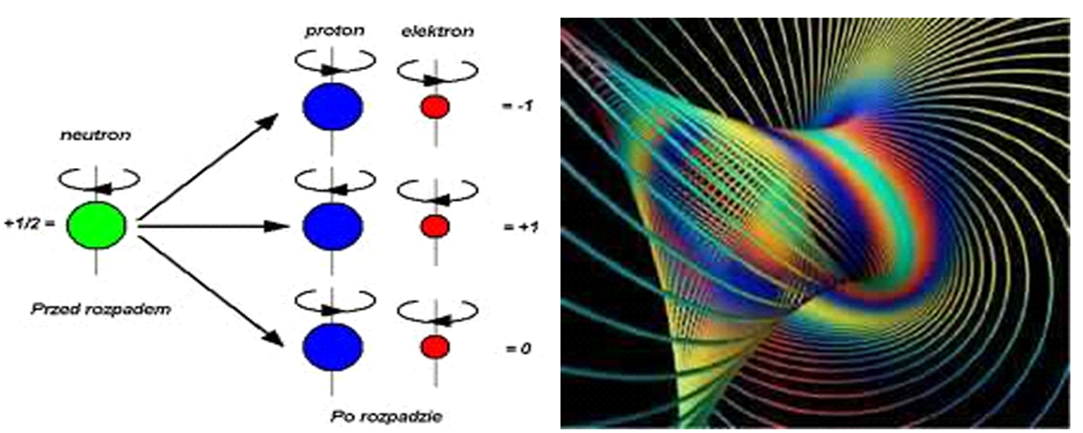
Figure 1-2 shows the clockwise or counterclockwise rotation of the spin.
The deflection between spins will propagate through the material, taking the form of waves that can carry information. Spin waves are short waves, several hundred nanometers wide, with frequencies ranging from GHz to THz. Wave phenomena do not involve charge transport. A similar phenomenon occurs during the heart's oxygen uptake. From a mechanical perspective, it is impossible to explain how, with an average resting cardiac output of 3.3 W, the heart can pump blood through a vascular system approximately 100,000 kilometers long. It remains unclear how blood is delivered to organs and tissues with such a small cardiac output and enormous arterial length. It has been found that different types of arteries have different anatomical structures (23, 24, 26). It has become apparent that blood is delivered to tissues only through the action of the muscular-elastic arterial pump, which is based on soliton action. Based on this, it is reasonable to hypothesize that the cardiovascular system functions based on the action of spin waves and solitons (Mikhaylov 2018).
A soliton can create spin and has been named a spin soliton—a stable, isolated wave of magnetization (collective spin vibrations) propagating in magnetic materials, arising from nonlinear effects. They retain their shape and velocity even after collisions, making them promising information carriers in spintronics and magnonics. These are local disturbances of the magnetic order. Spin waves, or collective spin excitations, can appear as nonlinear solitons on the nanoscale when excited by an electric current. Free radicals, formed during UV irradiation of melanin, can alter the spin alignment and permanently record information in the atomic nucleus, which is part of the biological structure. (Huping Hu., Maoxin Wu., 2004, p. 7). (Jacak et al. 201).
Free radicals are also responsible for the formation of quantum states of entangled particles, atoms, or entire information structures and images generated in the bioplasma of melanin and neuromelanin. A change in the alignment of nuclear spins is associated with a change in the intensity of the spin field or soliton field, which is believed to be responsible for the nature of mental processes. Solitons are produced in torsion fields.

Figure. 3. Formation of solitons in torsion fields.(. Shipov 1993)
Entanglement is a phenomenon in which two or more objects are connected. The process of entanglement creates a bilateral connection between the objects; their description cannot be realized without simultaneously taking the other into account. This leads to the emergence of correlations between the physical properties of the objects, even when they are distant from each other. This phenomenon is known in the scientific world as the EPR paradox.
Quantum entanglement can occur for a wide variety of objects in the microworld, such as atoms, elementary particles, or spin-entangled electrons. Entanglement is a spontaneous, timeless phenomenon, with the distance between the objects being irrelevant. For example, when two electrons are entangled, a change in the quantum state of one electron imme-diately causes a change in the quantum state of the other. By analogy, two quantum compu-ters whose memory consists of electrons entangled with each other can be assumed to have the ability to communicate bilaterally in dimensionless space-time. Such a system could function as a galactic internet. The method of transmitting information using quantum entanglement in physics is well-known and is based on quantum teleportation and dense coding (Bouwmeester et al., 1997).
Teleportation allows for the transmission of quantum messages recorded as the state of the system, while dense coding allows for increased channel capacity through the exchange of quantum information. Because the teleportation scheme can be extended to multiple qubits, longer messages can be transmitted this way (Barrett et al., 2008).The
concentration of free radicals in melanin varies depending on pH, the environment, the irradiation of the biopolymer, the degree of hydration, temperature, the content of metal ions, medicinal substances, and the presence of oxygen in the sample environment. The action of free radicals has significant effects on the biological system, apart from their negative impact on the aging process. The main targets of free radical attacks in the human body are molecules with double bonds, such as proteins, DNA, or unsaturated fatty acids that make up cell membranes, polysaccharides, and lipids (cholesterol) found in the blood. (Rzepka et al. 2016).
It should be assumed that the beating heart, through the regular ejection of blood from the ventricles, creates a pulsating movement in the arterial walls, which then become generators of water solitons. Blood pressure is the force exerted on flowing blood, which exerts an effect on the walls of blood vessels, causing polarization of piezoelectric proteins, which trigger the electric field necessary to control the valves. Changes in blood pressure influence the opening and closing of valves. The resulting sound is heard as the heartbeat – heart sounds. The closing and opening of valves is the main source of acoustic and water soliton generation. A human pulse measurement is simply a record of water solitons, which we detect by placing our fingers on the veins in our hands. We feel the pulses appear in spikes, as shown in the figure (Kołodzińska et al. 2022). pulsy jak to jest pokazane na rysunku (( Kołodzińska et al. 2022).

Figure.4. Soliton image for a water wave
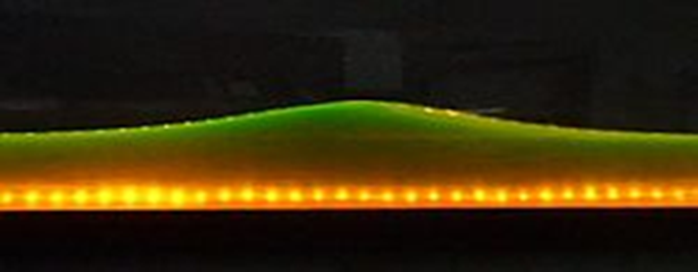
Figure 5: Image of a soliton for an acoustic wave
The heart generates light, water, and acoustic solitons. Without them, the heart's function would be impossible; they provide stability. Light solitons play an important role in the sinoatrial node, while water and acoustic solitons play a dominant role in the opening and closing of valves and in arteries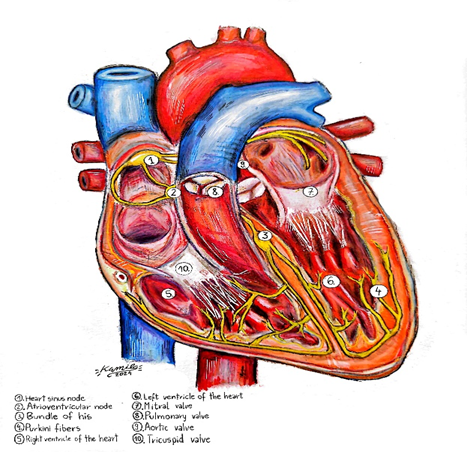
7 mitral valve, 8 pulmonary valve, 9 aortic valve, 10 tricuspid valve.The heart valves work by opening and closing during contractions and relaxations, allowing blood to flow from the heart to the lungs and the rest of the body. The valves are composed of connective tissue and are located between the heart chambers and the main vessels. The aortic valve is located in the left ventricle of the heart, at the aortic orifice. The pulmonary valve is located in the right ventricle, at the pulmonary orifice. The tricuspid valve is located between the right atrium and the right ventricle. The mitral valve is located between the left atrium and the left ventricle. The valves work in rhythm with the heart's contractions and relaxations, pumping blood and preventing its backflow. During ventricular contraction, the atrioventricular valves close, cutting off the outflow of blood into the arterial trunks. This forces blood into the atria. During diastole, the atrioventricular valves open, allowing blood to flow from the atria. Thanks to this mechanism, blood flows continuously in one direction. Blood flow does not occur automatically—it is driven by heart muscle contractions triggered by electrical impulses. The sinoatrial node, located in the upper part of the right atrium, serves as the pacemaker. It is composed of cells capable of spontaneous discharges. Each discharge initiates a new cardiac cycle. The sinoatrial node is responsible for the rhythmicity of heart muscle contractions (Torrent-Guasp et al. 2004). According to Francisco Torrent-Guasp, the heart has a spiral anatomical structure. This arrangement of fibers reduces flow and causes a spiral movement of blood. The spiral shape of the heart is a consequence of the asymmetric structure of fibers in the heart walls (Buckberg 2010). The functional interaction of the right and left ventricles occurs not only due to their serial arrangement but also due to their shared spiral features (Torrent-Guasp 2006). The importance of left ventricular torsional motion during systole was first noted by Stenson in 1664, who observed the helix of left ventricular fibers. Shortly thereafter, Giovanni Alphonso Borelli, a student of Galileo, suggested that left ventricular ejection is associated with torsional deformation, analogous to wringing a wet towel (Torrent-Guasp 1980).
Recent imaging studies have confirmed the presence of left ventricular torsion and have characterized its location, direction, timing, and frequency in different parts of the left ventricular wall; the significance of these findings is still not fully understood. Almost all available in vivo data on wall motion in the normal heart refer to the left ventricle, and virtually none to the normal right ventricle. This functional integration of both ventricles requires close interaction, or "interplay," throughout the cardiac cycle, during both systole and diastole. The helical structure of the heart, as well as the helical motion of blood, influence the generation of water solitons. Contraction of the basal loop, and then the descending segment, causes narrowing and shortening of the ventricles, which in turn reduces the volume of the ventricular chambers and leads to an increase in pressure, which causes blood to flow into the arteries and simultaneously activates the generation of solitons (Torrent-Guasp et al. 2005).
1. Spin waves play an important role in biological systems. The ability to direct a spin wave will allow us to better understand the etiology of disease and its treatment.
2. In living organisms, a spin wave closely interacts with a soliton wave, which has encoded programs for proper cell function and maintaining homeostasis. The soliton wave acts as a barrier to limit the intensity of the spin wave, which determines health and disease in a biological system.
3. The ability to direct the electric field resulting from piezoelectricity, pyroelectricity, and ferroelectricity will allow us to influence the proper functioning of electrostasis, which determines the functioning of a biological cell, tissue, organ, and the entire biological system. 4. A quantum-information vaccine for treatment will not be similar to traditional vaccines. It will not introduce a chemical substance into our body, but rather, it will introduce information that will produce antibodies to fight infectious diseases. This is possible thanks to the control of quantum-information processes; using electromagnetic, soliton, spin, and acoustic waves, electric and magnetic fields, and bioplasma (Adamski 2021).
5. In medicine, it is assumed that enzymes are chemical biocatalysts, and in bioelectronics, they are transistors and nanoprocessors, which are components of biocomputers. In the near future, chemical laboratories will disappear, replaced by computer science institutes that will develop algorithms, i.e., computer programs that will be embedded in the enzymatic system necessary to treat a specific disease. Enzymes absorb the energy of electric fields to work and communicate. In schizophrenics, a significant enzyme depletion is observed in the biological membranes of nerve cells. A similar situation occurs in depression, where the main enzymatic neurotransmitters are depleted (Drożak, Kozłowski 2006).
6. Building empirical evidence for the creation of artificial consciousness.
7. A characteristic feature of melanocyte-like cells is that they are located in areas that are the source of abnormal electrical activity. These cells are excitable and electrically coupled with neighboring myocytes. They act as a buffer for calcium and reactive oxygen species (ROS), affecting heart rhythm. When they lack the dopaminergic enzyme melanin tautomerase, they produce more ROS, leading to oxidative stress. Melanin directs the reduction of free radicals in the human biological system and also has the ability to accelerate and retard the movement of photons, phonons, solitons, and their spins, which is used in the creation of information language (Adamski, Sławiński 2011), (Bartosz 2003). Melanins exhibit selective susceptibility to phonons; this means that cells containing melanin are selectively sensitive to acoustic waves. (Sarna, Swartz, 1998). Melanin can act as a photon-to-phonon converter and the reverse process (McGinnes J., Corry P. 1977). The conversion of phonons into photons in a cell can affect Bose-Einstein condensation, in which case the bosons will emit polarized (laser) light. Coherent laser light will be responsible for the creation and control of solitons. Melanins exhibit paramagnetic properties (Schultz et al. 1987, p. 45).
Melanin has a significant impact on the development and density of electrostatic matter. It is capable of splitting water molecules into oxygen and hydrogen, acting similarly to chlorophyll in plants. As a semiconductor, melanin has the ability to conduct photochemical reactions under the influence of light and helps neutralize reactive oxygen species (ROS). It has a significant impact on the functioning of spins in oxygen molecules, as it is a natural polymer with paramagnetic properties (containing unpaired electrons) and acts as an active antioxidant. This means that oxygen molecules surrounding melanin alter the parameters of free radicals, which determine the quality of the spin wave, essential for heart function.
The era of quantum medicine is approaching – where enzymes, as transistors, will be the basic medicine in the treatment of various diseases. The second medicine is the ability to build biocomputer algorithms, which will constitute the basic source for treating biological systems. Biocomputers should not be underestimated, and the laws of quantum computing should be applied to further research. Computer science shows that phenomena such as wave function interference, quantum parallelism, superposition of states, quantum entanglement, and coherence can be used for computational purposes in quantum computers (Nielsen and Chuang 2000).
Spintronics demonstrates that, instead of the level of electric current or light intensity, information can be transmitted by the direction of spin (left or right). The properties of spin can be used not only to store information but also to process and transmit it. Spin synchronization results in memory storage (Barnas 2012).
Dear Editorial Team, Clinical Medical Reviews and Reports. My experience with the journal was highly positive. The peer-review process was rigorous, constructive, and completed in a timely manner. The reviewers provided valuable comments that helped improve the quality and clarity of our manuscript. The editorial office was professional, responsive, and supportive throughout all stages of the publication process. Communication was clear and efficient, and any questions were addressed promptly. Overall, I found the journal to maintain high scientific standards and an excellent publication workflow. I would be pleased to consider submitting future work to this journal. Best wishes from, Elena Popa.

It was my pleasure to submit my testimonial concerning the Reviewer Board of our Scientific Journal “Brain and Neurological Disorders”. The Reviewers focused on some modifications and their contribution was helpful. The ladies of our Editorial Office were also supported my efforts. It was my honor to have such a co-operation and I am looking forward for more collaboration.

Dear Grace Pierce, Editorial Coordinator of Journal of Clinical Research and Reports, Thank you for the speedy and efficient peer review process. I appreciate the fact that your peer reviewers do not take months to respond like with some other journals. I would also like to thank the editorial office for responding quickly to my questions. It is an excellent journal. I plan to submit more manuscripts in the future. Best wishes from, Robert W. McGee

Dear Grace Pierce, Editorial Coordinator of Journal of Clinical Research and Reports, Working with you and your team on our recent publication in JCRR has been a truly wonderful and enjoyable experience. The responses were prompt, and the reviewers were patient, constructive, and highly professional. One reviewer in particular gave me the feeling that a professor was carefully reading and commenting on my coursework, which was deeply touching. The entire process was straightforward and hassle‑free, with no tedious online forms to complete. I highly recommend this journal. Best wishes from, DR Aibing Rao, Head of R&D

I Appreciate the Opportunity to Share my Experience with the Journal of Clinical Research and Reports. The peer review process was timely and constructive, and the feedback provided helped improve the quality of our manuscript. The editorial office was professional, responsive, and supportive throughout the process, ensuring smooth communication and efficient handling of the submission. Overall, it was a positive experience collaborating with your team.

Dear Mercy Grace, Editorial Coordinator of Obstetrics Gynecology and Reproductive Sciences, We would like to express our gratitude for your help at all stages of publishing and editing the article. The editors of the magazine answer all the necessary questions and help at every stage. We will definitely continue to cooperate and publish other works in the Obstetrics Gynecology and Reproductive Sciences! Best wishes from, Alla Konstantinovna Politova,