Research Article | DOI: https://doi.org/10.31579/2641-0419/581
Instituto Cardiovascular de Puebla (ICVP), Puebla, Mexico.
*Corresponding Author: Raymundo Ocaranza-Sánchez, MD, PhD, Instituto Cardiovascular de Puebla (ICVP) Puebla, Mexico.
Citation: Ocaranza-Sanchez R, Fernández-Candelario BE, Aldana Villarrue JCB, Carlos De la Fuente-Macip, Rodrigo A. Calderon, et al., (2026), Durable Lesion Outcomes but Progressive Disease After Dedicated Bifurcation PCI: 24-Month Results from a Dual-Centre Registry, J Clinical Cardiology and Cardiovascular Interventions, 9(9); DOI:10.31579/2641-0419/581
Copyright: © 2026, Raymundo Ocaranza-Sánchez. This is an open-access article distributed under the terms of the Creative Commons Attribution License, which permits unrestricted use, distribution, and reproduction in any medium, provided the original author and source are credited.
Received: 07 August 2026 | Accepted: 10 June 2026 | Published: 10 August 2026
Keywords: coronary bifurcation lesions; dedicated bifurcation stent; biomime branch; bifurcation pci; target lesion revascularization; long-term outcomes
Background: Coronary bifurcation lesions remain among the most challenging subsets in contemporary percutaneous coronary intervention (PCI), particularly true bifurcation lesions requiring a planned two-stent strategy, and are frequently associated with increased procedural complexity and adverse clinical outcomes. Although dedicated bifurcation stents were developed to simplify complex procedures, optimize bifurcation scaffolding, and improve procedural reproducibility, evidence regarding their long-term clinical performance remains scarce, especially in patients with anatomically complex true bifurcation lesions. Consequently, the durability of lesion-specific outcomes following dedicated bifurcation PCI remains incompletely understood.
Methods: This prospective dual-centre registry included 80 consecutive patients with Medina 1,1,1 bifurcation lesions treated with the Biomime Branch™ dedicated bifurcation stent using a standardised modified implantation technique. The primary endpoint was major adverse cardiovascular events (MACE) at 24 months, defined as all-cause death, myocardial infarction (MI), or clinically driven target lesion revascularisation (TLR). Kaplan–Meier analyses were performed.
Results: Procedural success was achieved in 98.7% of cases. At 24 months, all-cause mortality was 6.5%, MI 11.6%, TLR 5.7%, and overall MACE 29.4%. Kaplan–Meier analyses demonstrated low and stable TLR over time, with no evidence of late catch-up beyond 12 months. In contrast, MI and overall adverse events progressively increased during follow-up.
Conclusion: Dedicated bifurcation PCI using a modified implantation technique provides durable lesion-specific outcomes with low long-term TLR. However, late clinical events appear predominantly driven by progression of coronary artery disease rather than failure of the treated lesion.
Coronary bifurcation lesions account for approximately 15–20% of all percutaneous coronary interventions and remain one of the most technically demanding subsets in contemporary interventional cardiology [1]. The inherent anatomical complexity, including carina shift, plaque distribution asymmetry, and side branch compromise, contributes to increased procedural failure and adverse clinical outcomes compared with non-bifurcation lesions [2].
Current guidelines recommend a provisional stenting approach as the default strategy; however, this paradigm is not universally applicable, particularly in true bifurcation lesions (Medina 1,1,1), where side branch significance necessitates a more complex two-stent strategy [3]. While techniques such as culotte, T-stenting, and double kissing crush have improved outcomes, they remain associated with procedural variability and increased technical complexity [4-6].
Dedicated bifurcation stents were developed to address these limitations by providing simultaneous scaffolding of both branches while preserving procedural simplicity. Nevertheless, previous studies evaluating these devices have yielded heterogeneous results, and long-term outcome data remain limited [7-9].
The Biomime Branch™ stent represents a novel dedicated bifurcation platform incorporating ultra-thin struts and a hybrid design enabling controlled side branch scaffolding and main vessel access. In the initial report of this registry, we demonstrated high procedural success and favourable acute outcomes using a modified implantation technique [3].
However, whether these acute procedural advantages translate into sustained long-term clinical benefit remains uncertain.
The present study provides the extended 24-month follow-up, focusing on durability, clinical outcomes, and mechanistic insights into device performance.
Study design and setting
This study represents a prospective, observational, dual-centre registry conducted at two high-volume tertiary institutions in Spain and Mexico. The registry was specifically designed to evaluate the feasibility, safety, and long-term clinical outcomes of a dedicated bifurcation stent in a real-world population using a standardised implantation technique.
Study population
Consecutive patients referred for coronary angiography due to suspected or confirmed ischaemic heart disease were screened for inclusion.
Inclusion criteria
True coronary bifurcation lesions (Medina 1,1,1), main branch diameter between 2.25 and 4.5 mm, side branch diameter ≥2.25 mm, planned two-stent strategy
Exclusion criteria
Non-significant side branch disease not requiring treatment, inability to achieve complete revascularisation
This selection ensured inclusion of patients with anatomically complex bifurcation lesions representative of routine clinical practice.
Device and implantation technique
All procedures were performed using the Biomime Branch™ dedicated bifurcation stent (Meril Lifesciences), a device specifically designed to provide simultaneous scaffolding of both the main vessel and side branch.
A standardised modified implantation technique was applied in all cases across both centres, ensuring procedural consistency [3].
Key procedural steps included:
Systematic lesion preparation with predilatation, precise stent positioning guided by radiopaque markers, proximal optimisation technique (POT) to ensure adequate stent expansion, maintenance of the main vessel guidewire (KIO concept) to preserve access, controlled rewiring of the side branch to optimise stent apposition and final kissing balloon inflation (FKBI) to ensure optimal bifurcation geometry.
This structured approach aimed to minimise technical variability and optimise procedural outcomes.
Endpoints and definitions
Primary endpoint
Major adverse cardiovascular events (MACE) at 24 months, defined as the composite of:
All-cause mortality, myocardial infarction (MI), target lesion revascularisation (TLR), secondary endpoints, non-target vessel revascularisation
Definitions:
Procedural success was defined as successful stent implantation with adequate angiographic result and absence of in-hospital major complications. Myocardial infarction (MI) was defined according to the Fourth Universal Definition of Myocardial Infarction. Clinically driven target lesion revascularisation (TLR) was defined as any repeat revascularisation of the target lesion associated with symptoms or objective evidence of ischaemia.
Clinical follow-up was achieved in 99% of patients at 24 months, ensuring robust assessment of long-term outcomes.
Statistical analysis
Time-to-event outcomes were analysed using Kaplan–Meier survival estimates. Event rates are presented as cumulative incidence over 24 months.
Baseline characteristics
A total of 80 patients were included in the analysis. The study population exhibited a high prevalence of cardiovascular risk factors, reflecting a complex real-world cohort typically encountered in contemporary PCI practice.
Procedural outcomes
Procedural success was achieved in 98.7% of cases, with a very low rate of intraprocedural complications. These findings confirm the feasibility and reproducibility of the modified implantation technique when applied in a standardised manner across centres.
Long-term clinical outcomes
Kaplan–Meier analysis
Major adverse cardiovascular events (Figure 1)
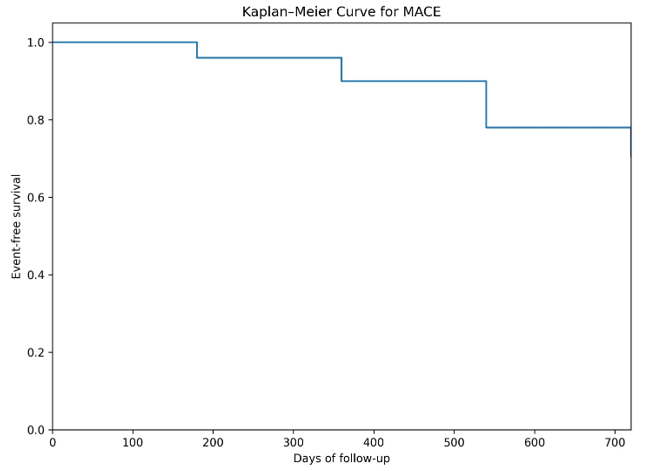
Figure 1: Kaplan-Meier curve showing cumulative incidence of major adverse cardiovascular events (MACE) at 24 months.
Kaplan–Meier analysis demonstrated a progressive increase in the cumulative incidence of composite events over time, reaching 29.4% at 24 months. This pattern reflects the expected evolution of adverse cardiovascular events in a high-risk population undergoing complex PCI.
Target lesion revascularisation (Figure 2)
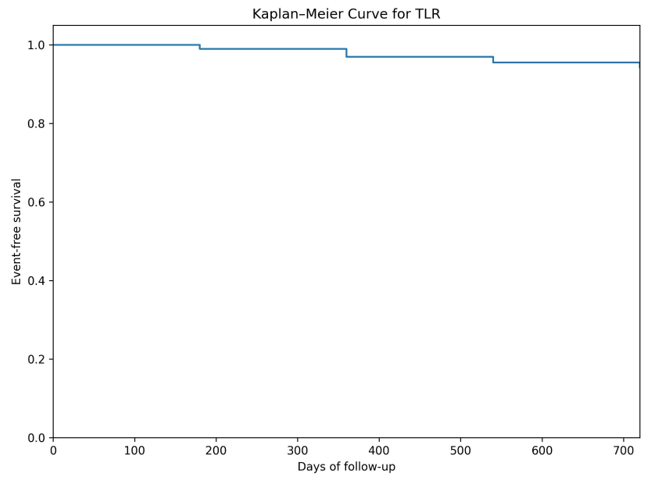
Figure 2: Kaplan-Meier curve showing target lesion revascularisation (TLR) at 24 months.
Target lesion revascularisation remained low at 5.7% and, importantly, showed no significant increase between 12 and 24 months.
This represents the most clinically relevant finding of the study, indicating sustained efficacy of the device and durability of the treated lesion over time. Myocardial infarction (Figure 3)
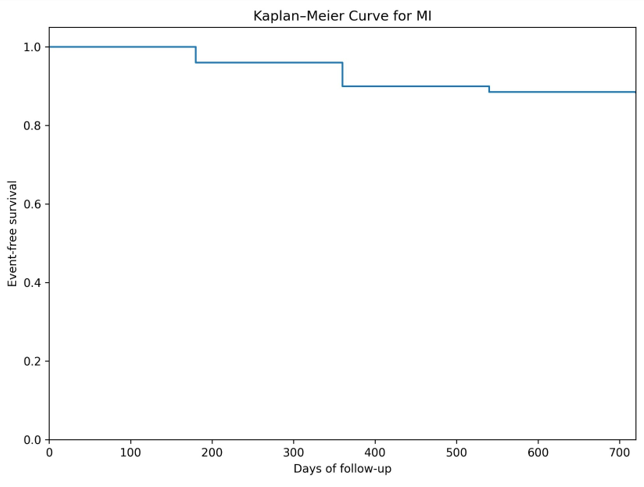
Figure 3: Kaplan-Meier curve showing myocardial infarction (MI) at 24 months.
The incidence of myocardial infarction increased progressively throughout follow-up, reaching 11.6% at 24 months. This temporal pattern suggests a contribution from ongoing disease progression rather than failure of the treated segment.
Temporal pattern of events
A distinct divergence in outcome trajectories was observed:
Principal Findings
The present extended 24-month analysis of a prospective dual-centre registry provides important insights into the long-term performance of a dedicated bifurcation stent in complex coronary anatomy. Three key findings emerge from this study:
First, the procedural success achieved in the initial phase of the registry is sustained over time, confirming the reproducibility and reliability of the modified implantation technique.
Second, the rate of target lesion revascularisation remains remarkably low (5.7%) and stable between 12 and 24 months, suggesting durable lesion scaffolding and favourable vascular healing.
Third, late adverse events, including myocardial infarction and non-target revascularisation, increase over time, reflecting the natural progression of coronary artery disease rather than failure of the implanted device.
Mechanistic Interpretation of Long-Term Outcomes
The stability of TLR beyond the first year represents one of the most relevant findings of the present study. In contemporary PCI, late TLR is often driven by factors such as stent underexpansion, malapposition, or neointimal proliferation. The absence of a temporal increase in TLR in our cohort strongly suggests that the combination of device design and procedural optimisation resulted in adequate stent expansion, optimal apposition, and sustained vessel patency.
The Biomime Branch™ platform incorporates ultra-thin struts and a hybrid architecture specifically designed to facilitate side branch scaffolding while maintaining main vessel integrity. These features, together with the systematic use of proximal optimisation technique (POT) and controlled rewiring, likely contributed to the observed durability.
In contrast, the progressive increase in myocardial infarction and non-target revascularisation aligns with previous observations in complex PCI populations, particularly those with high burden of diffuse atherosclerosis and multivessel disease [10-12].
This divergence between lesion-specific and patient-level outcomes underscores a fundamental concept in contemporary interventional cardiology:
The low rate of target lesion revascularisation suggests optimal device performance, whereas long-term events appear primarily driven by disease progression rather than stent-related failure.
This distinction is crucial, as it reinforces the notion that long-term prognosis in these patients is determined not only by procedural success but also by the underlying systemic disease.
Comparison with Contemporary Evidence
The present findings are consistent with contemporary bifurcation trials and registries.
In the DKCRUSH-V trial, double kissing crush demonstrated superiority over provisional stenting in distal left main bifurcation lesions, primarily through reductions in target lesion failure. [4] However, the complexity of DKCRUSH and its dependence on operator expertise may limit broader reproducibility. In contrast, the present study achieved a clinically driven TLR rate of only 5.7% at 24 months using a dedicated bifurcation platform implanted through a highly standardised modified technique.
Similarly, the EBC MAIN trial found no significant advantage of a routine two-stent strategy over a provisional approach in left main bifurcation disease. [5] More recently, the DEFINITION II trial demonstrated improved outcomes with systematic two-stent strategies in anatomically complex bifurcation lesions, supporting the concept that lesion complexity should guide treatment selection. [13,14]
The latest European Bifurcation Club recommendations continue to emphasise procedural optimisation, including proximal optimisation technique (POT), appropriate side-branch rewiring and final kissing balloon inflation. [15] These steps were systematically incorporated in all procedures within the present registry and may have contributed to the favourable long-term outcomes observed.
Previous studies evaluating dedicated bifurcation stents have reported heterogeneous outcomes due to differences in device design and implantation techniques. [7-9] Contemporary reviews suggest that dedicated bifurcation platforms may offer advantages in selected complex anatomies when combined with rigorous implantation protocols.[16] The favourable outcomes observed in our registry support this concept and reinforce the importance of procedural standardisation.
Furthermore, when compared with historical PCI trials involving complex coronary artery disease, including SYNTAX and EXCEL, the observed rates of myocardial infarction and repeat revascularisation fall within expected ranges. [11,12] Importantly, the persistently low TLR observed in our cohort suggests that late adverse events were predominantly driven by progression of coronary artery disease rather than failure of the treated lesion.
Clinical Implications
The results of this study have several important clinical implications.
First, they support the use of dedicated bifurcation stents as a viable and effective alternative to conventional two-stent techniques in true bifurcation lesions. The low TLR rate and high procedural success suggest that this approach may simplify complex procedures without compromising outcomes.
Second, the findings emphasise the critical role of procedural optimisation. The consistent application of POT, controlled rewiring, and final kissing balloon inflation appears to be essential in achieving durable results. This reinforces the concept that outcomes in bifurcation PCI are highly dependent on technique rather than device alone.
Third, the divergence between lesion-specific outcomes and overall clinical events highlights the need for comprehensive secondary prevention strategies in this high-risk population. Optimal medical therapy, aggressive risk factor control, and close follow-up remain essential components of patient management.
Finally, the inclusion of a substantial proportion of left main and calcified lesions in this registry suggests that this strategy may be particularly relevant in complex anatomical subsets, where conventional approaches are often suboptimal.
Novel Contributions of the Present Study
Unlike previous reports focused primarily on procedural feasibility and short-term outcomes, the present study provides one of the longest available follow-ups for a dedicated bifurcation platform using a standardised implantation technique. The findings demonstrate a clear dissociation between lesion-related outcomes and patient-level outcomes. While durable lesion scaffolding was reflected by persistently low TLR rates, long-term adverse events were mainly associated with progression of coronary artery disease. This observation may have important implications for patient management after complex bifurcation PCI and reinforces the need for aggressive secondary prevention beyond procedural optimisation.
This study has several limitations. First, its observational non-randomised design precludes definitive comparisons with alternative bifurcation strategies. Second, the sample size was relatively modest and all procedures were performed by a highly experienced operator, potentially limiting generalisability. Third, intravascular imaging was not systematically performed and therefore mechanistic explanations regarding stent expansion and apposition remain speculative. Fourth, the absence of an external control group prevents direct comparison with conventional two-stent techniques. Finally, despite the excellent follow-up rate, residual confounding inherent to registry studies cannot be excluded.
The divergence observed between lesion-specific durability and progressive patient-level events is summarised in the Central Illustration, highlighting that long-term outcomes after dedicated bifurcation PCI are influenced not only by local procedural success but also by the systemic progression of atherosclerotic disease. (Central Illustration)
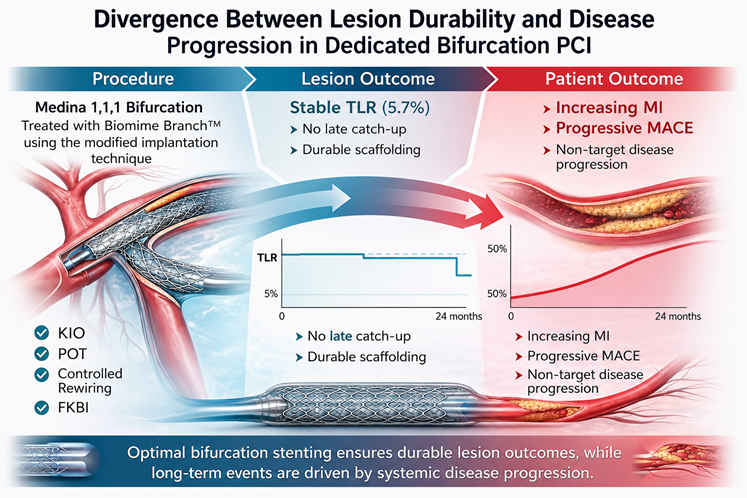
Recommendations for Clinical Management
Patients undergoing complex bifurcation PCI should receive intensive secondary prevention strategies, including high-intensity lipid-lowering therapy, strict blood pressure control, diabetes optimisation, smoking cessation and prolonged surveillance for progression of coronary artery disease. The present findings suggest that successful treatment of the target lesion alone may not be sufficient to prevent long-term adverse cardiovascular events.
This extended 24-month analysis demonstrates that dedicated bifurcation stenting using a modified implantation technique is associated with high procedural success and durable long-term outcomes in patients with true coronary bifurcation lesions.
The persistently low rate of target lesion revascularisation supports sustained device performance and effective lesion treatment, while the progressive increase in myocardial infarction and non-target revascularisation reflects the natural evolution of coronary artery disease in a high-risk population.
These findings reinforce the concept that optimal outcomes in bifurcation PCI are achieved through the combination of advanced device technology and meticulous procedural technique, and position dedicated bifurcation stenting as a compelling strategy in the management of complex coronary anatomy.
Impact on Daily practice
Dedicated bifurcation stenting using a standardised implantation technique provides durable lesion-specific outcomes in true bifurcation lesions. However, long-term prognosis is largely driven by progression of coronary artery disease, highlighting the need for aggressive secondary prevention strategies in this high-risk population.
The authors declare no conflicts of interest related to this manuscript.
Funding
No specific funding was received for this study.
Ethics Statement
The study was conducted in accordance with the principles of the Declaration of Helsinki and was approved by the institutional ethics committees of both participating centres. All patients provided informed consent.
Data Availability Statement
The data underlying this study are available from the corresponding author upon reasonable request.
ORCID
Raymundo Ocaranza-Sánchez: 0000-0002-7035-861X
Acknowledgements
The authors would like to acknowledge the catheterisation laboratory staff at both participating centres for their technical support and contribution to this study.
Dear Editorial Team, Clinical Medical Reviews and Reports. My experience with the journal was highly positive. The peer-review process was rigorous, constructive, and completed in a timely manner. The reviewers provided valuable comments that helped improve the quality and clarity of our manuscript. The editorial office was professional, responsive, and supportive throughout all stages of the publication process. Communication was clear and efficient, and any questions were addressed promptly. Overall, I found the journal to maintain high scientific standards and an excellent publication workflow. I would be pleased to consider submitting future work to this journal. Best wishes from, Elena Popa.

It was my pleasure to submit my testimonial concerning the Reviewer Board of our Scientific Journal “Brain and Neurological Disorders”. The Reviewers focused on some modifications and their contribution was helpful. The ladies of our Editorial Office were also supported my efforts. It was my honor to have such a co-operation and I am looking forward for more collaboration.

Dear Grace Pierce, Editorial Coordinator of Journal of Clinical Research and Reports, Thank you for the speedy and efficient peer review process. I appreciate the fact that your peer reviewers do not take months to respond like with some other journals. I would also like to thank the editorial office for responding quickly to my questions. It is an excellent journal. I plan to submit more manuscripts in the future. Best wishes from, Robert W. McGee

Dear Grace Pierce, Editorial Coordinator of Journal of Clinical Research and Reports, Working with you and your team on our recent publication in JCRR has been a truly wonderful and enjoyable experience. The responses were prompt, and the reviewers were patient, constructive, and highly professional. One reviewer in particular gave me the feeling that a professor was carefully reading and commenting on my coursework, which was deeply touching. The entire process was straightforward and hassle‑free, with no tedious online forms to complete. I highly recommend this journal. Best wishes from, DR Aibing Rao, Head of R&D

I Appreciate the Opportunity to Share my Experience with the Journal of Clinical Research and Reports. The peer review process was timely and constructive, and the feedback provided helped improve the quality of our manuscript. The editorial office was professional, responsive, and supportive throughout the process, ensuring smooth communication and efficient handling of the submission. Overall, it was a positive experience collaborating with your team.

Dear Mercy Grace, Editorial Coordinator of Obstetrics Gynecology and Reproductive Sciences, We would like to express our gratitude for your help at all stages of publishing and editing the article. The editors of the magazine answer all the necessary questions and help at every stage. We will definitely continue to cooperate and publish other works in the Obstetrics Gynecology and Reproductive Sciences! Best wishes from, Alla Konstantinovna Politova,