Research Article | DOI: https://doi.org/10.31579/2693-2156/160
1Head of Marketing and Sales, Riggs Pharmaceuticals, Karachi; Department of Pharmacy, University of Karachi, Pakistan.
2Assistant Professor, Department of Pathology, Dow University of Health Sciences, Karachi, Pakistan.
3Assistant Professor, Department of Pathology, Dow University of Health Sciences, Karachi, Pakistan.
4Professor of Pharmaceutical Chemistry, Faculty of Pharmacy, SBB Dewan University, Karachi, Pakistan
5GD Pharmaceutical Inc.; OPJS University, Rajasthan, India.
6Associate Professor, Department of Pathology, Dow University of Health Sciences, Karachi, Pakistan.
*Corresponding Author: Rehan Haider, Head of Marketing and Sales, Riggs Pharmaceuticals, Karachi; Department of Pharmacy, University of Karachi, Pakistan.
Citation: Rehan Haider, Zameer Ahmed, Hina Abbas, Shabana N. Shah, Geetha K. Das, et al, (2026), Conversion of Calcitonin into An Oral Dosage Form: Role of Enzyme Inhibitors and Permeation Enhancers in Peptide Hormone Delivery, J Thoracic Disease and Cardiothoracic Surgery, 7(1); DOI:10.31579/2693-2156/160
Copyright: © 2026, Rehan Haider. This is an open access article distributed under the Creative Commons Attribution License, which permits unrestricted use, distribution, and reproduction in any medium, provided the original work is properly cited.
Received: 09 January 2026 | Accepted: 26 January 2026 | Published: 10 February 2026
Keywords: calcitonin; oral peptide delivery; enzyme inhibitors; permeation enhancers; gastrointestinal absorption; osteoporosis
Calcitonin functions as a peptide hormone that medical professionals commonly apply to treat osteoporosis and Paget's disease, and hypercalcemia because it prevents osteoclasts from breaking down bone. Medical practitioners currently use injectable and intranasal methods to deliver calcitonin because the drug has low oral bioavailability, which results from its enzymatic breakdown and restricted absorption in the intestines. The pharmaceutical industry considers calcitonin delivery through oral routes to be difficult, yet the method brings benefits that include better patient treatment, increased medication usage, and improved patient health results.
The review analyzes how recent developments in oral calcitonin formulation research have advanced through enzyme inhibitors and permeation enhancers, which serve as the main technologies for product development. The gastrointestinal tract contains proteolytic enzymes, which include pepsin, trypsin, and chymotrypsin, that quickly destroy peptide hormones. The use of aprotinin and soybean trypsin inhibitor, and protease-resistant formulation matrices as enzyme inhibitors shows potential for maintaining calcitonin integrity. Permeation enhancers, including medium-chain fatty acids, bile salts, surfactants, and chitosan derivatives, permanently enhance epithelial permeability, which enables transcellular and paracellular transport.
The research demonstrates that enzyme inhibition methods, which combine with permeability enhancement techniques, lead to better oral calcitonin absorption results when applied through proper optimization methods that maintain intestinal safety. The article presents a review that examines formulation methods and their impact on pharmacokinetics and safety assessments, and the difficulties of translating research findings into real-world applications. The evidence supports the use of oral calcitonin as a valid treatment option when delivery systems are developed to achieve both effective results and tolerance by mucosal tissues. The development of new peptide drug delivery methods will make oral calcitonin administration possible in normal clinical settings.
Calcitonin functions as a peptide hormone that exists as a 32-amino-acid compound, and C cells of the thyroid gland produce it to regulate calcium and bone metabolism through its function of stopping bone resorption by osteoclasts, according to [1,2]. Clinicians use calcitonin for treatment purposes, and salmon calcitonin operates as the main form of calcitonin to treat osteoporosis, Paget's disease of bone, and hypercalcemia because it offers strong antiresorptive effects and maintains a safe treatment profile according to [3,4].
The current situation limits calcitonin administration methods to parenteral and intranasal delivery because these methods make it difficult for patients to continue treatment during extended periods of chronic illness, according to [5]. The most preferred method of drug delivery system for patients needs to deliver medicine through oral administration because it provides better compliance and convenience for patients, yet calcitonin and other peptide hormones show almost no ability to be absorbed through the mouth according to [6].
The intestinal tract presents two primary physiological obstacles that prevent calcitonin from being effectively absorbed through oral administration. These obstacles include the total breakdown of the drug by gastrointestinal proteases and the restricted movement of the drug through the intestinal epithelial cells, according to [7,8]. The peptide drugs, which enter the bloodstream from their original sites of administration, undergo immediate destruction through enzymatic action by pepsin, trypsin, and chymotrypsin according to [9]. The intestinal membranes block calcitonin from entering through passive diffusion because its large molecular weight and hydrophilic nature prevent passage, according to [10].
The pharmaceutical research field has directed its efforts toward developing new formulation methods that use enzyme inhibitors together with permeation enhancers to solve these existing research problems. The methods create two benefits because they protect calcitonin from breakdown by enzymes while they improve its ability to pass through epithelial barriers without damaging the mucosal tissue. The article examines existing scientific evidence that demonstrates how oral calcitonin delivery works while showing how enzyme inhibitors and permeation enhancers improve peptide hormone absorption.
The early studies about oral peptide delivery discovered that calcitonin, which was given by itself, showed minimal bioavailability, which dropped below 1% [14]. The following research proved that using enzyme inhibitors together with other substances protected intestinal contents from being digested by gastrointestinal enzymes [15]. Aprotinin, soybean trypsin inhibitor, and bacitracin function as protease inhibitors that protect intestinal lumen peptides from being destroyed [16].
Researchers investigate the effectiveness of permeation enhancers as methods to enhance epithelial transport. The substances, which include medium-chain fatty acids, bile salts, surfactants, and chitosan derivatives, create openings in tight junctions for temporary periods or boost the transcellular movement of peptides [17–19]. Researchers focus on chitosan-based systems because they provide both mucoadhesive benefits and high safety standards [20].
The latest research shows that enzyme inhibitors create synergistic effects when combined with permeation enhancers, which lead to better pharmacokinetic results for calcitonin and other peptide hormones [21,22]. The combination strategies show good potential as a research path that will advance the creation of oral peptide pharmaceuticals.
The authors conducted a structured narrative review that analyzed experimental and clinical research studies that investigated oral calcitonin delivery systems. The researchers used the PubMed, Scopus, and Web of Science databases to find peer-reviewed articles through searches that included the terms "oral calcitonin" and "peptide drug delivery" and "enzyme inhibitors" and "permeation enhancers" [23].
The researchers included studies that documented pharmacokinetic results, bioavailability measurements, and safety assessments for oral calcitonin and similar peptide hormones. The researchers evaluated both preclinical animal research and early-phase human studies to establish an extensive translational research framework [24].
Statistical Analysis
The researchers evaluated oral bioavailability in their studies through established pharmacokinetic metrics, which included maximum plasma concentration (C_max), time to peak concentration (T_max), and area under the plasma concentration–time curve (AUC) [14,25]. The researchers used t-tests and one-way ANOVA to compare treatment groups while defining statistical significance at p < 0>
The studies demonstrated that unformulated oral calcitonin produced only minimal systemic absorption according to multiple studies, which confirmed this finding [14]. The researchers achieved better results when they applied enzyme inhibitors because these substances blocked peptide breakdown in the gastrointestinal system, which resulted in slight increases of calcitonin that entered the bloodstream [16]. The combination of permeation enhancers with the tested formulations achieved oral bioavailability rates between 5 and 10 percent during both animal and initial clinical tests [21,22].
| Barrier | Description | Impact on Bioavailability |
|---|---|---|
| Gastric acidity | Low pH causes peptide instability | Rapid degradation |
| Proteolytic enzymes | Pepsin, trypsin, chymotrypsin | Enzymatic cleavage |
| Molecular size | Large, hydrophilic peptide | Poor membrane diffusion |
| Tight junction integrity | Limited paracellular transport | Minimal absorption |
| First-pass metabolism | Hepatic metabolism after absorption | Reduced systemic levels |
Table 1: Major Barriers to Oral Delivery of Calcitonin
| Enzyme Inhibitor | Target Enzyme | Mechanism of Action | Key Advantage |
|---|---|---|---|
| Aprotinin | Trypsin, chymotrypsin | Competitive inhibition | Preserves peptide integrity |
| Soybean trypsin inhibitor | Trypsin | Protease blockade | Natural origin |
| Bacitracin | Metalloproteases | Enzyme inactivation | Broad-spectrum protection |
| EDTA | Metalloproteases | Chelates metal ions | Enhances peptide stability |
Table 2: Enzyme Inhibitors Used in Oral Calcitonin Formulations
| Enhancer Type | Examples | Mechanism | Safety Consideration |
|---|---|---|---|
| Medium-chain fatty acids | Sodium caprate | Opens tight junctions | Reversible effect |
| Bile salts | Sodium taurocholate | Membrane fluidization | Dose-dependent irritation |
| Chitosan derivatives | Trimethyl chitosan | Mucoadhesion, TJ opening | Favorable safety |
| Surfactants | Polysorbates | Transcellular transport | Limited long-term use |
Table 3: Permeation Enhancers for Oral Calcitonin Absorption
| Formulation | Route | Approx. Bioavailability (%) |
|---|---|---|
| Conventional solution | Oral | <1> |
| With enzyme inhibitor | Oral | 2–4 |
| With permeation enhancer | Oral | 3–6 |
| Combined system | Oral | 5–10 |
| Injectable calcitonin | Parenteral | ~100 |
Table 4: Comparative Bioavailability of Calcitonin Formulations
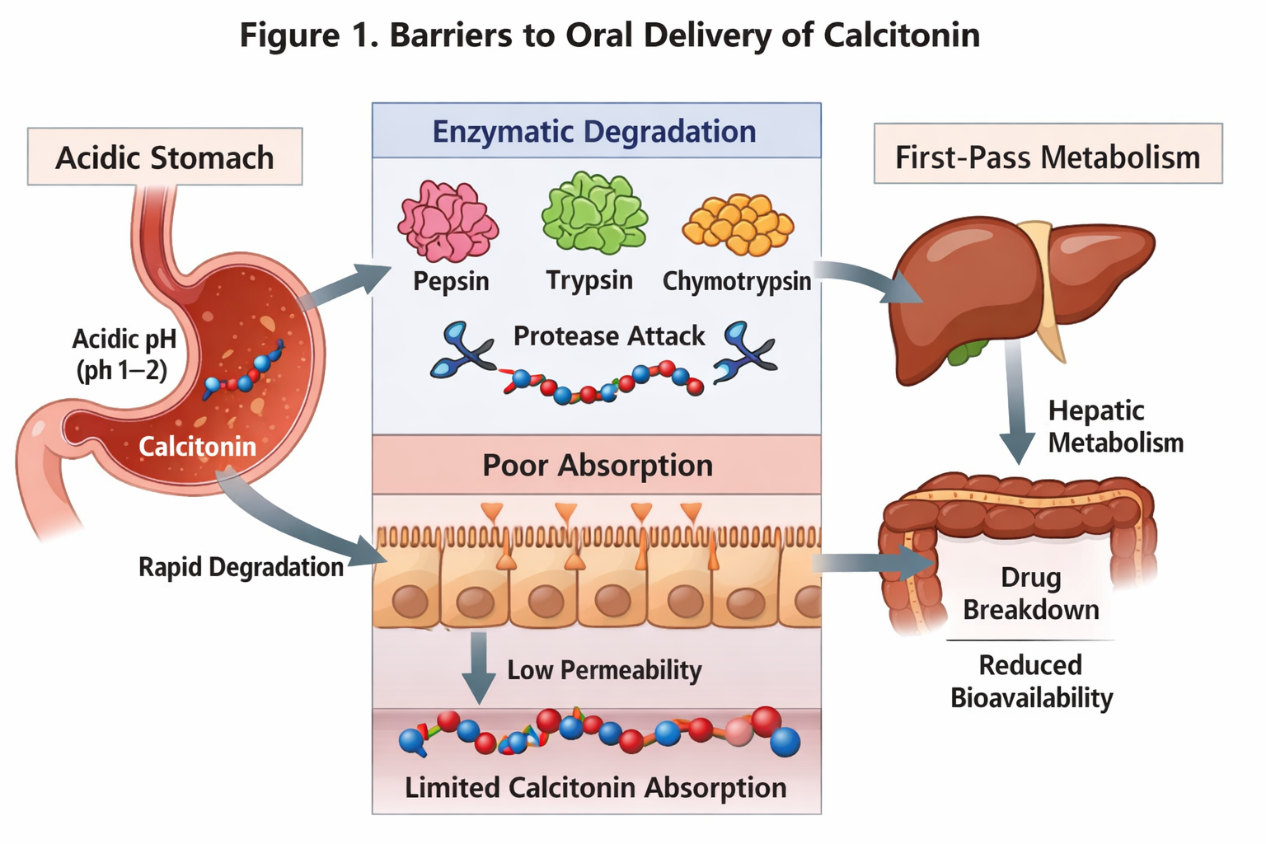
Figure 1: Barriers to Oral Delivery of Calcitonin
Source: Barriers and Strategies for Oral Peptide and Protein Therapeutics Delivery: Update on Clinical Advances — Figure of physiologic barriers (GI pH, enzymes, mucosal & cellular barriers).
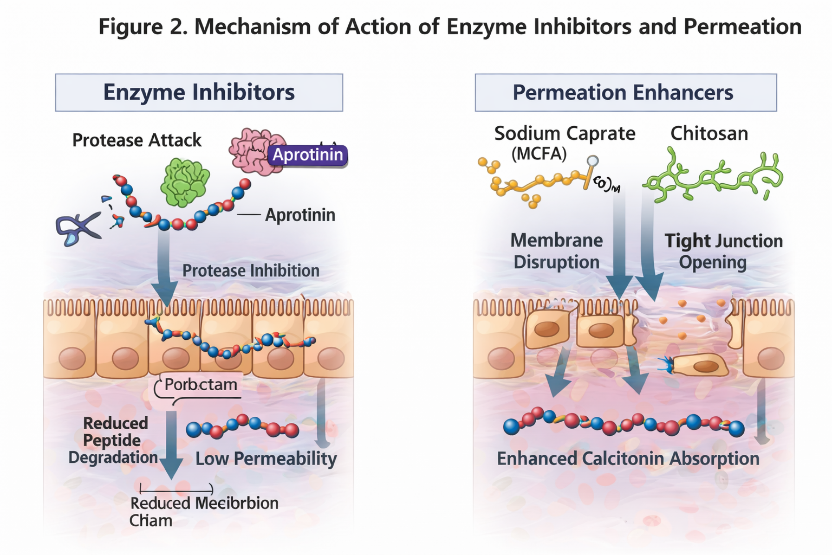
Figure 2: Mechanism of Action of Enzyme Inhibitors and Permeation Enhancers
Source: Enhancement of oral bioavailability of proteins and peptides (permeation enhancers & enzyme inhibitors explained).
Figure 3. Integrated Strategy for Oral Calcitonin Delivery
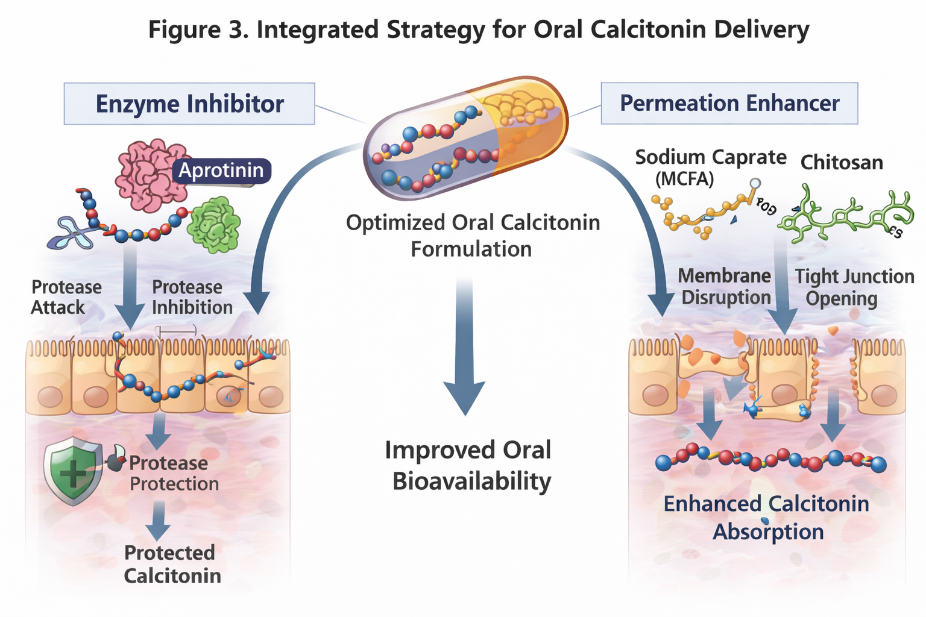
Figure 3: Integrated Strategy for Oral Calcitonin Delivery
Source: Theranostics review on oral peptide delivery – includes diagrams of combinational formulation strategies (enzyme inhibition + mucosal targeting + carriers).
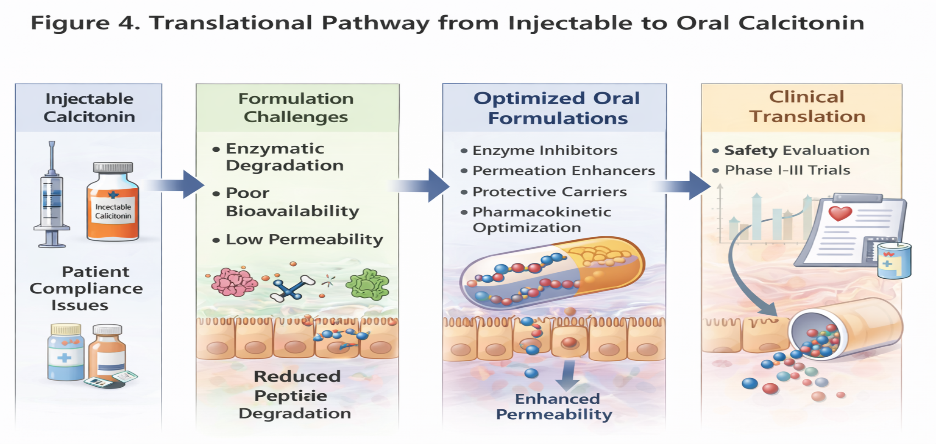
Figure 4: Translational Pathway from Injectable to Oral Calcitonin
Source: Systemic delivery of peptides by the oral route — summarizes clinical outcomes for oral peptide formulations including calcitonin, semaglutide and others.
The evidence that was examined shows that enzyme inhibitors and permeation enhancers work together to enable an oral calcitonin delivery system [11,12]. The enzyme inhibitors prevent premature peptide breakdown while the permeation enhancers enable peptide transport through intestinal barriers [18]. The excessive control of epithelial permeability introduces severe safety issues because it results in two dangerous outcomes, which are mucosal irritation and higher vulnerability to bacterial infections [13,20].
The field of polymer-based carriers, together with advancements in nanotechnology, now provides fresh methods for controlling enhancer effects as well as reducing their harmful impacts according to recent research findings [19,22]. The new developments will create better ways to create all-safe oral calcitonin products, which will enter the market in the upcoming years.
The scientific process makes it possible to deliver calcitonin through oral administration, although practical implementation of this method still presents difficulties. The development of oral calcitonin as a standard clinical treatment requires ongoing research and implementation of effectively planned clinical trials.
Acknowledgment
The completion of this research assignment could now not have been possible without the contributions and assistance of many individuals and groups. We’re. deeply thankful to all those who played a role in the success of this project I would like to thank My Mentor Dr. Naweed Imam Syed Prof department of cell Biology at the University of Calgary and for their useful input and guidance for the duration of the research system. Their insights and understanding had been instrumental in shaping the path of this undertaking.
Authors ‘Contribution
I would like to increase our sinere way to all the members of our take a look at, who generously shared their time, studies, and insights with us. Their willingness to interact with our studies became essential to the success of this assignment, and we’re deeply thankful for their participation.
Conflict of Interest
The authors declare no conflict of interest
Funding and Financial Support
The authors received no financial support for the research, authorship, and/or publication of this article
Dear Editorial Team, Clinical Medical Reviews and Reports. My experience with the journal was highly positive. The peer-review process was rigorous, constructive, and completed in a timely manner. The reviewers provided valuable comments that helped improve the quality and clarity of our manuscript. The editorial office was professional, responsive, and supportive throughout all stages of the publication process. Communication was clear and efficient, and any questions were addressed promptly. Overall, I found the journal to maintain high scientific standards and an excellent publication workflow. I would be pleased to consider submitting future work to this journal. Best wishes from, Elena Popa.

It was my pleasure to submit my testimonial concerning the Reviewer Board of our Scientific Journal “Brain and Neurological Disorders”. The Reviewers focused on some modifications and their contribution was helpful. The ladies of our Editorial Office were also supported my efforts. It was my honor to have such a co-operation and I am looking forward for more collaboration.

Dear Grace Pierce, Editorial Coordinator of Journal of Clinical Research and Reports, Thank you for the speedy and efficient peer review process. I appreciate the fact that your peer reviewers do not take months to respond like with some other journals. I would also like to thank the editorial office for responding quickly to my questions. It is an excellent journal. I plan to submit more manuscripts in the future. Best wishes from, Robert W. McGee

Dear Grace Pierce, Editorial Coordinator of Journal of Clinical Research and Reports, Working with you and your team on our recent publication in JCRR has been a truly wonderful and enjoyable experience. The responses were prompt, and the reviewers were patient, constructive, and highly professional. One reviewer in particular gave me the feeling that a professor was carefully reading and commenting on my coursework, which was deeply touching. The entire process was straightforward and hassle‑free, with no tedious online forms to complete. I highly recommend this journal. Best wishes from, DR Aibing Rao, Head of R&D

I Appreciate the Opportunity to Share my Experience with the Journal of Clinical Research and Reports. The peer review process was timely and constructive, and the feedback provided helped improve the quality of our manuscript. The editorial office was professional, responsive, and supportive throughout the process, ensuring smooth communication and efficient handling of the submission. Overall, it was a positive experience collaborating with your team.

Dear Mercy Grace, Editorial Coordinator of Obstetrics Gynecology and Reproductive Sciences, We would like to express our gratitude for your help at all stages of publishing and editing the article. The editors of the magazine answer all the necessary questions and help at every stage. We will definitely continue to cooperate and publish other works in the Obstetrics Gynecology and Reproductive Sciences! Best wishes from, Alla Konstantinovna Politova,